CM Majhi lays foundation of Pipili Chandua Handicraft Hub

Synopsis
Odisha Chief Minister Mohan Charan Majhi laid the foundation stone of the Pipili Chandua Handicraft Hub on 5 June 2026, pledging to convert decades of unfulfilled promises into real infrastructure and economic empowerment for thousands of artisan families tied to the GI-tagged appliqué craft.
Key Takeaways
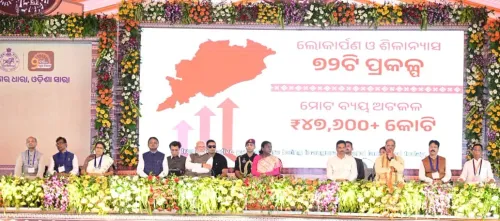
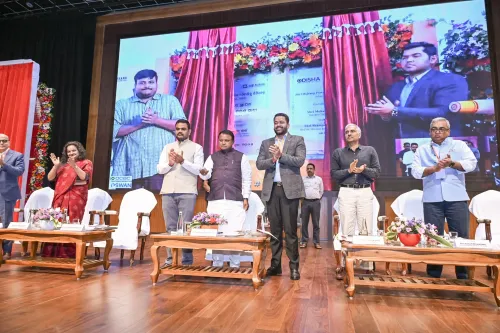
CM Mohan Charan Majhi laid the foundation stone of the Pipili Chandua Handicraft Hub on 5 June 2026 .
Pipili in Puri district is home to a GI-tagged appliqué craft tradition known as Chandua .
The hub is framed as moving beyond past promises to deliver concrete infrastructure for artisan communities.
Thousands of artisan families dependent on Chandua work are the intended primary beneficiaries.
The project fits within a broader state push for physical craft-cluster hubs under the BJP-led Odisha government that took office in June 2024 .
Construction timeline, project cost, and linked skill or marketing programmes are yet to be publicly detailed.
Odisha Chief Minister Mohan Charan Majhi on Friday, 5 June 2026 announced the foundation-stone laying of the Pipili Chandua Handicraft Hub, marking what his administration describes as a decisive shift from decades of unfulfilled promises to concrete infrastructure for the town's world-renowned appliqué artisans.
Context
Pipili, a town in Puri district, Odisha, is globally recognised for its Chandua craft — a vibrant appliqué tradition in which artisans stitch intricate patterns of cloth onto canopies, wall hangings, and decorative items. The craft holds a Geographical Indication (GI) tag, formally recognising its unique regional identity. CM Majhi's post in Odia states: 'For long years, the world-famous Chandua art of Pipili and the development of its artisans received only promises, but our government has laid the foundation stone of the Pipili Chandua Handicraft Hub. This is not merely an infrastructure project; rather, it is a new chapter of dreams, dignity, and economic empowerment for thousands of artisan families.'
The announcement positions the hub as a direct response to a perceived gap between past policy rhetoric and on-the-ground support for craft workers in the region.
Policy Backdrop
Odisha governments across administrations have periodically announced welfare and infrastructure measures for GI-tagged crafts, including Pipili appliqué. The BJP-led administration that took office in June 2024 under CM Majhi has framed its handicraft agenda around physical cluster hubs and direct economic outcomes for artisan communities, a model that mirrors similar craft-infrastructure initiatives seen in other Indian states.
Central schemes supporting handloom and handicraft clusters — including those under the Ministry of Textiles — provide a policy framework within which state governments can co-invest in such hubs. The Pipili hub, once operational, is expected to consolidate production, training, and marketing functions under one facility.
Stakeholders and Impact
The primary beneficiaries are thousands of artisan families in and around Pipili whose livelihoods depend on Chandua work. The craft is labour-intensive and largely cottage-based, making artisans vulnerable to market fluctuations and limited access to institutional support.
A dedicated hub could provide shared workspace, raw-material access, design upgradation, and direct market linkages — factors that artisan welfare groups have long cited as critical gaps. Broader stakeholders include the Odisha handicraft export sector and domestic tourism circuits centred on Puri, where Chandua products are a major draw for visitors to the Jagannath Temple corridor.
What's Next
The key markers to watch are the construction timeline, the total project outlay, and whether linked skill-development and marketing programmes are announced alongside the physical infrastructure. Execution pace will determine whether the hub translates the foundation-stone moment into sustained income gains for artisan households.
If the Pipili hub delivers on its stated aims, it could serve as a replicable model for other GI-tagged craft clusters across Odisha — including Sambalpuri weaving and Dhokra metalcraft — where similar infrastructure deficits exist.
Point of View
A framing common to governments seeking to consolidate support among artisan and rural constituencies. The move aligns with a wider BJP state-government pattern of announcing tangible infrastructure for GI-tagged heritage crafts, lending cultural nationalism a developmental vocabulary. The real test will be execution: foundation stones for artisan hubs have historically preceded long construction delays in several states. Sustained follow-through on budget allocation and marketing linkages will determine whether the hub becomes a genuine income lever or a ceremonial milestone.
NationPress
22 Sept 2026
Frequently Asked Questions
What is the Pipili Chandua Handicraft Hub?
The Pipili Chandua Handicraft Hub is a proposed infrastructure facility in Pipili, Puri district, Odisha, intended to provide artisans engaged in the traditional GI-tagged Chandua appliqué craft with shared workspace, skill development, and market linkages. Its foundation stone was laid by CM Mohan Charan Majhi on 5 June 2026.
What is Pipili Chandua craft?
Pipili Chandua is a centuries-old appliqué craft from Pipili town in Odisha's Puri district, in which artisans stitch colourful cloth cutouts onto fabric to create canopies, wall hangings, and decorative items. It holds a Geographical Indication (GI) tag recognising its unique regional origin.
Who is Mohan Charan Majhi?
Mohan Charan Majhi is a BJP leader who has served as Chief Minister of Odisha since June 2024, when the BJP formed the state government for the first time.
Why is the Pipili Chandua hub significant for artisans?
Thousands of artisan families in and around Pipili depend on Chandua work for their livelihoods. A dedicated hub could address long-standing gaps in raw-material access, design support, and direct market linkages that have limited artisan incomes.
What is the cost and timeline of the Pipili Chandua Handicraft Hub?
The exact project cost and construction timeline have not been publicly confirmed as of the foundation-stone ceremony on 5 June 2026. These details are expected to be announced as the project progresses.