CM Majhi launches Chandua Handicraft Hub for Pipili artisans
Synopsis
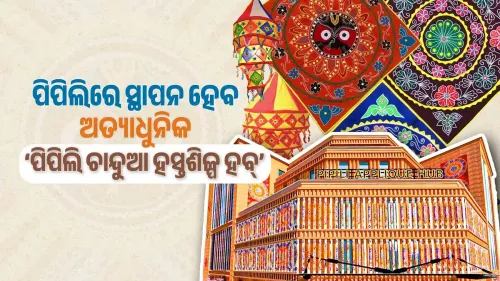
Odisha Chief Minister Mohan Charan Majhi announced a Chandua Handicraft Hub for Pipili artisans on 6 June 2026, calling it a symbol of Odia identity and a historic milestone toward Viksit Odisha 2036 and Viksit Bharat 2047. The hub aims to formalise the centuries-old GI-tagged applique craft sector and boost the state economy.
Key Takeaways
Odisha CM Mohan Charan Majhi announced a new Chandua Handicraft Hub on 6 June 2026 to support Pipili artisans and weavers.
Pipili Chandua applique craft holds a Geographical Indication (GI) tag awarded in 2008 , protecting its traditional designs.
The hub is framed as a milestone toward both Viksit Odisha 2036 and the national Viksit Bharat 2047 development vision.
Majhi described Pipili Chandua as a symbol of Odia identity and cultural pride ( Odia asmita ).
The Odisha Handicrafts Development Corporation has supported artisans since the 1970s ; the new hub represents a structural upgrade to that framework.
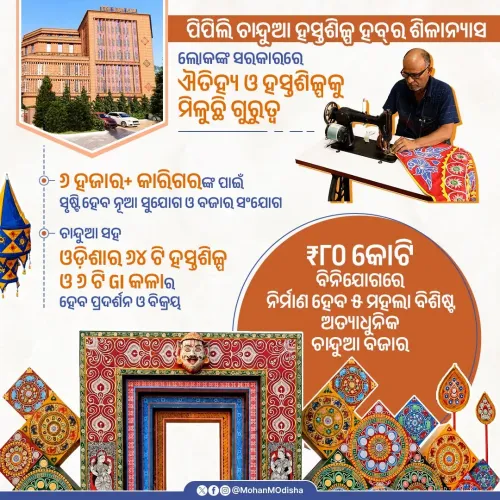
Budget outlay, land allocation, and timeline for the hub are yet to be officially announced.
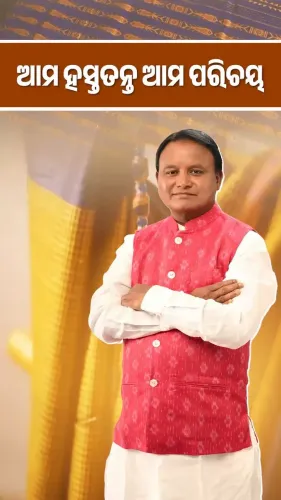
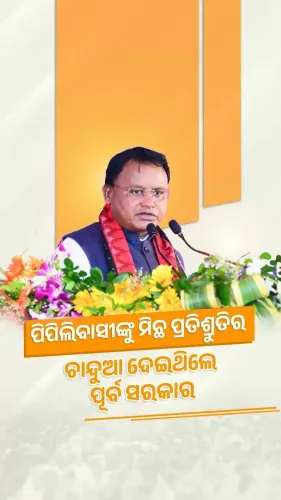
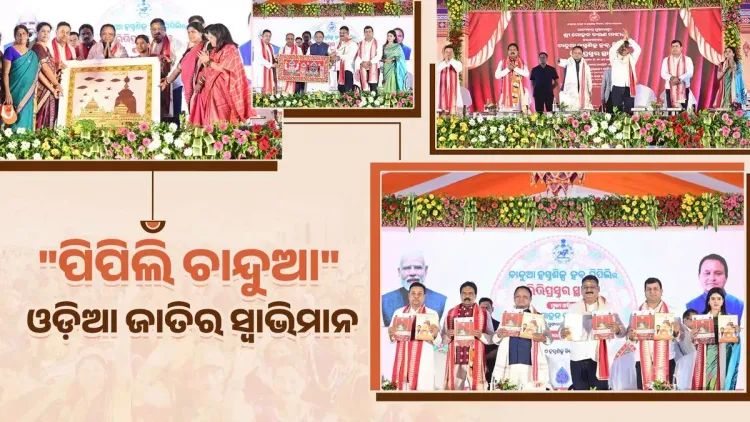
Odisha Chief Minister Mohan Charan Majhi on Saturday, 6 June 2026, announced a new Chandua Handicraft Hub dedicated to the artisans and weavers of Pipili, framing the initiative as a historic step toward a prosperous Odisha and a symbol of Odia cultural pride.
Context
Posting in Odia on X, CM Majhi declared that his government is 'continuously working for the all-round development of every artisan and weaver in our state.' He described Pipili Chandua — the town's celebrated applique craft — as a symbol of Odia asmita (Odia identity) and self-respect of the Odia people. The new hub, he said, 'will play an important role in enriching the state's economy.'
Majhi linked the project to two larger national and state visions: 'Viksit Odisha 2036' and 'Viksit Bharat 2047', calling the handicraft hub 'a historic milestone' in realising both goals.
Policy Backdrop
Pipili, a town in Puri district, has been the centre of Odisha's applique craft tradition for centuries. The craft received a Geographical Indication (GI) tag in 2008, offering legal protection to its distinctive designs and providing a formal identity for its weavers in national and international markets.
The Odisha Handicrafts Development Corporation, established in the 1970s, has run artisan welfare programmes for decades, but practitioners have long called for more structured infrastructure to improve market access and working conditions. The proposed Chandua Handicraft Hub is positioned as an upgrade to that legacy framework, consolidating informal artisan clusters into a formal production and marketing ecosystem.
The initiative mirrors craft-hub models adopted in states such as Rajasthan and Uttar Pradesh, where state governments have established dedicated facilities to formalise traditional craft clusters, improve supply chains, and link artisans directly to export markets and e-commerce platforms.
Stakeholders and Impact
The primary beneficiaries are the artisans and weavers of Pipili and surrounding areas who produce the vibrant applique canopies, wall hangings, and decorative items that have made the town a craft destination. These workers largely operate in the informal economy, making institutional support critical for income stability and skill transmission to younger generations.
Beyond the craft community, the hub is expected to generate ancillary economic activity in Puri district — from raw material supply chains to tourism and retail. Odisha's broader handicrafts sector, which includes Sambalpuri textiles, Dhokra metalwork, and Pattachitra painting, stands to benefit from the visibility and policy momentum that a flagship project like this can generate for the state's artisan economy as a whole.
What's Next
Details on the hub's land allocation, budget outlay, and implementation timeline are expected to emerge in upcoming Odisha state budget sessions or through state industrial policy announcements. Observers will watch whether the project attracts central government co-funding under schemes that promote GI products and rural non-farm employment.
As Odisha positions itself for the 2036 Viksit Odisha target — a state-level development benchmark aligned with the national Viksit Bharat 2047 centenary vision — the Chandua Handicraft Hub will serve as an early test of whether cultural heritage initiatives can be translated into measurable economic outcomes for the state's most vulnerable craft workers.
Point of View
The Odisha government is signalling that heritage preservation and developmental politics are not competing priorities but mutually reinforcing ones. The move also follows a well-worn playbook seen in BJP-governed states where GI-tagged crafts are elevated as both vote-bank signalling and genuine economic policy for rural non-farm workers. The real measure of success will be in the implementation details — land, budget, and market linkages — which remain unannounced.
NationPress
21 Sept 2026
Frequently Asked Questions
What is the Chandua Handicraft Hub announced by Odisha CM Majhi?
The Chandua Handicraft Hub is a proposed facility announced by Odisha Chief Minister Mohan Charan Majhi on 6 June 2026 to support artisans and weavers producing the traditional Pipili applique craft, with the aim of boosting the state economy and preserving Odia cultural heritage.
What is Pipili Chandua and why is it significant?
Pipili Chandua is a centuries-old applique craft from Pipili town in Puri district, Odisha, known for its vibrant canopies, wall hangings, and decorative items. It received a Geographical Indication (GI) tag in 2008, giving it legal protection and a formal identity in national and international markets.
What is Viksit Odisha 2036?
Viksit Odisha 2036 is a state-level development vision set by the Odisha government, aligned with the national Viksit Bharat 2047 goal of transforming India into a developed nation by the centenary of independence. CM Majhi has cited it as a guiding framework for projects like the Chandua Handicraft Hub.
Who will benefit from the Chandua Handicraft Hub in Odisha?
The primary beneficiaries are artisans and weavers in and around Pipili in Puri district who produce applique craft products. The hub is expected to formalise their work, improve market access, and generate broader economic activity in the region.
Has the Odisha government supported handicraft artisans before?
Yes. The Odisha Handicrafts Development Corporation has run artisan welfare programmes since the 1970s. The new Chandua Handicraft Hub is positioned as a structural upgrade to that legacy, consolidating informal craft clusters into a more formal production and marketing ecosystem.