CM Majhi lays foundation of ₹80 cr Pipili Chandua Hub
Synopsis
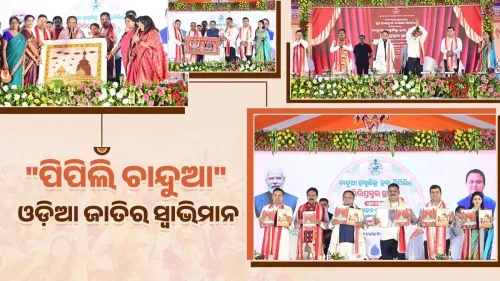
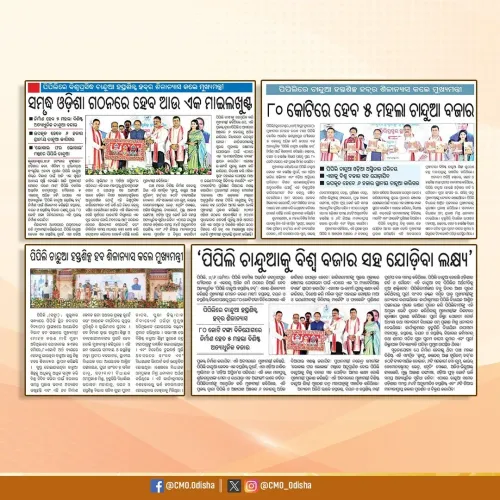
Odisha Chief Minister Mohan Charan Majhi laid the foundation of a five-storey Pipili Chandua Hub on 6 June 2026, backed by ₹80 crore, to provide modern infrastructure, new markets, and improved opportunities for Pipili's GI-tagged appliqué artisans.
Key Takeaways
Odisha CM Mohan Charan Majhi announced the foundation-laying of the Pipili Chandua Hub on 6 June 2026 .
The hub will require an investment of ₹80 crore and will be a five-storey facility.
The project aims to create new markets, improved infrastructure, and fresh opportunities for Pipili appliqué artisans .
Pipili Chandua received Geographical Indication (GI) registration in 2008 , recognising its distinct craft heritage.
The hub continues Odisha's long-standing policy of pairing GI protection with physical craft infrastructure.
The facility is located in Pipili, Puri district , on the high-footfall Bhubaneswar–Puri highway .
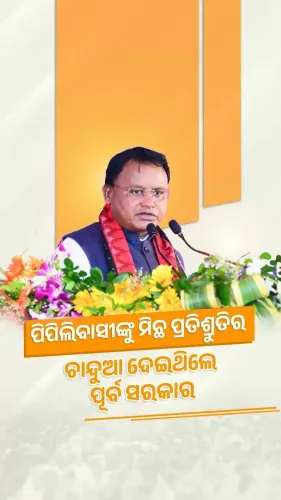
Odisha Chief Minister Mohan Charan Majhi on Saturday, 6 June 2026, announced the foundation-laying of a dedicated Pipili Chandua Hub, backed by an investment of ₹80 crore, to modernise infrastructure and expand market access for the state's celebrated appliqué artisans.
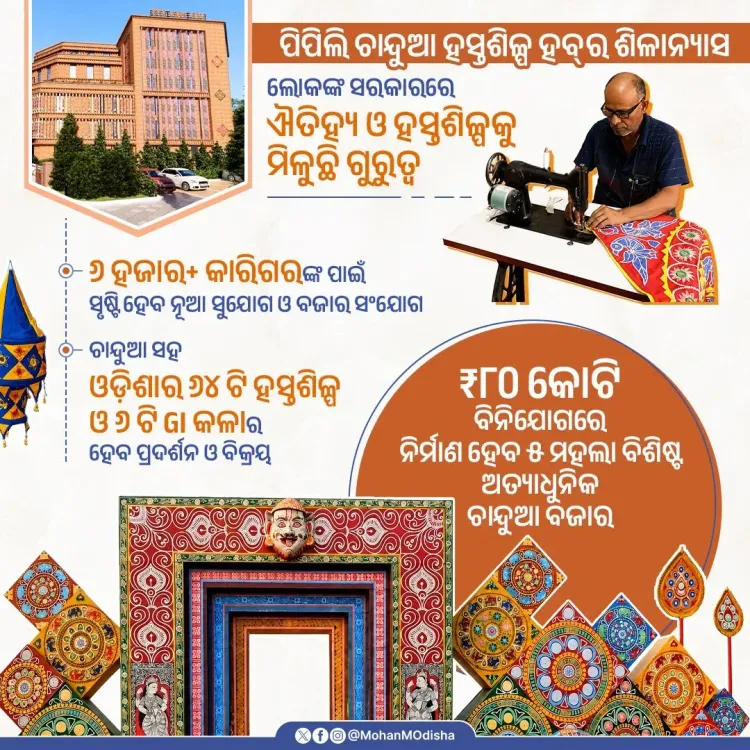
Posting in Odia on X, Chief Minister Majhi wrote: 'ପିପିଲିର ଚାନ୍ଦୁଆ କେବଳ ଏକ ହସ୍ତଶିଳ୍ପ ନୁହେଁ' — 'Pipili's Chandua is not merely a handicraft; it is the identity of Odisha's heritage, tradition, and creativity.' He added that the government has laid the foundation of a state-of-the-art, five-storey Chandua Hub at an investment of ₹80 crore to give this world-renowned art a new identity, and that the hub will create new markets, new opportunities, and improved infrastructure for artisans.
Context
Pipili, a town in Puri district, Odisha, is the historic centre of the state's appliqué tradition, locally known as Chandua — a craft defined by intricate cut-cloth motifs stitched onto contrasting fabric, historically used in temple ceremonies and festive canopies. The craft received Geographical Indication (GI) registration in 2008, formally recognising its distinct design lineage and geographic origin.
Despite the GI tag, artisan clusters in Pipili have long faced challenges including limited modern workspace, fragmented supply chains, and restricted access to national and international buyers. The Chandua Hub is positioned as a structural response to these gaps.
Policy Backdrop
Odisha governments across administrations have pursued a consistent policy of pairing GI protection with physical infrastructure — craft hubs, common facility centres, and buyer-seller platforms — for traditional industries including silver filigree (Tarakasi) and stone carving. The current BJP-led state government under Chief Minister Majhi, in office since June 2024, continues this policy arc while placing emphasis on fresh branding and modern facilities.
The proposed five-storey Chandua Hub is designed to consolidate production, training, retail, and logistics functions under a single roof, a model increasingly adopted for heritage craft clusters across India to integrate them into larger value chains and export pipelines.
Stakeholders and Impact
The primary beneficiaries are the artisans and handicraft workers of Pipili, many of whom operate from home-based units with limited capital. A centralised hub offering improved workspace, market linkages, and institutional support could meaningfully reduce their dependence on middlemen and improve income stability.
Broader stakeholders include the Odisha handicraft export sector and domestic tourism, given Pipili's location on the Bhubaneswar–Puri highway, a high-footfall corridor. The hub could also serve as a cultural landmark drawing buyers, designers, and tourists to the cluster.
What's Next
Attention will now shift to the construction timeline and the eventual commissioning of the hub. Key milestones to watch include the rollout of artisan training modules, the organisation of buyer-seller meets, and whether the facility generates measurable new export orders for Pipili Chandua products.
If executed on schedule, the hub could serve as a template for similar investments in Odisha's other GI-tagged craft clusters, reinforcing the state's positioning as a destination for heritage handicraft tourism and ethical sourcing.
Point of View
Translating heritage rhetoric into capital expenditure. By anchoring the investment in a GI-tagged craft with an established global identity, the BJP-led administration is aligning craft welfare with tourism and export strategy rather than treating it as purely a welfare measure. The five-storey format — consolidating production, training, and retail — mirrors successful cluster models elsewhere in India and, if executed well, could reduce artisan dependence on middlemen. The real test will be whether the hub generates sustained buyer linkages and measurable income gains, or remains a well-intentioned infrastructure asset underutilised after inauguration.
NationPress
21 Sept 2026
Frequently Asked Questions
What is the Pipili Chandua Hub?
The Pipili Chandua Hub is a proposed five-storey facility in Pipili, Puri district, Odisha, being built at a cost of ₹80 crore to provide modern workspace, market access, and infrastructure for artisans who make the traditional Chandua appliqué craft.
What is Pipili Chandua?
Pipili Chandua is a traditional appliqué craft from Pipili town in Odisha, characterised by intricate cut-cloth motifs stitched onto contrasting fabric. It received Geographical Indication (GI) registration in 2008.
Who laid the foundation of the Pipili Chandua Hub?
Odisha Chief Minister Mohan Charan Majhi laid the foundation of the Pipili Chandua Hub on 6 June 2026.
How much is the government investing in the Pipili Chandua Hub?
The Odisha government has announced an investment of ₹80 crore for the construction of the five-storey Pipili Chandua Hub.
What will the Pipili Chandua Hub offer artisans?
According to Chief Minister Majhi's announcement, the hub will create new markets, new opportunities, and improved infrastructure for Pipili's appliqué artisans, consolidating production, training, and retail functions.