CM Majhi: Over 20 Lakh Odisha Farmers Benefit Under Samruddha Krushak Yojana
Synopsis
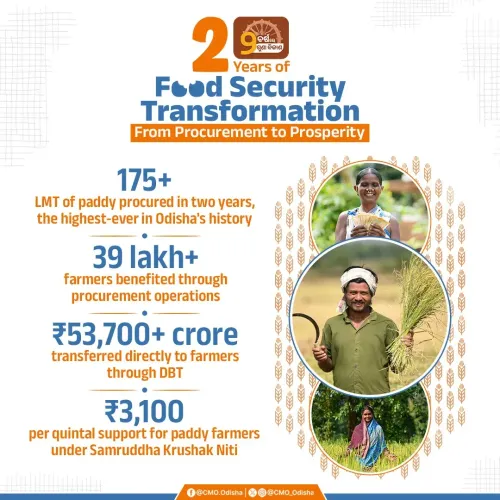
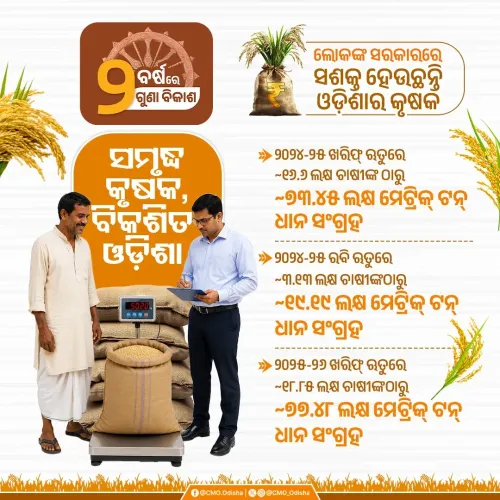
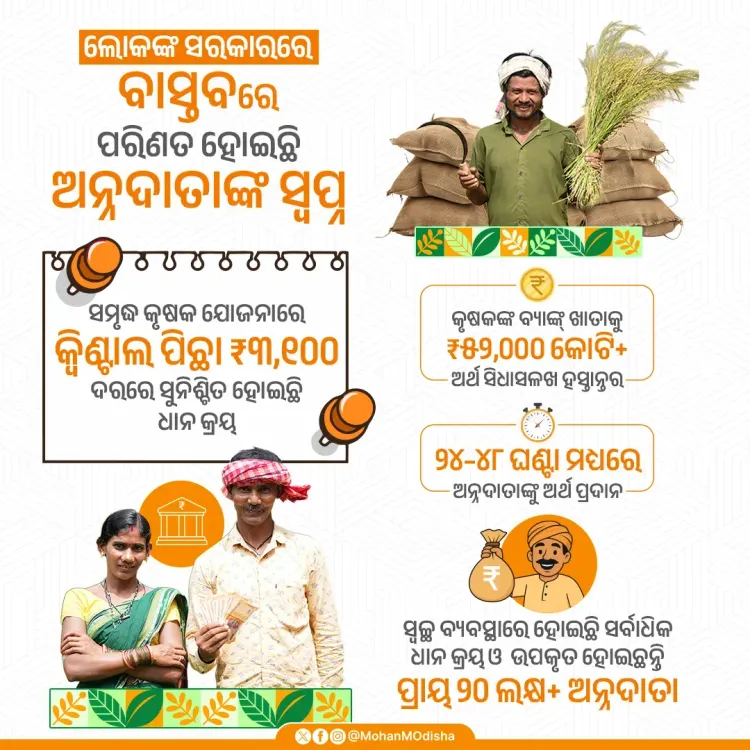
Odisha CM Mohan Charan Majhi marks two years in office by highlighting Samruddha Krushak Yojana's paddy procurement at ₹3,100 per quintal, over ₹52,000 crore in direct bank transfers, and more than 20 lakh farmer beneficiaries — with payments credited within 24–48 hours.
Key Takeaways
Odisha CM Mohan Charan Majhi posted on 26 June 2026 to mark two years of the BJP-led state government.
The Samruddha Krushak Yojana procures paddy at ₹3,100 per quintal , above the central MSP baseline.
More than ₹52,000 crore has been transferred directly to farmers' bank accounts under the scheme.
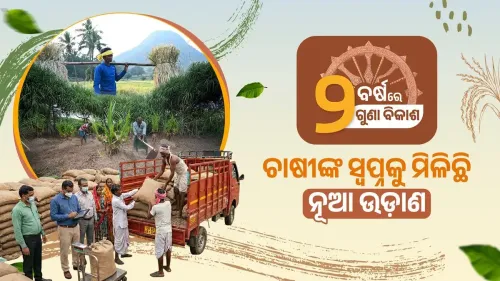
Over 20 lakh farmers have been covered, which the government describes as the state's highest-ever paddy procurement.
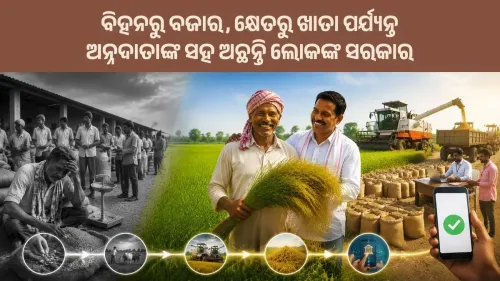
Payments are credited within 24 to 48 hours of paddy sale, targeting a key pain point of procurement delays.
The scheme continues Odisha's tradition of decentralised paddy procurement while shifting to a DBT-heavy, digitally tracked model.
Odisha Chief Minister Mohan Charan Majhi on Friday, 26 June 2026, highlighted the state government's commitment to farmer welfare, citing paddy procurement at ₹3,100 per quintal under the Samruddha Krushak Yojana and direct bank transfers exceeding ₹52,000 crore to farmers across Odisha.
Context
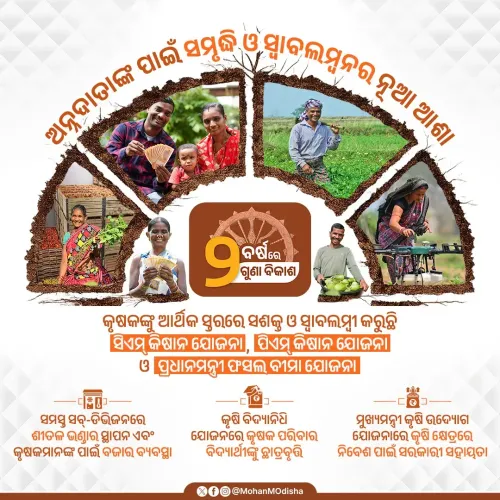
Posting in Odia on the occasion of the ruling government's two-year anniversary — marked by the hashtag #2YearsofLokankaSarakar (Two Years of the People's Government) — CM Majhi stated that the 'Lok Sarkar' (People's Government) remains committed to the 'all-round development of the Annadata' (provider of food, a term of respect for farmers). He noted that more than 20 lakh farmers have benefited through what he described as the state's highest-ever paddy procurement in a transparent system.
A key feature highlighted in the post is the payment turnaround: farmers receive funds directly in their bank accounts within 24 to 48 hours of paddy sale, a mechanism the government says strengthens financial security for cultivators.
Policy Backdrop
The Samruddha Krushak Yojana is the BJP-led Odisha government's flagship farmer income support scheme, introduced after the party came to power following the 2024 state elections. It builds on Odisha's long-standing participation in the central government's Decentralised Procurement Scheme, under which states procure paddy at the Minimum Support Price using their own infrastructure.
Odisha had earlier run the KALIA scheme (launched 2018) under the previous administration, which provided direct financial assistance to farmers and sharecroppers. The current government's scheme shifts emphasis toward procurement-linked transfers and faster payment cycles, reflecting a broader national trend of Direct Benefit Transfer-heavy models seen in states such as Telangana and Andhra Pradesh.
Indian states have increasingly supplemented the central MSP with bonus prices and DBT mechanisms to address farmer income volatility — a pattern that has intensified as agricultural distress remains a politically sensitive issue ahead of successive election cycles.
Stakeholders and Impact
The primary beneficiaries are paddy farmers across Odisha, a predominantly agrarian state in eastern India. The claim of over 20 lakh beneficiaries and transfers exceeding ₹52,000 crore represents a significant scale of welfare delivery if sustained through the current Kharif and Rabi procurement seasons.
The 24–48 hour payment window, if consistently implemented, addresses one of the most persistent grievances among paddy farmers — delayed payments through procurement agencies — which have historically pushed cultivators toward distress sales to private traders at below-MSP rates. Digitalisation of procurement records and bank-linked transfers are central to this model.
The government's framing of 'highest-ever paddy procurement' also carries political weight as the BJP seeks to consolidate its farmer-voter base in Odisha ahead of future assembly and local body elections.
What's Next
Attention will now turn to the Kharif 2026 procurement season, where the state's ability to maintain the ₹3,100 per quintal rate and the rapid payment timeline will be closely watched by farmer groups and opposition parties. Any supplementary budget allocations for the Samruddha Krushak Yojana in the next Odisha Legislative Assembly session will be a key indicator of the scheme's fiscal sustainability. The government's two-year mark also sets a benchmark against which procurement volumes and beneficiary numbers will be measured going forward.
Point of View
100 per quintal, ₹52,000 crore, 20 lakh beneficiaries) to cement its farmer-friendly credentials in a state where agrarian sentiment is electorally decisive. The shift from the previous administration's KALIA model to a procurement-linked DBT framework signals a deliberate ideological repositioning: rewarding market participation rather than simply providing income support. If the 24–48 hour payment cycle holds at scale through Kharif 2026, it could set a replicable standard for eastern Indian states still struggling with procurement delays. The broader arc here is the competitive federalism in farmer welfare — states are increasingly outbidding each other on MSP bonuses and payment speed as a substitute for structural agricultural reform.
NationPress
26 Jun 2026
Frequently Asked Questions
What is the Samruddha Krushak Yojana in Odisha?
The Samruddha Krushak Yojana is the Odisha government's flagship paddy procurement scheme that buys paddy from farmers at ₹3,100 per quintal and transfers payment directly to their bank accounts within 24–48 hours. It was introduced by the BJP-led government after the 2024 state elections.
How much has Odisha transferred to farmers under Samruddha Krushak Yojana?
According to CM Mohan Charan Majhi's post on 26 June 2026, more than ₹52,000 crore has been transferred directly to farmers' bank accounts under the Samruddha Krushak Yojana.
How many farmers have benefited from Odisha's paddy procurement scheme?
CM Majhi stated that more than 20 lakh (2 million) farmers have benefited under the Samruddha Krushak Yojana, which he described as the highest-ever paddy procurement in the state.
What is the paddy procurement rate in Odisha in 2026?
The Odisha government is procuring paddy at ₹3,100 per quintal under the Samruddha Krushak Yojana, as stated by Chief Minister Mohan Charan Majhi on 26 June 2026.
How is Samruddha Krushak Yojana different from the earlier KALIA scheme in Odisha?
The earlier KALIA scheme, launched in 2018, provided direct financial assistance to farmers and sharecroppers regardless of market activity. The Samruddha Krushak Yojana, by contrast, is linked to paddy procurement — farmers receive payment when they sell paddy to the government — and emphasises fast DBT settlement within 24–48 hours.