CM Majhi promises relief for cyclone Arnab-hit fishermen, farmers
Synopsis
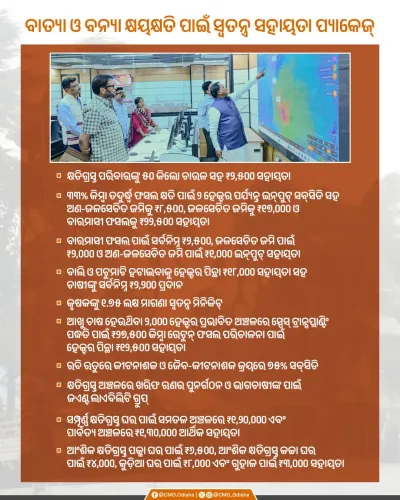
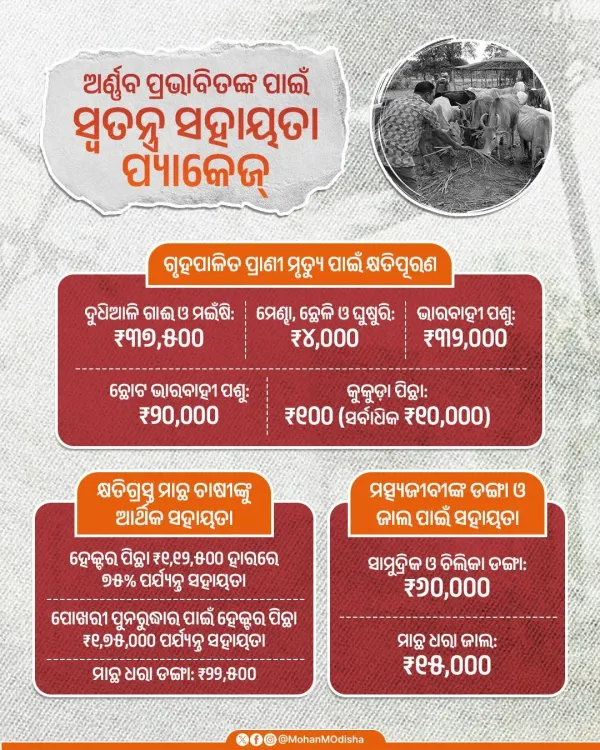
Odisha CM Mohan Charan Majhi announces financial relief for Cyclone Arnab-hit fishermen, fish farmers, and livestock keepers, covering losses to fish ponds, boats, and nets under the state's disaster response framework.
Key Takeaways
CM Mohan Charan Majhi announced compensation for those affected by Cyclone Arnab in Odisha on November 2, 2026 .
Relief covers three groups: livestock keepers , fish farmers , and fishermen .
Financial assistance includes compensation for damaged fish cultivation ponds , boats , and fishing nets .
Odisha's State Disaster Response Fund under the Disaster Management Act, 2005 provides the legal and financial mechanism for rapid disbursement.
The announcement follows a precedent set after Cyclone Fani in 2019 , when similar fisheries-focused compensation was rolled out.
Damage surveys and fund disbursement by coastal district revenue departments are the critical next step.
When a cyclone tears through Odisha's coast, it doesn't just damage property — it shreds livelihoods. Odisha Chief Minister Mohan Charan Majhi on Monday, November 2, 2026, announced financial assistance for livestock keepers, fish farmers, and fishermen battered by Cyclone Arnab, promising compensation alongside support for damaged fish ponds, boats, and nets.
What the state is promising: ponds, boats, and nets covered
In his post on X, CM Majhi wrote in Odia that those affected by 'Cyclone Arnab' — ବାତ୍ୟା 'ଅର୍ଣ୍ଣବ' — would receive both reassurance and material support. The announcement covers compensation for losses in fish cultivation ponds, boats, and fishing nets, while simultaneously extending relief to animal husbandry workers hit by the storm. The message is clear: no affected livelihood group left behind.
This is the state government moving quickly to get ahead of the recovery curve. Odisha's coastal districts are dotted with small-scale fish farms and fishing communities for whom a single severe cyclone can mean months of lost income. Boats and nets are not cheap to replace; a pond breached by storm surge may take weeks to rehabilitate.
Odisha's well-worn disaster playbook
Odisha has been here before — many times. The state's long Bay of Bengal coastline has made it one of India's most cyclone-vulnerable territories, and successive governments have refined a response architecture built around rapid ex-gratia payments and asset replacement. After Cyclone Fani in 2019, the state ran compensation programmes specifically targeting fishermen for boat and pond repairs — an institutional memory that now shapes how Majhi's government is framing its Cyclone Arnab response.
The legal backbone is the State Disaster Response Fund, maintained under the Disaster Management Act, 2005, which enables the state to deploy funds quickly to sectors like fisheries and animal husbandry without waiting for central approval on every line item. That mechanism is what allows a chief minister to make this kind of public commitment within days of a cyclone's passage.
Who gets helped — and what comes next
The three groups named in CM Majhi's post — livestock keepers, fish farmers, and fishermen — represent the backbone of coastal Odisha's rural economy. For these communities, compensation is not a bonus; it is often the difference between rebuilding and abandoning a livelihood entirely.
What the state must now execute is the harder part: damage surveys by revenue department officials, verified assessments of pond, boat, and net losses, and a disbursement mechanism that actually reaches the furthest-flung coastal villages. The announcement sets the intent. The coastal districts are watching for the follow-through.
Point of View
Sector-specific relief announcements to signal administrative responsiveness after natural disasters. By naming fishermen, fish farmers, and livestock keepers explicitly, the BJP government is targeting the rural coastal vote bank that has historically been mobilised by cyclone-relief narratives. The harder political test, however, is not the announcement but the disbursement speed — post-cyclone compensation delays have been a recurring grievance in coastal Odisha. How quickly the revenue machinery converts this pledge into cash in hand will define whether this lands as governance or as optics.
NationPress
2 Nov 2026
Frequently Asked Questions
What relief did Odisha CM Majhi announce for Cyclone Arnab victims?
CM Mohan Charan Majhi announced financial compensation for livestock keepers, fish farmers, and fishermen affected by Cyclone Arnab, covering damages to fish cultivation ponds, boats, and fishing nets.
What is Cyclone Arnab and where did it hit?
Cyclone Arnab is the storm referenced in CM Majhi's November 2026 announcement as having caused damage to fisheries and livestock in Odisha. Specific track and damage figures are under assessment.
How does Odisha fund disaster compensation for fishermen?
Odisha uses its State Disaster Response Fund, constituted under the Disaster Management Act, 2005, to disburse rapid relief to cyclone-affected sectors including fisheries and animal husbandry.
Has Odisha given this kind of relief before?
Yes. After Cyclone Fani in 2019, the Odisha government ran compensation programmes specifically for fishermen covering boat and fish pond repairs — a precedent the current government is drawing on.
Who are the main beneficiaries of Odisha's Cyclone Arnab relief?
The three named beneficiary groups are livestock keepers, fish farmers, and fishermen — communities central to coastal Odisha's rural economy whose livelihoods are most directly hit by cyclone damage.