CM Majhi boosts SC, ST, SEBC quotas in Odisha tech education
Synopsis
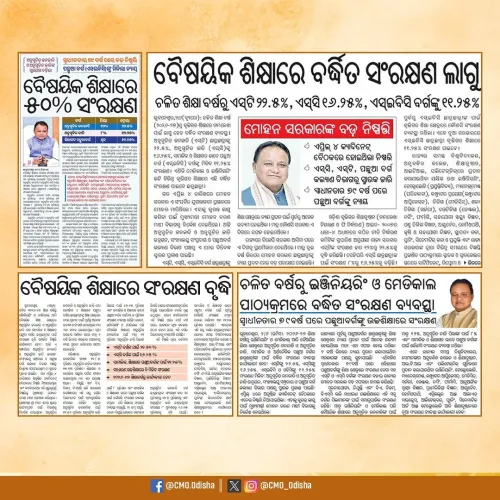
Odisha Chief Minister Mohan Charan Majhi announced a hike in reservations for SC, ST, and SEBC students in medical and engineering admissions, calling it a historic correction of 79 years of educational denial since Independence.
Key Takeaways
Odisha CM Mohan Charan Majhi announced increased reservations for SC, ST, and SEBC students in technical and professional education on 8 June 2026 .
The move covers medical and engineering courses — the most competitive professional streams in the state.
CM Majhi cited 79 years of post-Independence denial of educational rights for backward communities as the justification.
Odisha has a large SC and ST population and has periodically revised state-level quotas within judicial limits.
Implementation will be tested in the next medical and engineering admission cycle ; legal challenges remain a standard risk for reservation amendments.
The announcement reinforces the BJP-led Odisha government's social-equity agenda since its 2024 election victory.
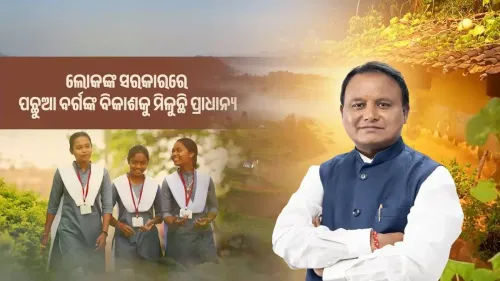
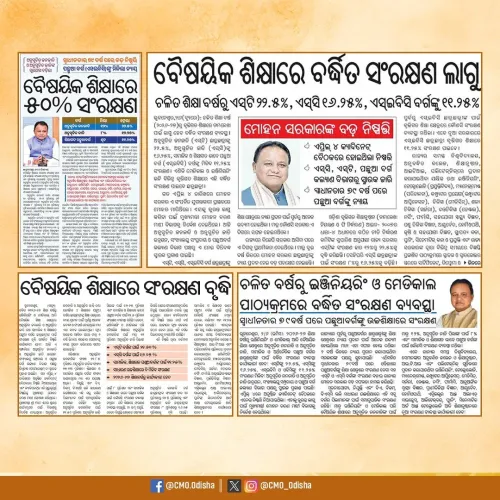
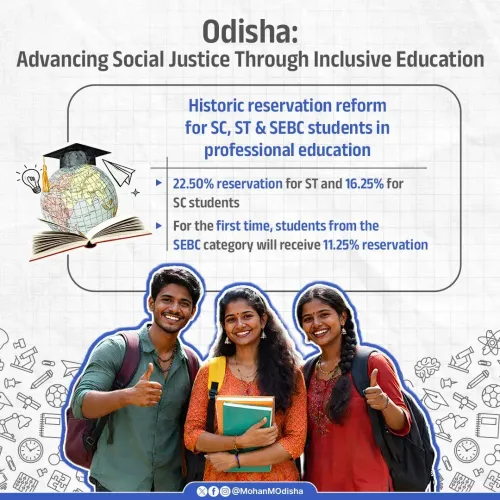
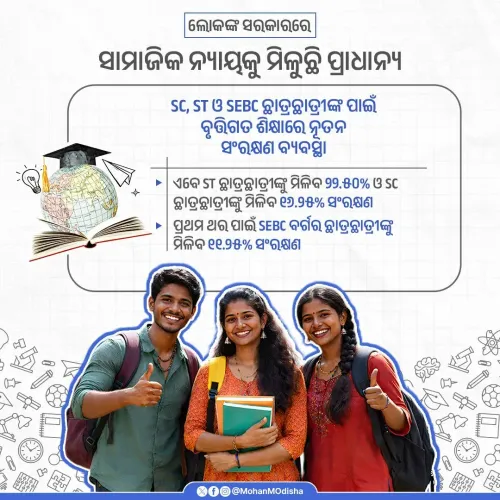
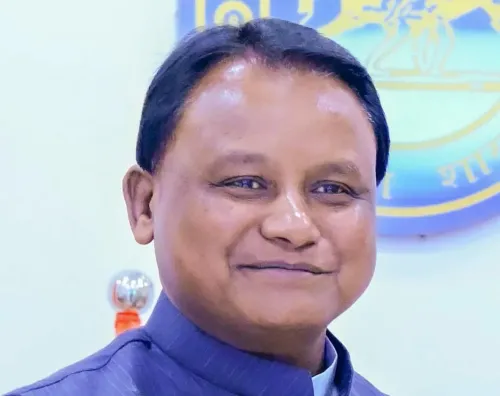
Odisha Chief Minister Mohan Charan Majhi announced on Monday, 8 June 2026 that his government has increased reservations for SC, ST, and SEBC students in technical and professional courses — including medical and engineering programmes — declaring it a landmark step toward social justice and equal opportunity in the state.
Context
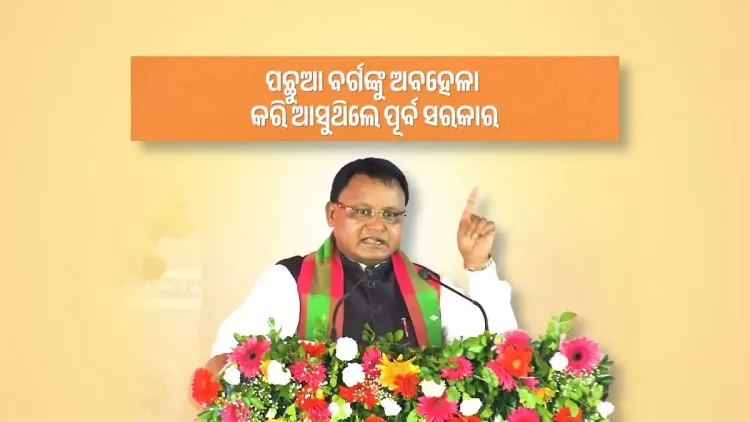
Posting in Odia, CM Majhi stated: 'Dirgh 79 barsha dhara pachhuan bargara chhatracchatrinka shiksha kshetrare semananka adhikararu banchita rakhajaithhila' — 'For a long 79 years, students from backward classes were denied their rightful access to education.' He framed the reservation hike as correcting a post-Independence injustice that had persisted since 1947. The 79-year reference squarely covers the entire period since India's Independence.
The Chief Minister added that his government has now 'ensured the rights' of these communities by expanding quotas specifically in technical and vocational disciplines such as medicine and engineering — sectors where professional opportunity and upward mobility are most concentrated.
Policy Backdrop
India's Constitution, since 1950, has provided for reservations for Scheduled Castes (SC) and Scheduled Tribes (ST) in education. The Mandal Commission recommendations further extended Other Backward Class (OBC) reservations in central higher education institutions from the 1990s onwards. Socially and Educationally Backward Classes (SEBC) — the category used in Odisha — occupy a parallel position at the state level.
Odisha, an eastern Indian state with among the largest SC and ST population shares in the country, has periodically revised quota frameworks in professional courses within limits set by judicial precedent. The BJP-led government that came to power in Odisha in 2024 under CM Majhi has positioned social equity in education as a priority of its administration.
Stakeholders and Impact
The primary beneficiaries are SC, ST, and SEBC students seeking admission to medical and engineering colleges in Odisha. These groups have historically faced structural barriers — including limited access to quality schooling and coaching — that made competitive professional-course admissions difficult. Expanded reservation seats directly widen the entry pathway for these aspirants.
General-category applicants and private institutions with government-recognised seats will be affected by any reallocation of seats. Educational administrators and college management bodies will need to align admission processes with the revised quota matrix ahead of the next academic cycle.
What's Next
The immediate test will be implementation during the upcoming medical and engineering admission cycle, where the revised reservation percentages must be operationalised across state-run and affiliated institutions. Legal scrutiny is a standard feature of reservation amendments in India; any revision that approaches or exceeds judicially prescribed ceilings could attract petitions before the Odisha High Court.
CM Majhi's announcement signals that affirmative action in professional education will remain a central plank of his government's social-policy agenda, with further legislative or executive steps likely to follow as the policy is formalised and notified.
Point of View
ST, and SEBC voters — communities that were pivotal in the party's 2024 Odisha victory. By invoking 79 years of denial, the messaging frames the Congress-era and previous BJD-era governments as having failed these communities, sharpening the contrast with the current dispensation. The focus on medical and engineering seats is particularly significant: these are high-aspiration, high-visibility courses where reservation debates carry the most social weight. Whether the revised quotas survive judicial scrutiny and translate into measurable enrollment gains will determine the policy's long-term credibility.
NationPress
22 Sept 2026
Frequently Asked Questions
What did Odisha CM Majhi announce about reservations?
CM Mohan Charan Majhi announced that the Odisha government has increased reservations for SC, ST, and SEBC students in technical and professional courses, including medical and engineering programmes, calling it a historic step toward social justice.
Who benefits from the Odisha reservation hike in 2026?
Scheduled Caste (SC), Scheduled Tribe (ST), and Socially and Educationally Backward Class (SEBC) students seeking admission to medical and engineering colleges in Odisha are the primary beneficiaries.
Why did CM Majhi say students were denied rights for 79 years?
The 79-year reference covers the period since India's Independence in 1947, during which CM Majhi argued that backward-class students were systematically denied their rightful access to quality technical and professional education.
What is SEBC in Odisha?
SEBC stands for Socially and Educationally Backward Classes — the category used in Odisha for communities that qualify for state-level reservation benefits, analogous to OBC classifications used in central government schemes.
Can Odisha's reservation increase be challenged in court?
Yes. Reservation amendments in Indian states are routinely subject to judicial scrutiny. Any revision that approaches or exceeds the ceilings set by Supreme Court precedent could attract petitions before the Odisha High Court or higher courts.