CM Majhi: Subhadra Yojana empowers over 1 crore Odisha women
Synopsis
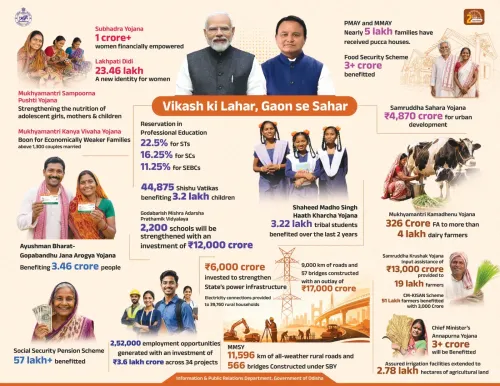
Odisha CM Mohan Charan Majhi announced on 1 July 2026 that Subhadra Yojana has empowered over one crore women through direct financial assistance, marking two years of the BJP government's women-centric welfare push in the state.
Key Takeaways
Odisha Chief Minister Mohan Charan Majhi posted on 1 July 2026 claiming Subhadra Yojana has benefited more than one crore women .
The scheme was a flagship BJP manifesto promise for the June 2024 Odisha assembly elections and was launched after the party formed the government.
It delivers financial assistance via Direct Benefit Transfer (DBT) , targeting adult women for economic self-reliance.
The post was made on the occasion of two years of the BJP-led Odisha government , tagged #2YearsofLokankaSarakar .
The scheme builds on Mission Shakti 's self-help group network, established in 2001 under the previous BJD government.
State budget allocations for 2026-27 and independent beneficiary evaluations remain awaited.
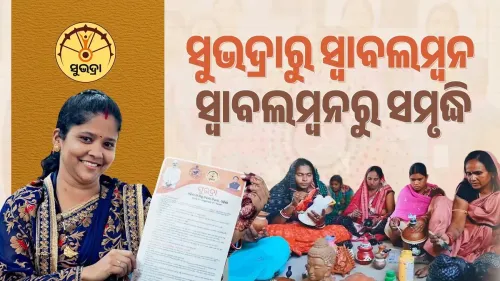
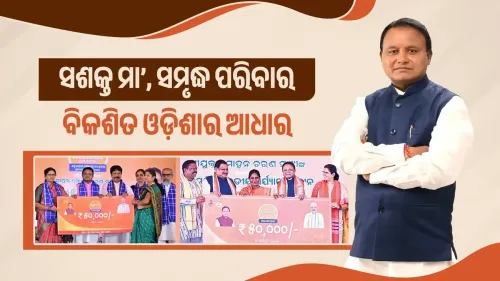
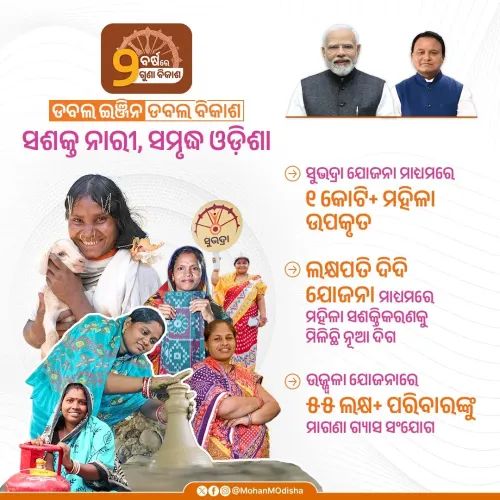
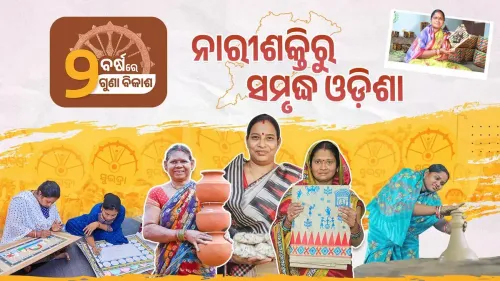
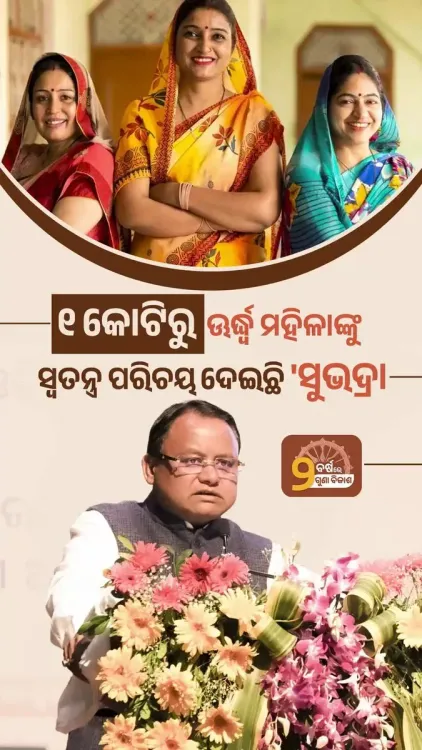
Odisha Chief Minister Mohan Charan Majhi on Wednesday, 1 July 2026 declared that the state's flagship Subhadra Yojana has empowered more than one crore women, calling the scheme a realisation of the government's commitment to women's empowerment. Posting in Odia on X, the Chief Minister said the initiative has made women financially self-reliant, confident, and dignified, and that Odisha's women are today building a prosperous and empowered state.
Translating the post: 'Subhadra Yojana is fulfilling the resolve of women's empowerment. Through Subhadra Yojana, more than one crore women have become empowered and prosperous. With financial self-reliance, self-confidence, and dignity, the women power of Odisha is today building a prosperous and empowered Odisha.' The post was tagged with the hashtags #2YearsofLokankaSarakar and #BikasharaDharaOdishaSara, marking two years of the BJP-led government in the state.
Context
The Subhadra Yojana was a centrepiece promise in the Bharatiya Janata Party's 2024 Odisha election manifesto. The BJP swept to power in Odisha in the June 2024 assembly elections, ending more than two decades of Biju Janata Dal rule. Chief Minister Majhi's government formally launched the scheme after assuming office, positioning it as the state's primary vehicle for direct cash transfers to adult women.
The scheme delivers financial assistance directly to eligible women beneficiaries through a Direct Benefit Transfer (DBT) platform. CM Majhi's post on the second anniversary of his government underscores the administration's intent to frame women's welfare as its signature governance achievement.
Policy Backdrop
Subhadra Yojana builds on a pre-existing foundation: the previous BJD government's Mission Shakti programme, launched in 2001, had created an extensive network of women's self-help groups across rural Odisha. The new scheme channels direct financial assistance through similar grassroots structures, shifting from group-based support toward individual cash transfers.
Across India, state governments have increasingly rolled out targeted cash-transfer schemes for women since the mid-2010s — Madhya Pradesh's Ladli Behna being a prominent example. The BJP's national emphasis on women-centric welfare delivery through DBT aligns closely with the Odisha model, reflecting a broader electoral and policy calculus around female financial inclusion.
Stakeholders and Impact
The primary beneficiaries are adult women from rural and semi-urban households across Odisha. The government's claim of more than one crore beneficiaries would represent a substantial share of the state's female population, which numbers roughly 2.3 crore adult women according to census projections.
Financial self-reliance for women at the household level can reduce dependence on informal credit and improve spending on nutrition, education, and health — outcomes that welfare economists associate with direct cash transfers to women specifically. Advocacy groups and researchers tracking women's economic participation in eastern India will be watching whether beneficiary numbers translate into measurable changes in household spending patterns.
What's Next
The 2026-27 state budget allocation for Subhadra Yojana will be a key indicator of the government's long-term fiscal commitment to the scheme. Independent evaluations of beneficiary coverage, fund utilisation, and grievance redressal mechanisms are yet to enter the public domain.
As the BJP government marks two years in office, the framing of Subhadra Yojana as a transformative milestone signals that women's welfare will remain central to the party's political messaging ahead of future electoral cycles in Odisha.
Point of View
Anchoring the BJP's Odisha narrative around women's welfare at a moment when the party needs to consolidate its 2024 gains. The one-crore-beneficiary claim, if borne out by independent data, would represent one of the largest state-level DBT outreaches for women in eastern India. Subhadra Yojana fits squarely into the BJP's national template — demonstrated in Madhya Pradesh with Ladli Behna — of using targeted cash transfers to build durable female voter loyalty. The real test will be whether third-party audits validate coverage and whether the scheme survives scrutiny of fund utilisation before the next electoral cycle.
NationPress
1 Jul 2026
Frequently Asked Questions
What is Subhadra Yojana in Odisha?
Subhadra Yojana is an Odisha government scheme that provides direct financial assistance to eligible adult women to promote economic self-reliance and empowerment. It was a key promise in the BJP's 2024 Odisha election manifesto and was launched after the party formed the state government.
How many women have benefited from Subhadra Yojana?
Chief Minister Mohan Charan Majhi claimed on 1 July 2026 that more than one crore women have been empowered through Subhadra Yojana, though independent verification of this figure is awaited.
Who is eligible for Subhadra Yojana?
The scheme targets adult women in Odisha, with financial assistance delivered through Direct Benefit Transfer. Specific eligibility criteria are determined by the Odisha state government.
When was Subhadra Yojana launched?
Subhadra Yojana was formally launched after the BJP formed the Odisha state government following the June 2024 assembly elections, when Mohan Charan Majhi became Chief Minister.
What is the difference between Subhadra Yojana and Mission Shakti?
Mission Shakti, launched in 2001 under the previous BJD government, built women's self-help group networks across Odisha. Subhadra Yojana shifts from that group-based model to direct individual cash transfers to eligible women beneficiaries.