CM Majhi Marks World Elephant Day With Conservation Pledge
Synopsis
Odisha Chief Minister Mohan Charan Majhi used World Elephant Day on 12 August 2026 to call for elephant protection and coexistence, anchoring the appeal in the state's deep cultural ties to elephants — from Lord Jagannath's Hati Besha to ancient temple architecture.
Key Takeaways
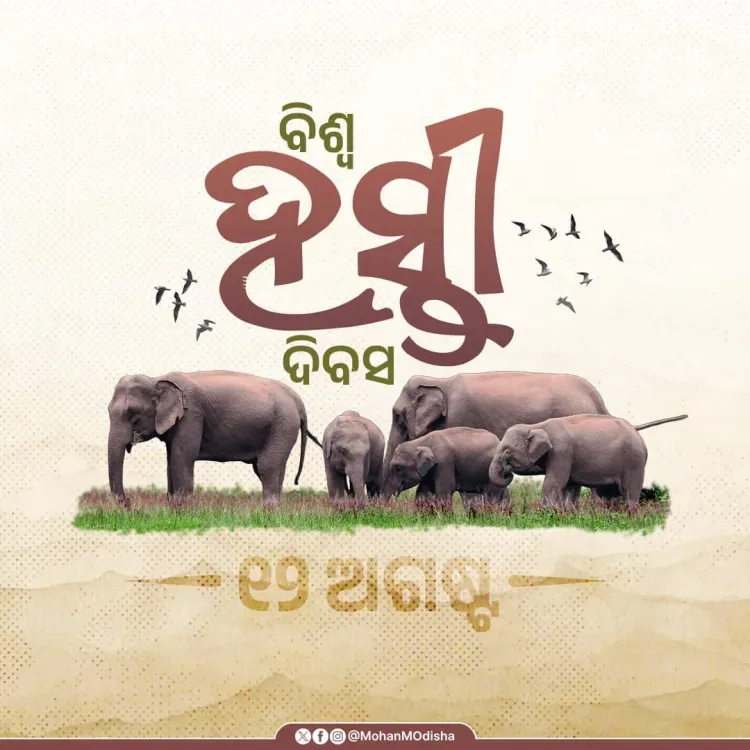
Mohan Charan Majhi posted on 12 August 2026 — World Elephant Day — urging conservation and stronger human-elephant coexistence in Odisha .
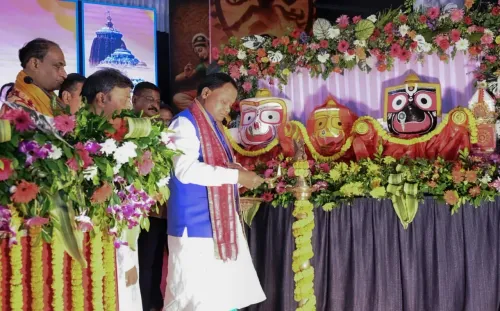
He invoked Hati Besha , the elephant form of Lord Jagannath during Rath Yatra, to frame elephant protection as a cultural imperative.
Odisha holds one of India's largest wild elephant populations, with key habitats in Sambalpur , Keonjhar , and Mayurbhanj districts.
Project Elephant , launched in 1992 , is the national framework for protecting elephant habitats and migration corridors.
The Chief Minister did not announce a new state scheme; the post was a public awareness and commitment appeal.
Wildlife conservationists will watch for follow-up action on corridor protection and human-elephant conflict mitigation in the state.
On World Elephant Day, 12 August 2026, Odisha Chief Minister Mohan Charan Majhi called on citizens to commit to elephant protection and stronger human-elephant coexistence — framing the appeal not merely as an environmental duty but as an act of cultural self-preservation.
In a post in Odia, the Chief Minister wrote: 'Elephants are a unique symbol of our natural environment, biodiversity and glorious culture. From Mahaprabhu's Hati Besha [the elephant form of Lord Jagannath] to the temple architecture and our rich history, Gajaraja [the elephant king] has always been deeply intertwined with Odisha's cultural identity. On the occasion of World Elephant Day, let us resolve to protect elephants, conserve them, and secure the future of their natural habitats. Let everyone come forward to strengthen human-elephant coexistence and protect this magnificent treasure of nature.'
Hati Besha and the Elephant in Odisha's Soul
The reference to Hati Besha is pointed. During the Rath Yatra festival at Puri, Lord Jagannath — the presiding deity of Odisha — is adorned in an elephant form, one of the most sacred rituals in the state's religious calendar. Elephant motifs run through the carved stone of Odisha's ancient temples, including the famous Konark Sun Temple, where stone elephants line the base. For Majhi, invoking this lineage transforms a conservation message into something far more resonant for an Odia audience.
Odisha's Elephant Population and the Conflict on Its Borders
Odisha is home to one of India's largest wild elephant populations, concentrated in districts such as Sambalpur, Keonjhar, and Mayurbhanj. The state's forest corridors are critical to elephant migration across eastern India. Yet habitat fragmentation and encroachment have intensified human-elephant conflict in recent decades, with crop raids and casualties — both human and animal — reported regularly in these districts.
Project Elephant, launched by the Government of India in 1992, provides the national framework for protecting wild elephants, their habitats, and migration corridors. Majhi's call for coexistence aligns with that mandate, though the Chief Minister stopped short of announcing any new state-level scheme or corridor initiative in today's post.
A Day, a Pledge, and the Work That Follows
World Elephant Day, observed every 12 August, was co-founded in 2012 to rally global attention around the threats facing both Asian and African elephants — poaching, habitat loss, and conflict with expanding human settlements. In India, the day has grown into an occasion for state governments to reaffirm conservation commitments, even as forest officials and local communities bear the daily burden of managing that conflict on the ground.
The real test of any pledge lies in the corridors, the compensation schemes, and the patrol budgets that follow it — and those are the numbers Odisha's wildlife conservationists will be watching.
Point of View
He broadens the constituency for a cause that often struggles to hold public attention between crises. The invocation of Lord Jagannath's Hati Besha is politically shrewd in a state where temple culture carries enormous social weight. Yet the post arrives without a policy announcement, which means it functions more as brand-building than governance. The harder question — whether Odisha will expand elephant corridors or improve conflict-compensation mechanisms — remains unanswered, and that gap is precisely where conservation advocates will push the government next.
NationPress
27 Sept 2026
Frequently Asked Questions
What is World Elephant Day and when is it observed?
World Elephant Day is a global conservation observance held annually on 12 August , co-founded in 2012 , to raise awareness about threats facing wild elephants including poaching, habitat loss, and human-elephant conflict.
What did Odisha CM Mohan Majhi say on World Elephant Day 2026?
Mohan Charan Majhi called on citizens to commit to elephant protection, conservation of their natural habitats, and stronger human-elephant coexistence, linking the cause to Odisha's cultural and religious identity.
What is Hati Besha in Odisha's culture?
Hati Besha is the sacred elephant form in which Lord Jagannath is adorned during the Rath Yatra festival at Puri , making the elephant a deeply revered symbol in Odia religious tradition.
How many elephants are there in Odisha and where do they live?
Odisha is home to one of India's largest wild elephant populations, concentrated in forest districts including Sambalpur , Keonjhar , and Mayurbhanj , which are key to elephant migration corridors in eastern India.
What is Project Elephant in India?
Project Elephant was launched by the Government of India in 1992 to protect wild elephants, their habitats, and migration corridors, and to address human-elephant conflict across states including Odisha.