CM Mann Chairs First Meeting of 7th Punjab Finance Commission
Synopsis
Chief Minister Bhagwant Mann presided over the inaugural meeting of Punjab's newly formed 7th Finance Commission on September 24, 2026, emphasising disciplined fiscal devolution and sustainable financial frameworks for the state's panchayats and municipalities under the constitutional five-year mandate.
Key Takeaways
Chief Minister Bhagwant Singh Mann chaired the first meeting of the 7th Punjab Finance Commission on September 24, 2026 .
The Commission is mandated to recommend distribution of taxes, duties, and road tax between the state and panchayats/municipalities.
Mann called for a 'disciplined fiscal path' and 'sustainable financial institutions' at the grassroots level.
State Finance Commissions are a constitutional requirement under the 73rd and 74th Amendments of 1992 , to be constituted every five years .
The Commission's eventual recommendations will directly shape Punjab's local body funding in upcoming state budgets.
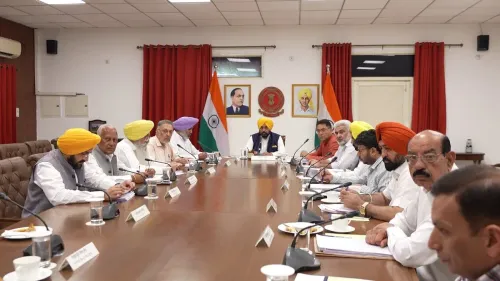
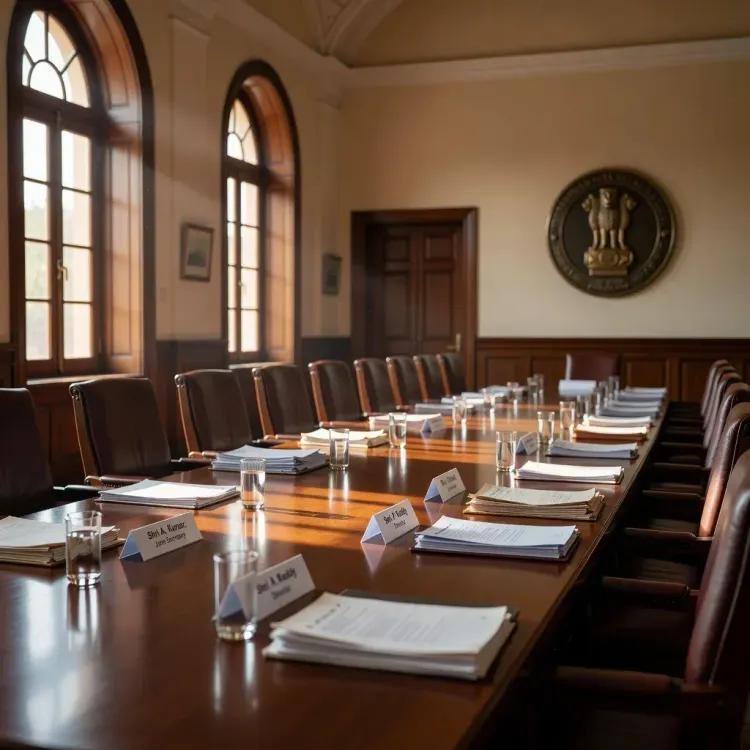
Grassroots governance in Punjab just got a formal fiscal backbone. Chief Minister Bhagwant Singh Mann on Thursday, September 24, 2026, presided over the inaugural meeting of the newly constituted 7th Punjab Finance Commission, calling for a disciplined fiscal path and sustainable financial institutions to put real money — and real power — in the hands of panchayats and municipalities.
What the 7th Commission is mandated to do
The Chief Minister was unambiguous about the Commission's brief. 'The Commission has been formed to make specific recommendations for the distribution of taxes, duties, road tax, and others between the state and the panchayats/municipalities, besides making other recommendations to improve the financial condition of these civic bodies,' Mann said at the meeting.
That mandate goes to the heart of fiscal federalism at the sub-state level. Urban local bodies and village panchayats across Punjab have long depended heavily on state transfers, leaving them with limited capacity to plan or execute services independently. A credible Finance Commission recommendation can rebalance that equation.
The constitutional clock behind every State Finance Commission
This is not a novel exercise — it is a constitutional obligation. The 73rd and 74th Constitutional Amendments of 1992 require every state to constitute a State Finance Commission once every five years to recommend how taxes, duties, tolls, and fees should be shared between the state government and local bodies. Punjab's seventh commission follows that standard cycle.
The amendments were a landmark moment in Indian federalism, intended to push resources and accountability down from state capitals to gram panchayats and municipal councils. Decades later, the quality of devolution varies sharply across states — and the robustness of each State Finance Commission's recommendations is a key variable.
Mann's push for fiscal discipline alongside devolution
Beyond the Commission's formal mandate, Mann used the meeting to stress something broader: that states and local bodies alike must walk a 'disciplined fiscal path.' The pairing is deliberate. More devolved funds are only meaningful if the institutions receiving them can manage, account for, and deploy the money effectively.
For Punjab's roughly 13,000 gram panchayats and its network of urban local bodies spanning major cities like Ludhiana, Amritsar, and Jalandhar, sustainable financial institutions at the grassroots level is both a governance goal and a service-delivery prerequisite — from clean water supply to street lighting to local infrastructure.
What comes next for Punjab's local bodies
The Commission's recommendations, once finalised, will feed directly into how Punjab structures its subsequent budgets and local body funding frameworks. The fiscal decisions it shapes — on road-tax sharing, duties, and grant formulae — will determine whether Punjab's panchayats and municipalities gain the financial independence to govern, or remain perennially dependent on Chandigarh's discretion.
Every commission like this one is a bet on the bottom of the governance pyramid. Whether the 7th Punjab Finance Commission cashes that bet in will be written in the numbers it eventually recommends.
Point of View
The exercise fits into a broader pattern of states varying widely in how seriously they treat State Finance Commission mandates, with some converting recommendations into genuine local-body empowerment and others treating the exercise as a compliance formality. Punjab's emphasis on 'disciplined fiscal paths' alongside devolution signals an attempt to avoid the trap of pushing funds downward without the institutional capacity to absorb them.
NationPress
24 Sept 2026
Frequently Asked Questions
What is the 7th Punjab Finance Commission?
The 7th Punjab Finance Commission is a newly constituted body mandated to recommend how taxes, duties, road tax, and other revenues should be shared between the Punjab state government and its panchayats and municipalities, as well as to suggest measures to improve the financial health of local bodies.
Why does Punjab need a State Finance Commission?
The 73rd and 74th Constitutional Amendments of 1992 require every state to constitute a Finance Commission every five years to recommend fiscal devolution to rural and urban local bodies, ensuring grassroots governance has the financial resources to function.
What did CM Bhagwant Mann say at the Finance Commission meeting?
Mann said the Commission was formed to make specific recommendations on distributing taxes, duties, and road tax between the state and panchayats/municipalities, and to improve the financial condition of civic bodies. He also stressed the need for a disciplined fiscal path and sustainable financial institutions.
How will the 7th Punjab Finance Commission affect panchayats and municipalities?
Its recommendations will determine how much revenue is devolved from the state to local bodies, directly influencing the capacity of Punjab's panchayats and municipalities to fund local services like infrastructure, water supply, and sanitation.
When will the Punjab Finance Commission submit its recommendations?
The exact timeline for the 7th Punjab Finance Commission's report has not been officially announced. Its recommendations, once finalised, are expected to be incorporated into Punjab's subsequent budgets and local body funding frameworks.