CM Mann Inaugurates ₹5 Cr School Block at Lohara
Synopsis
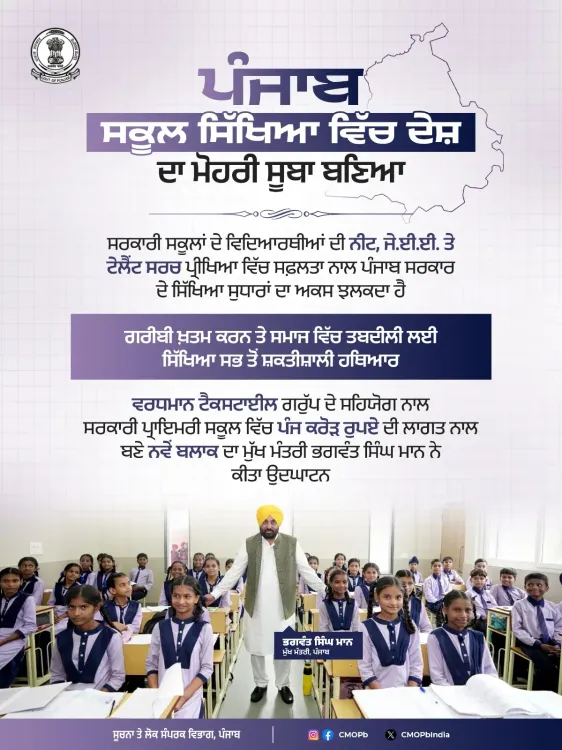
Chief Minister Bhagwant Mann inaugurated the ₹5 crore Vardhman Block at Government Primary School, Lohara, on 27 July 2026, asserting that Punjab's sustained investment in school infrastructure and teacher training has made it the country's top performer in school education, pointing to student results in NEET, JEE, and PSTSE.
Key Takeaways
₹5 crore Vardhman Block inaugurated at Government Primary School, Lohara by CM Bhagwant Singh Mann on 27 July 2026 .
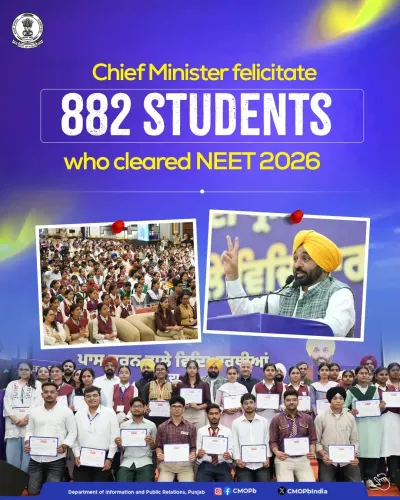
Government cited student success in NEET , JEE , and the Punjab State Talent Search Examination (PSTSE) as evidence of reform impact.
Punjab's AAP government has framed its school upgrades as modelled on the party's earlier approach in Delhi .
Three reform pillars highlighted: strengthening government schools , modernising infrastructure , and investing in teacher training .
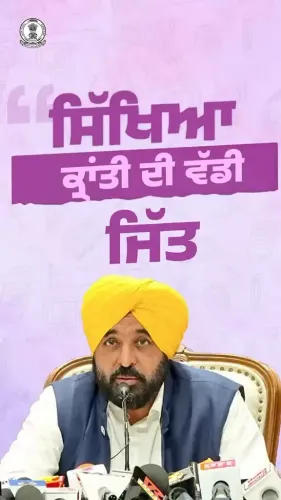
The initiative is branded under the hashtag #PunjabSikhyaKranti (Punjab Education Revolution).
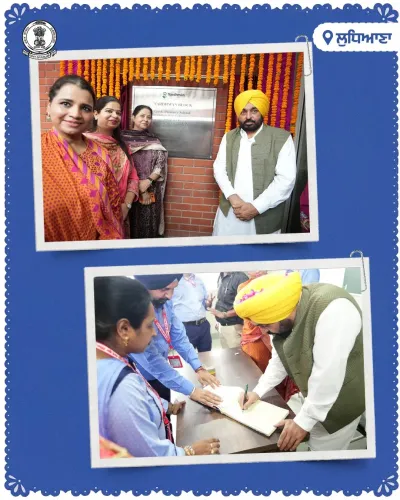
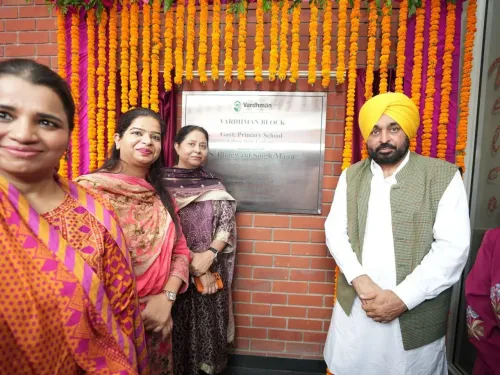
The Chief Minister's Office of Punjab announced on Monday, 27 July 2026 that Chief Minister Bhagwant Singh Mann inaugurated the ₹5 crore 'Vardhman Block' at Government Primary School, Lohara, citing the state's sustained investment in public school infrastructure, teacher training, and modernisation as the driving force behind Punjab's improved standing in school education nationally.
Context
Speaking at the inauguration, CM Mann said the government's efforts had 'transformed the state into the country's top performer in school education.' He pointed specifically to the performance of government school students in NEET (National Eligibility cum Entrance Test), JEE (Joint Entrance Examination), and the Punjab State Talent Search Examination (PSTSE) as evidence of the reforms' reach. In Punjabi, he described this as ਸਿੱਖਿਆ ਸੁਧਾਰਾਂ ਦੇ ਦੂਰਗਾਮੀ ਪ੍ਰਭਾਵ ('the far-reaching impact of education reforms').
The Vardhman Block, built at a cost of ₹5 crore, adds new physical infrastructure to Government Primary School, Lohara, a facility that now symbolises the state government's broader push to upgrade rural and semi-urban public schools.
Policy Backdrop
After winning the 2022 Punjab assembly elections, the Aam Aadmi Party (AAP) government under Mann launched a programme of government school upgrades explicitly modelled on the approach the party had pursued in Delhi. The focus areas — physical infrastructure, teacher training, and learning outcomes — mirror the framework the party used to build its education credentials in the capital.
These efforts align broadly with the National Education Policy 2020, which emphasises foundational learning, equitable access, and modernised school infrastructure across India. Punjab's use of competitive exam results as a performance benchmark reflects a wider national trend of measuring public school quality through board and entrance exam outcomes.
Stakeholders and Impact
The primary beneficiaries are government school students — particularly those from rural and lower-income families who depend on state-run institutions for access to quality education and coaching for high-stakes exams. Teachers are also central stakeholders, as the government has framed investment in teacher training as a core pillar of the reform agenda.
For families in villages around Lohara and similar areas, new infrastructure like the Vardhman Block represents tangible change: better classrooms, improved facilities, and an environment more conducive to preparing for national-level competitive examinations. The hashtag #PunjabSikhyaKranti ('Punjab Education Revolution') used in the official post signals how the government is branding this reform cycle ahead of future electoral cycles.
What's Next
The Punjab government is expected to continue rolling out similar infrastructure projects at government schools across the state. The true measure of the reform's impact will come when statewide learning outcome data and disaggregated competitive exam results — broken down by school type — are published and independently assessed. Observers will also watch whether the pace of infrastructure delivery is matched by improvements in teacher recruitment, retention, and training at scale.
Point of View
Now deploying it as a state-level brand ahead of future elections. By anchoring the narrative to NEET and JEE outcomes, the government is choosing metrics that resonate with aspirational middle- and lower-income families, the core constituency it needs to retain. However, the claim of Punjab being the 'country's top performer' in school education remains officially unverified and will face scrutiny as independent learning outcome assessments and disaggregated exam data become available. The broader pattern — infrastructure investment paired with competitive exam framing — reflects a national shift toward outcome-visibility in public education, but sustained credibility will depend on whether the numbers hold up beyond government-curated announcements.
NationPress
27 Jul 2026
Frequently Asked Questions
What is the Vardhman Block inaugurated by CM Bhagwant Mann?
The Vardhman Block is a newly constructed building at Government Primary School, Lohara, in Punjab, built at a cost of ₹5 crore as part of the state government's school infrastructure modernisation programme. It was inaugurated by Chief Minister Bhagwant Singh Mann on 27 July 2026.
Has Punjab really become the top performer in school education in India?
This claim was made by Chief Minister Bhagwant Mann at the Lohara inauguration event. The assertion is based on student performance in NEET, JEE, and the Punjab State Talent Search Examination, but an independent, nationally comparable ranking of school education performance has not been verified from official published data.
What is the Punjab State Talent Search Examination (PSTSE)?
The Punjab State Talent Search Examination (PSTSE) is a state-level competitive exam used to identify academically talented students in government schools across Punjab. The government has cited student success in this exam alongside NEET and JEE as a marker of its education reform outcomes.
What is the AAP government's education reform approach in Punjab?
The AAP government in Punjab, led by CM Bhagwant Mann since 2022, has focused on three pillars: strengthening government school infrastructure, modernising facilities, and investing in teacher training. The approach is modelled on the party's earlier school upgrade programme in Delhi.
Where is Government Primary School, Lohara?
Government Primary School, Lohara is a state-run primary school in Punjab, India. It was the site of the Vardhman Block inauguration on 27 July 2026 and serves as a showcase for the Punjab government's school infrastructure investment.