CM Mann's 'Sarkar Tuhade Dwar' brings govt services to doorstep
Synopsis
Punjab's 'Sarkar Tuhade Dwar' scheme under CM Bhagwant Mann is drawing strong public response by sending government officials to citizens' homes for certificates and services after a simple call to helpline 1076, eliminating the need for office visits.
Key Takeaways
The Chief Minister's Office of Punjab confirmed strong public uptake of the 'Sarkar Tuhade Dwar' doorstep service delivery scheme on 26 June 2026 .
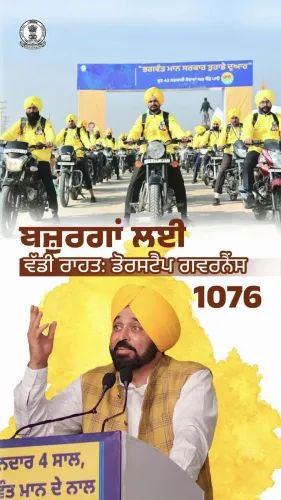
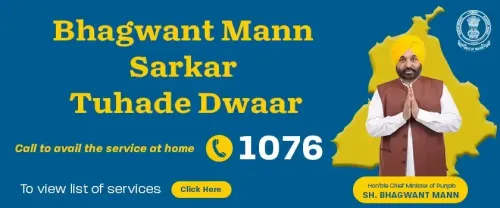
Citizens can book a home visit by calling helpline 1076 — no office visit required for certificates and other essential services.
A government official or employee then visits the applicant's residence to complete the required process on the spot.
The scheme is led by Chief Minister Bhagwant Mann and aligns with the AAP government's citizen-service reform agenda since March 2022 .
The initiative builds on the Punjab Right to Service Act, 2011 , adding a physical outreach layer to existing time-bound delivery mandates.
Rural households, the elderly, and daily-wage workers stand to benefit most by avoiding travel costs and middlemen.
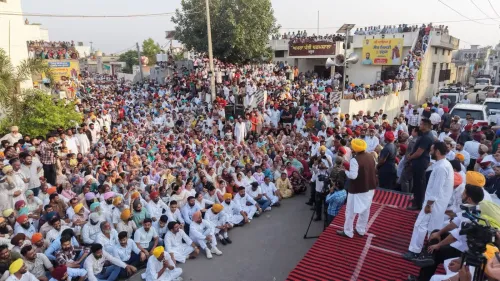
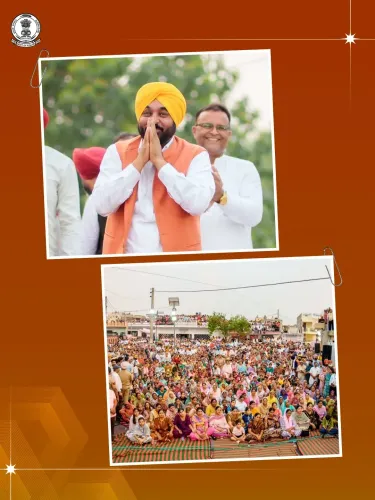
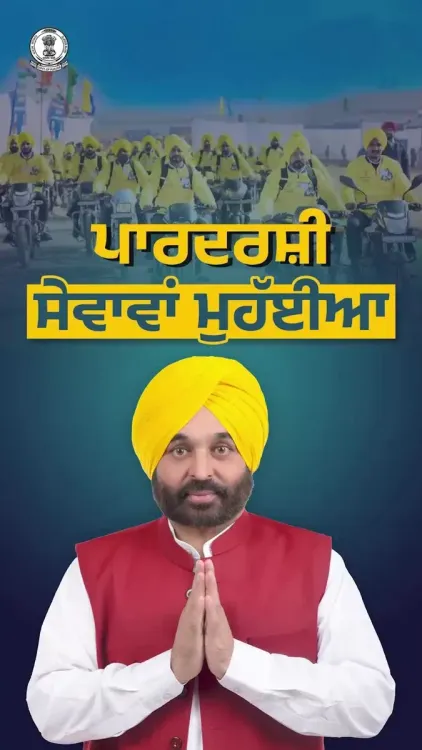
The Chief Minister's Office of Punjab announced on Friday, 26 June 2026 that the 'Sarkar Tuhade Dwar' scheme — launched under Chief Minister Bhagwant Mann to deliver government services directly to citizens' homes — is receiving an overwhelming public response across the state.
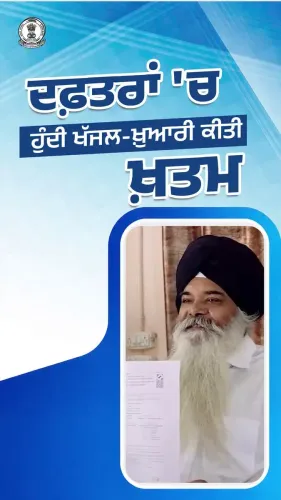
The post, shared in Punjabi, states: 'Sarkar Tuhade Dwar yojana nu bharvaan hungara mil reha hai' ('The Sarkar Tuhade Dwar scheme is receiving an enthusiastic response'). Under the initiative, residents no longer need to visit government offices for certificates and other essential services. Instead, they can call helpline number 1076 to book an appointment, after which the concerned official or government employee visits the applicant's home to complete the required process.
Context
The scheme directly targets one of the most persistent grievances among Punjab's citizens — the burden of travelling to tehsil and district offices, often multiple times, to obtain routine documents such as caste, residence, and income certificates. For rural households and daily-wage workers, each such trip means lost income and out-of-pocket travel costs. The 'Sarkar Tuhade Dwar' model eliminates that friction by reversing the direction of service delivery: the government comes to the citizen, not the other way around.
Policy Backdrop
Punjab has a legislative foundation for time-bound service delivery in the form of the Punjab Right to Service Act, 2011, which mandated defined timelines for notified government services. The current doorstep-delivery scheme builds on that framework by adding a physical outreach component — a call-centre-backed appointment system — that goes beyond the Act's original portal-and-counter model. The Aam Aadmi Party government, which came to power in March 2022, has positioned citizen-service reform as a central plank of its administration, drawing on similar models piloted in Delhi where AAP has governed for longer.
Across India, several states have adopted doorstep and call-centre models to reduce dependence on intermediaries and improve last-mile access. Punjab's version is notable for its use of a dedicated helpline (1076) rather than a purely app-based interface, which broadens reach to citizens without smartphones or reliable internet access.
Stakeholders and Impact
The primary beneficiaries are ordinary citizens — particularly those in rural Punjab, the elderly, persons with disabilities, and daily-wage earners who cannot afford repeated office visits. By removing the need for physical presence at government counters, the scheme also aims to curb the role of touts and middlemen who have historically charged informal fees to navigate bureaucratic processes. Government field staff and revenue officials are now the front-line delivery agents, visiting homes with the authority to complete documentation on the spot.
The enthusiastic public response cited by the CMO Punjab suggests strong uptake, though precise call volumes and district-wise data have not been specified in the official communication.
What's Next
Observers will watch for quarterly performance disclosures on the number of services delivered under the scheme and any expansion of the services list covered under 1076. The Punjab Assembly's next session could also see proposed amendments to the Right to Service Act to formally incorporate doorstep delivery as a statutory entitlement. The scheme's scalability — and whether staffing levels can sustain rising appointment volumes — will be the key operational test in the months ahead.
Point of View
Last-mile governance ahead of what is likely to be a competitive electoral cycle in Punjab. By anchoring the scheme on a simple phone number — 1076 — rather than a smartphone app, the administration is deliberately targeting the rural and semi-urban voter who has historically felt excluded from e-governance initiatives. The scheme also fits a broader pattern of AAP-ruled governments using doorstep delivery as a counter-narrative to allegations of administrative inertia. The real test, however, will be whether field-level staffing and accountability mechanisms can keep pace with demand as call volumes grow.
NationPress
26 Jun 2026
Frequently Asked Questions
What is the 'Sarkar Tuhade Dwar' scheme in Punjab?
'Sarkar Tuhade Dwar' is a Punjab government initiative under Chief Minister Bhagwant Mann that delivers government services — including certificates and other official documents — directly to citizens' homes, eliminating the need to visit government offices.
How do I book a home visit under Sarkar Tuhade Dwar?
Citizens can call the dedicated helpline 1076 to book an appointment. A government official or employee will then visit the applicant's home to complete the required service.
Which services are available under Punjab's doorstep delivery scheme?
The scheme covers various certificates and essential government services. The CMO Punjab has not specified the complete list in its latest communication, but the initiative is designed to cover documents that previously required office visits.
Is the Sarkar Tuhade Dwar scheme available in rural Punjab?
Yes. The scheme is designed to benefit all residents of Punjab, with particular emphasis on rural households and citizens who face difficulties travelling to tehsil or district offices.
What is the legal basis for doorstep service delivery in Punjab?
The scheme builds on the Punjab Right to Service Act, 2011, which mandated time-bound delivery of government services. The doorstep component adds a physical outreach layer to that existing framework.