Punjab CMO: 1076 Doorstep Governance Brings Relief to Elderly
Synopsis
Punjab's Chief Minister's Office says the 1076 Doorstep Governance Initiative now lets elderly residents access pensions, certificates, and land records at home by calling 1076, with a Seva Sahayak completing all paperwork on their behalf — removing the need to visit government offices.
Key Takeaways
The Chief Minister's Office of Punjab highlighted the 1076 Doorstep Governance Initiative on 16 June 2026 as a major relief measure for senior citizens.
Elderly citizens can access pensions , certificates , and land records without visiting a government office.
A single call to 1076 dispatches a Seva Sahayak (service assistant) to the citizen's home to complete all required procedures.
The scheme builds on the Punjab Right to Service Act, 2011 , which mandated time-bound delivery of government services.
The initiative aligns with the national Digital India programme's goal of last-mile service delivery.
Expansion of services under the 1076 umbrella and independent performance audits remain areas to watch.
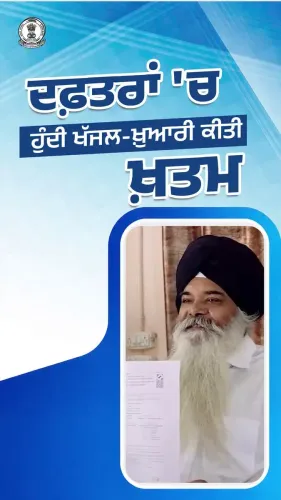
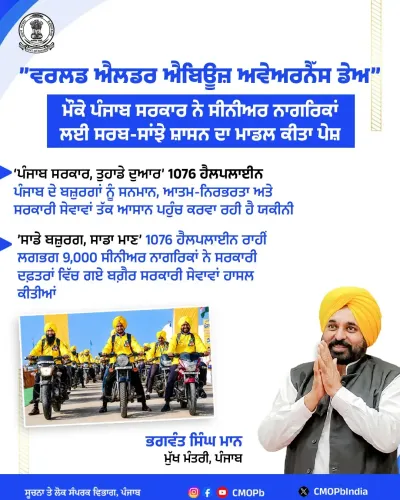
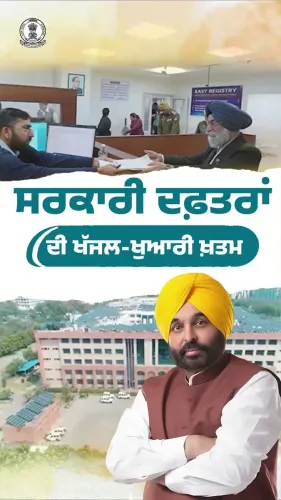
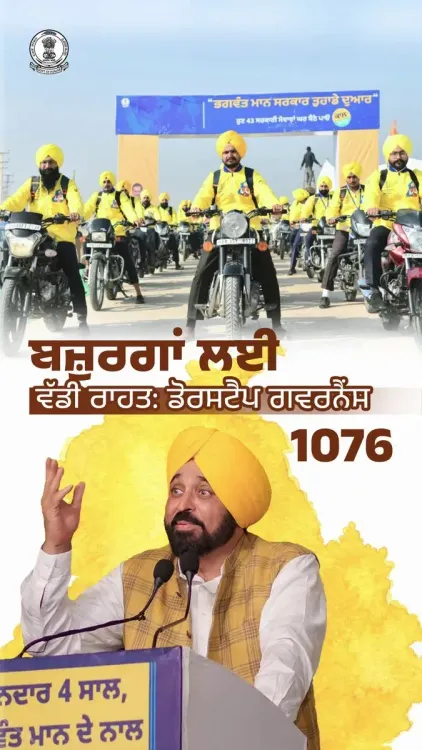
The Chief Minister's Office of Punjab announced on Tuesday, 16 June 2026 that the state government's 1076 Doorstep Governance Initiative has emerged as a major source of relief for senior citizens, enabling them to access pensions, certificates, and land records without visiting a government office.
The official post, shared in Punjabi, stated: 'ਪੰਜਾਬ ਸਰਕਾਰ ਦੀ 1076 ਡੋਰਸਟੈਪ ਗਵਰਨੈਂਸ ਪਹਿਲ ਬਜ਼ੁਰਗਾਂ ਲਈ ਵੱਡੀ ਰਾਹਤ ਬਣੀ ਹੈ।' ('Punjab government's 1076 Doorstep Governance Initiative has become a major relief for the elderly.') Under the scheme, citizens dial 1076, after which a Seva Sahayak (service assistant) visits their home and completes the entire procedure on their behalf.
Context
For elderly and mobility-impaired citizens in Punjab, routine government tasks — collecting pension entitlements, obtaining income or residence certificates, or accessing Jamabandi (land records) — have historically required multiple visits to crowded tehsil or district offices. Long queues, travel costs, and procedural complexity have long been cited as barriers to timely access to welfare entitlements, particularly in rural areas. The 1076 helpline model addresses this gap by dispatching trained field workers directly to the citizen's doorstep, removing the need for the beneficiary to navigate bureaucratic offices at all.Policy Backdrop
The initiative sits within a longer arc of service-delivery reform in the state. Punjab's Right to Service Act, 2011 mandated time-bound delivery of notified government services and established a legal framework for citizen entitlements — laying the groundwork for the doorstep extensions that followed. Across India, states have progressively adopted helpline-based and mobile delivery models since the mid-2010s, consistent with the national Digital India programme's last-mile access objectives. Punjab's 1076 model reflects this broader trend, applying it specifically to a demographic — senior citizens — that faces the steepest access barriers.Stakeholders and Impact
The primary beneficiaries are elderly pensioners and senior residents across Punjab, including those in rural and semi-urban areas where the distance to government offices is greatest. By eliminating the physical commute and paperwork burden, the scheme reduces dependence on intermediaries or family members who would otherwise accompany seniors to offices. Services covered under the initiative include old-age and social welfare pensions, income, caste, and residence certificates, and land record documents — among the most frequently accessed government services by this age group.What's Next
Attention will now turn to whether the Punjab government expands the basket of services delivered under the 1076 umbrella and whether official performance data — including call volumes, turnaround times, and beneficiary counts — are made public. Independent audits measuring uptake among senior citizens will be critical to assessing the scheme's real-world reach. If the model proves scalable, it could serve as a template for other Indian states seeking to extend last-mile governance to ageing populations.Point of View
Choosing senior citizens — a large and consistent voting bloc — as the face of its service-delivery story. The doorstep model is not unique to Punjab, but the state's emphasis on a single memorable helpline number mirrors successful communication strategies used elsewhere in India to build public awareness of welfare entitlements. What distinguishes or limits Punjab's version will ultimately be determined by verifiable uptake data and turnaround-time compliance, neither of which has yet been placed in the public domain. Until independent audits surface, the initiative's scale remains a policy promise rather than a measured outcome.
NationPress
15 Sept 2026
Frequently Asked Questions
What is Punjab's 1076 Doorstep Governance Initiative?
The 1076 Doorstep Governance Initiative is a Punjab government scheme that delivers services such as pensions, income and residence certificates, and land records directly to a citizen's home after they call the helpline number 1076, with a Seva Sahayak completing all paperwork on their behalf.
Who can use the 1076 helpline in Punjab?
The scheme is designed primarily for elderly and senior citizens in Punjab who face difficulty travelling to government offices, though the helpline is available to residents seeking the covered services.
What services are available through Punjab's 1076 doorstep service?
Services available include old-age and social welfare pensions, income, caste, and residence certificates, and land record documents such as Jamabandi.
How does the Punjab 1076 Seva Sahayak system work?
A citizen calls 1076, a trained Seva Sahayak is assigned and visits the caller's home, and the assistant completes the entire government service procedure at the doorstep, removing the need for the citizen to visit any office.
Is Punjab's doorstep governance scheme part of Digital India?
While the 1076 initiative is a state-level Punjab government programme, it aligns with the national Digital India programme's objective of last-mile delivery of government services to all citizens, including the elderly and those in rural areas.