CM Mohan Majhi Backs Integrated Bauxite-Aluminium Project for Odisha
Synopsis
Chief Minister Mohan Majhi of Odisha on 2 July 2026 announced an integrated bauxite-aluminium project covering mining, refining, smelting, and downstream production, framing it as the state's shift from raw-mineral exports to value-added industrialization under the 'Samruddha Odisha 2036' and 'Viksit Bharat 2047' visions.
Key Takeaways
CM Mohan Charan Majhi outlined an integrated project covering bauxite mining, alumina refining, aluminium smelting, a captive power plant, and downstream aluminium production.
The government's stated goal is value addition over raw mineral exports, with youth employment as the primary social objective.
The project is anchored to 'Samruddha Odisha 2036' , which marks the 100th anniversary of Odisha's formation as a separate state.
It also aligns with the national 'Viksit Bharat 2047' vision for a developed India.
NALCO , established in 1981 , provides an existing public-sector precedent for integrated bauxite-to-aluminium operations in Odisha.
Key pending steps include land acquisition, environmental clearances, financing, and partnership announcements.
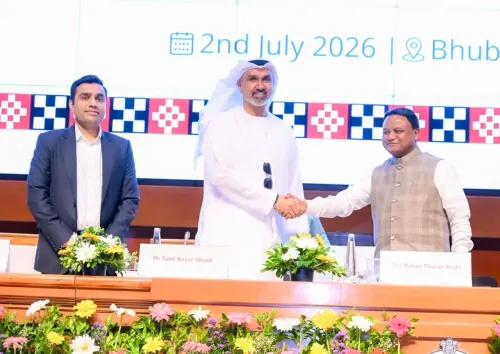
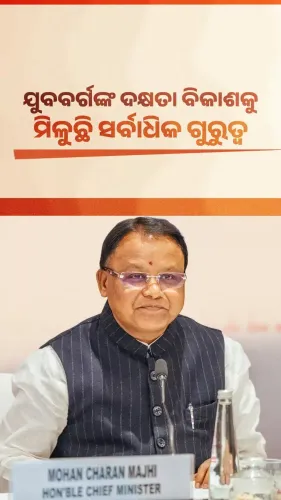
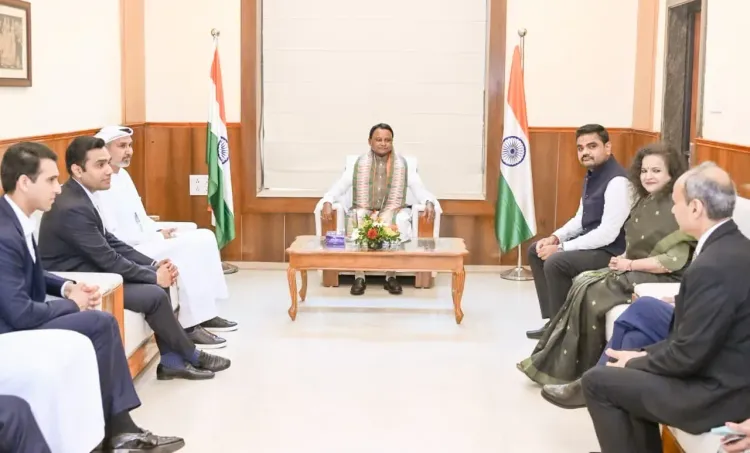
The Chief Minister's Office of Odisha on Thursday, 2 July 2026 shared remarks by Chief Minister Shri Mohan Charan Majhi at an industry event, where he outlined a large-scale integrated project spanning bauxite mining, alumina refining, aluminium smelting, a captive power plant, and downstream aluminium production alongside infrastructure development.
Context
Speaking at the event, CM Majhi described the project as a departure from Odisha's historical role as a raw-mineral exporter. 'The primary goal of the people's government is not just to export the state's mineral resources, but driving extensive industrialization through value addition to create widespread employment for the youth,' he stated. The integrated scope — from mine to finished aluminium — signals an intent to capture the full value chain within the state rather than shipping unprocessed ore.
Odisha holds some of India's largest bauxite reserves, concentrated largely in its southern and eastern districts. For decades, a significant portion of these reserves fed raw-material supply chains without generating commensurate downstream employment or fiscal returns at the state level.
Policy Backdrop
The announcement aligns with two overarching visions articulated by the Chief Minister: 'Samruddha Odisha 2036' (Samruddha Odisha 2036 — Prosperous Odisha 2036) and 'Viksit Bharat 2047' (Viksit Bharat 2047 — Developed India 2047). The 2036 target is particularly significant because it marks the 100th anniversary of Odisha's formation as a separate province, making it a centenary milestone the state government has explicitly tied to industrial transformation.
The push for value addition in minerals is not new to Odisha. The state's Industrial Policy Resolution of 2015 had already promoted downstream processing to attract higher-quality investments. At the national level, National Aluminium Company (NALCO), established in 1981, demonstrated the viability of an integrated bauxite-to-aluminium operation in the state, providing a public-sector template that private and joint-venture projects can build upon.
Stakeholders and Impact
The principal beneficiaries identified by CM Majhi are Odisha's youth, with job creation cited as the primary social objective of the integrated model. An end-to-end aluminium value chain — from mining through smelting to downstream fabrication — generates significantly more employment per tonne of ore than raw bauxite export, spanning skilled, semi-skilled, and ancillary roles.
Mineral-sector investors and infrastructure developers are the other key stakeholders. The project's scope, which includes a captive power plant and broader infrastructure development, suggests a substantial capital outlay and multi-year execution horizon. Environmental groups and communities in bauxite-bearing regions will also be closely watching land acquisition and clearance processes as the project moves toward implementation.
What's Next
Critical milestones to watch include formal announcements on land acquisition, environmental and forest clearances, financing arrangements, and any private or joint-venture partnerships for the project. The government's stated commitment to establishing Odisha as 'a leading industrial state by 2036' sets a clear political deadline, meaning project timelines and downstream unit rollouts will face heightened public and legislative scrutiny in the years ahead.
If executed at scale, the integrated bauxite-aluminium corridor could reshape Odisha's industrial profile — shifting it from a commodity-exporting economy toward a manufacturing hub aligned with national goals for self-reliant, value-added production.
Frequently Asked Questions
What is the integrated bauxite-aluminium project announced by Odisha CM Mohan Majhi?
The project covers the full aluminium value chain — bauxite mining, alumina refining, aluminium smelting, a captive power plant, and downstream aluminium production — with the goal of creating industrial jobs in Odisha rather than exporting raw bauxite.
What is 'Samruddha Odisha 2036'?
'Samruddha Odisha 2036' (Prosperous Odisha 2036) is the Odisha state government's vision to transform the state into a leading industrial economy by 2036, the year that marks the 100th anniversary of Odisha's formation as a separate province.
How does this project relate to 'Viksit Bharat 2047'?
'Viksit Bharat 2047' is the national goal of a developed India by the centenary of Independence. The Odisha government has aligned its 2036 industrial vision with this broader national framework, positioning local value-added manufacturing as a contribution to India's development targets.
Why is Odisha focusing on value addition in bauxite rather than raw exports?
Odisha holds large bauxite reserves but has historically exported raw ore, capturing limited economic value. An integrated aluminium value chain generates significantly more employment and fiscal returns per tonne than raw mineral exports, which is why successive state policies have pushed for downstream processing.
What are the key hurdles for the Odisha bauxite-aluminium project?
The main challenges include land acquisition in bauxite-bearing regions, obtaining environmental and forest clearances, securing financing, and finalising any private or joint-venture partnerships — all of which must progress on a timeline consistent with the 2036 centenary deadline.