CM Mohan Yadav Backs Modi's Crackdown on Exam Paper Leaks
Synopsis
Madhya Pradesh Chief Minister Dr. Mohan Yadav on 23 July 2026 lauded PM Modi's move to combat exam paper leaks, citing the Public Examinations (Prevention of Unfair Means) Act, 2024, and pledging stronger protection for student aspirants across India.
Key Takeaways
Mohan Yadav publicly praised PM Narendra Modi on 23 July 2026 for a decision to tighten action against examination malpractice.
The Chief Minister called the step a 'decisive strike' against paper leak networks and promised time-bound, stringent punishment for offenders.
The remarks anchor to the Public Examinations (Prevention of Unfair Means) Act, 2024 , Parliament's central law targeting organised paper leak mafias.
The Act was enacted following widespread paper leak incidents in 2023–2024 that triggered student protests and undermined trust in national exams.
Madhya Pradesh is expected to align local enforcement mechanisms with the central framework, with prosecutions and institutional reforms to watch.
The move is positioned as a confidence-building measure for lakhs of competitive exam aspirants who depend on a fair merit system.
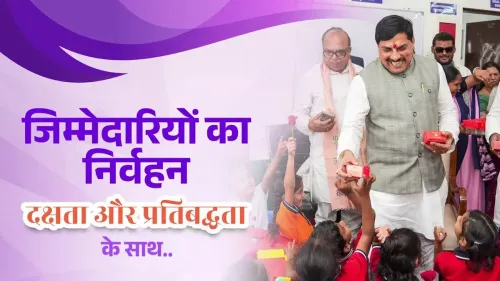
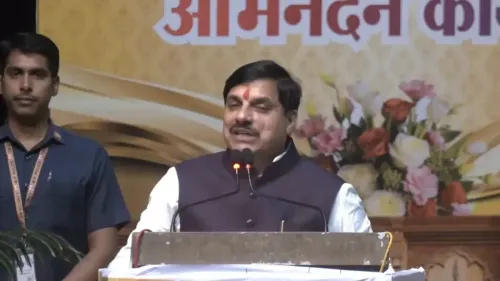
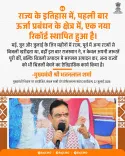
Madhya Pradesh Chief Minister Dr. Mohan Yadav on Thursday, 23 July 2026, publicly praised Prime Minister Narendra Modi for a decision aimed at strengthening the integrity of India's public examination system, calling it a decisive strike against paper leak networks and a firm commitment to protecting the futures of millions of students.
Context
In his post, Dr. Mohan Yadav wrote — 'यह निर्णय युवाओं के भविष्य की सुरक्षा के प्रति सरकार की अटूट प्रतिबद्धता का सशक्त प्रमाण है' ['This decision is a powerful proof of the government's unwavering commitment to protecting the future of youth']. He added that the step would deliver 'time-bound and stringent punishment' to those guilty of examination malpractice, and expressed heartfelt gratitude to the Prime Minister for what he called a 'far-sighted and decisive step.'
The post reflects the Madhya Pradesh government's alignment with central efforts to restore public trust in competitive examinations, a trust severely eroded by repeated paper leak incidents reported across the country in 2023 and 2024.
Policy Backdrop
The central reference point for Dr. Yadav's remarks is the Public Examinations (Prevention of Unfair Means) Act, 2024, passed by Parliament to impose strict criminal penalties for paper leaks, impersonation, and other unfair practices in public recruitment and entrance examinations. The law was a direct legislative response to high-profile exam irregularities that had sparked student protests and eroded confidence in national-level testing bodies.
Under the Act, offences related to organised paper leaks can attract imprisonment and substantial fines, targeting not just individuals but the networks — often described as 'paper leak mafias' — that profit from selling question papers. BJP-governed states, including Madhya Pradesh, have broadly signalled support for the central framework and have been expected to strengthen local enforcement mechanisms in parallel.
Stakeholders and Impact
The primary beneficiaries of tighter exam security are the lakhs of competitive exam aspirants across India who invest years of preparation for government jobs and higher education seats. Paper leaks disproportionately disadvantage students from lower-income backgrounds who rely on the merit system and cannot afford to repeat examination cycles indefinitely.
State education boards, recruitment agencies such as staff selection bodies, and university entrance authorities are all directly affected by the legislative and enforcement framework. Dr. Yadav emphasised that the measure would 'strengthen the confidence and morale of millions of talented students,' signalling that the Madhya Pradesh administration views credible examinations as a pillar of its youth welfare agenda.
What's Next
Attention will now turn to how Madhya Pradesh operationalises the central Act at the state level — including whether the government announces dedicated enforcement machinery, fast-track courts for exam fraud cases, or amendments to state-level examination rules. Any fresh prosecutions under the 2024 Act in the state will be a key indicator of follow-through. Nationally, the pattern of BJP-ruled states publicly endorsing and amplifying the Centre's anti-paper-leak stance is likely to continue as competitive examinations remain a politically sensitive issue for youth voters ahead of electoral cycles.
Point of View
Reinforcing the BJP's unified messaging on youth welfare ahead of future electoral contests. By framing the issue in moral terms — protection of meritocracy, punishment of mafias — the Chief Minister is simultaneously signalling administrative intent to Madhya Pradesh's large student population and amplifying the Prime Minister's governance narrative. The post fits a well-established pattern of BJP chief ministers using social media to visibly second central policy moves, creating a coordinated federal chorus. The real test will be whether state-level enforcement under the 2024 Act produces tangible prosecutions and institutional reforms, or remains at the level of political declaration.
NationPress
23 Jul 2026
Frequently Asked Questions
What is the Public Examinations Prevention of Unfair Means Act 2024?
The Public Examinations (Prevention of Unfair Means) Act, 2024 is a central law passed by the Indian Parliament to impose strict criminal penalties — including imprisonment and fines — for paper leaks, impersonation, and other organised malpractices in public recruitment and entrance examinations. It was enacted in response to widespread exam irregularities reported in 2023 and 2024.
Why did Madhya Pradesh CM Mohan Yadav praise PM Modi on exam paper leaks?
On 23 July 2026, CM Dr. Mohan Yadav praised PM Narendra Modi for a decision to strengthen action against exam paper leak networks, saying it demonstrated the government's unwavering commitment to protecting the futures of millions of student aspirants and would restore confidence in the examination system.
What action is India taking against paper leak mafias?
India enacted the Public Examinations (Prevention of Unfair Means) Act, 2024, which targets organised networks involved in leaking question papers, providing for time-bound and stringent punishment. BJP-governed states including Madhya Pradesh have signalled support for strengthening local enforcement under this central framework.
How does the 2024 exam malpractice law affect competitive exam students in India?
The law aims to make public examinations fairer and more credible by deterring paper leaks and impersonation. This directly benefits the lakhs of students who rely on a merit-based system for government jobs and higher education seats, and who are disproportionately harmed when exam integrity is compromised.
What will Madhya Pradesh do to implement the anti-paper-leak law?
While no specific implementation details have been confirmed, observers are watching for state-level steps such as dedicated enforcement machinery, fast-track courts for exam fraud cases, and amendments to Madhya Pradesh's own examination rules to align with the central 2024 Act.