CM Mohan Yadav Backs Modi's Seven-Power Vision on I-Day
Synopsis
On Independence Day 2026, MP Chief Minister Dr. Mohan Yadav amplified PM Narendra Modi's Red Fort address, spotlighting a seven-pillar national vision — from manufacturing and defence to green economy and soft power — signalling Bhopal's alignment with Delhi's policy agenda.
Key Takeaways
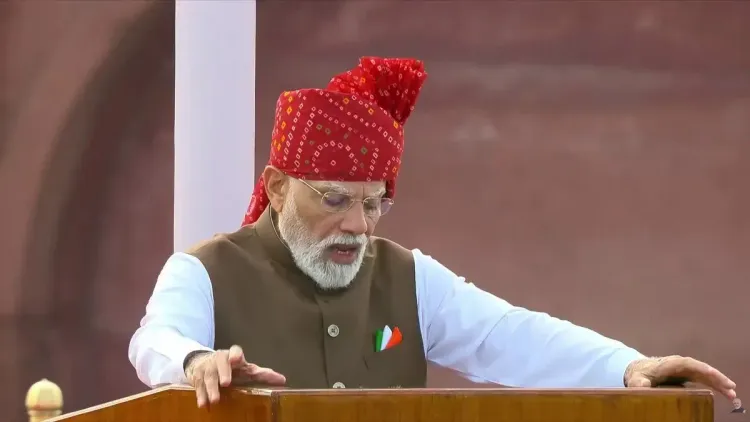
PM Narendra Modi outlined a seven-pillar 'Shakti' framework in his Independence Day 2026 address from the Red Fort .
Mohan Yadav publicly amplified the address, listing all seven pillars: Manufacturing, Agriculture and Food Processing, Technology and Innovation, Gati Shakti, Defence, Green and Blue Economy, and Soft Power.
PM Gati Shakti , launched in 2021 , is the existing multimodal infrastructure master plan underpinning the fourth pillar.
The post reflects a pattern of state-level BJP leaders aligning publicly with central government policy themes on national occasions.
Madhya Pradesh has direct policy stakes in at least four of the seven pillars, including agriculture, manufacturing, and infrastructure.
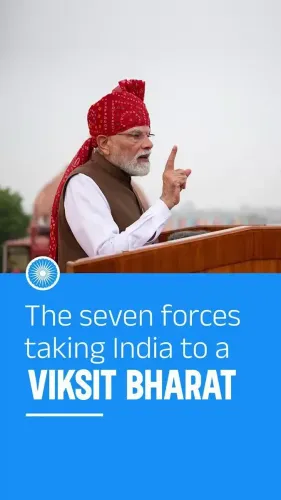
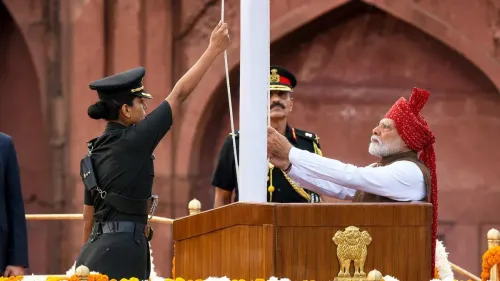
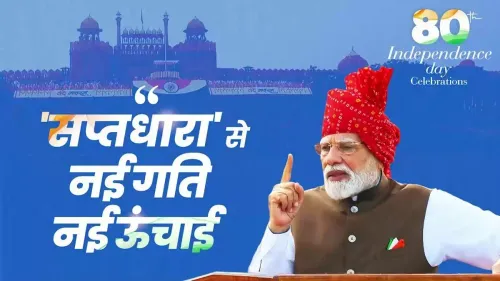
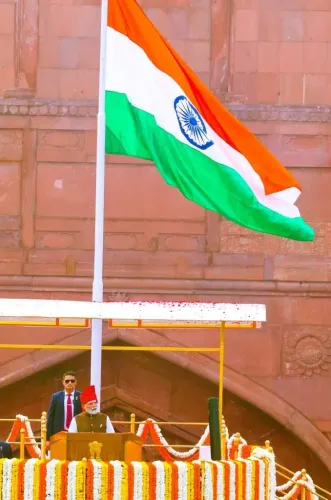
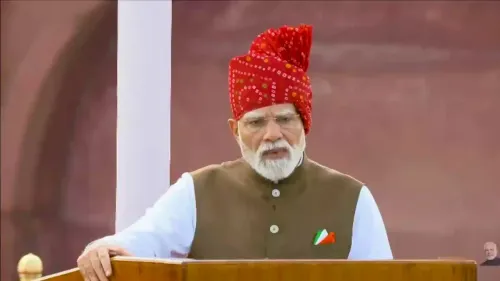
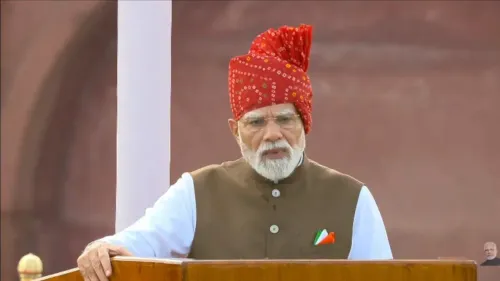
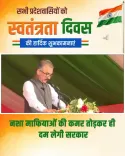
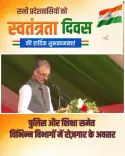
From the ramparts of the Red Fort on Independence Day, August 15, 2026, Prime Minister Narendra Modi laid out a seven-pillar framework for India's next leap — and Madhya Pradesh Chief Minister Dr. Mohan Yadav was quick to amplify every word of it, framing the address as a national call to arms across seven distinct domains of power.
Quoting the Prime Minister directly, Dr. Yadav invoked what he called the 'Shakti ki Saptadhara' — a sevenfold stream of national strength. The seven pillars: Manufacturing Power, Agriculture and Food Processing, Technology and Innovation, Gati Shakti, Defence Power, Green and Blue Economy, and Soft Power. Seven domains. One unified ambition.
What the Seven Pillars Actually Mean
The list is not decorative. Each pillar maps onto a live strand of central government policy. Manufacturing Power connects to the Production-Linked Incentive schemes that have drawn global supply chains toward India. Agriculture and Food Processing speaks directly to rural India, where farm income and value-addition remain unfinished business. Technology and Innovation signals the government's bet on semiconductors, AI, and deep-tech as the next frontier.
Gati Shakti — the National Master Plan for multimodal infrastructure, launched in 2021 — is already the connective tissue of India's logistics revolution, integrating roads, rail, ports, and airways under a single digital planning platform. Defence Power nods to indigenisation and strategic self-reliance. The twin ambitions of a Green Economy (renewables, clean energy) and a Blue Economy (maritime trade, coastal resources) round out the vision with a long-horizon ecological bet. And Soft Power — culture, diaspora, diplomacy — anchors India's global identity beyond hard metrics.
Why a State Chief Minister's Echo Matters
State chief ministers do not typically set national policy from Independence Day posts. But the signal here is federal coordination — Bhopal aligning its political vocabulary with Delhi's. Madhya Pradesh, a landlocked state with a large agrarian base and growing industrial corridors, has direct stakes in at least four of the seven pillars: manufacturing, agriculture, infrastructure, and green energy.
Dr. Yadav's post is a public statement of alignment, signalling that the state's upcoming budget sessions and policy announcements are likely to be framed around these same seven axes. In BJP's federal architecture, such synchronisation is deliberate — it builds a unified national narrative from the ground up, state by state.
Seven streams, one river. Whether the current runs deep enough to reshape India's economic geography is the question the next budget cycle will begin to answer.
Point of View
Gati Shakti, defence indigenisation, green energy targets — that have been in motion since 2014, now repackaged under a single rhetorical umbrella. For Madhya Pradesh specifically, the alignment is strategically meaningful: the state's next budget cycle and industrial policy announcements will likely invoke these same pillars as a legitimising framework. The real test of this vision lies not in the proclamation but in state-level execution and resource allocation that follows.
NationPress
15 Aug 2026
Frequently Asked Questions
What did PM Modi announce in his Independence Day 2026 Red Fort speech?
PM Narendra Modi outlined a seven-pillar national vision — Manufacturing Power, Agriculture and Food Processing, Technology and Innovation, Gati Shakti, Defence Power, Green and Blue Economy, and Soft Power — as India's roadmap for growth, as amplified by MP CM Dr. Mohan Yadav.
What is PM Gati Shakti?
PM Gati Shakti is a National Master Plan for multimodal infrastructure launched in 2021. It integrates planning across roads, railways, ports, and airways under a unified digital platform to reduce logistics costs and boost connectivity.
Why did Madhya Pradesh CM Mohan Yadav post about the Independence Day speech?
Dr. Mohan Yadav shared the post to publicly align Madhya Pradesh with PM Modi's national vision. State BJP leaders routinely echo the Prime Minister's Independence Day address to signal federal coordination and shared policy priorities.
What is India's Blue Economy policy?
India's Blue Economy refers to sustainable use of ocean resources — including maritime trade, fisheries, coastal tourism, and offshore energy — as a driver of economic growth. It is one of the seven pillars highlighted in the Independence Day address.
How does Madhya Pradesh fit into India's manufacturing and infrastructure goals?
Madhya Pradesh is a landlocked state with expanding industrial corridors and a large agrarian base, giving it direct stakes in at least four of the seven pillars: manufacturing, agriculture and food processing, infrastructure (Gati Shakti), and green energy.