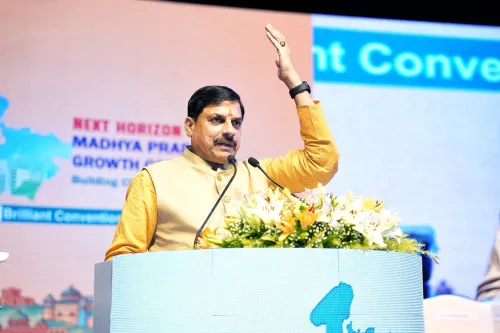
CM Mohan Yadav Drives MP Growth With 2 New Metro Areas

Synopsis
Madhya Pradesh is developing two new metropolitan regions to accelerate infrastructure, connectivity, industry, and investment, Chief Minister Dr. Mohan Yadav's office announced on 4 July 2026, extending planned urban governance beyond Bhopal and Indore.
Key Takeaways
The Chief Minister's Office of Madhya Pradesh announced two new metropolitan regions on 4 July 2026 .
Mohan Yadav and the MP Urban Development Department are driving the initiative.
The expansion aims to boost infrastructure, connectivity, industry, and investment across the state.
Metropolitan designation typically unlocks central scheme funding and higher investment norms for the designated areas.
The move builds on earlier central programmes including the Smart Cities Mission and AMRUT , which focused on Bhopal and Indore.
Formal notifications naming the two areas and their funding structures are awaited from state budget and assembly session documents.
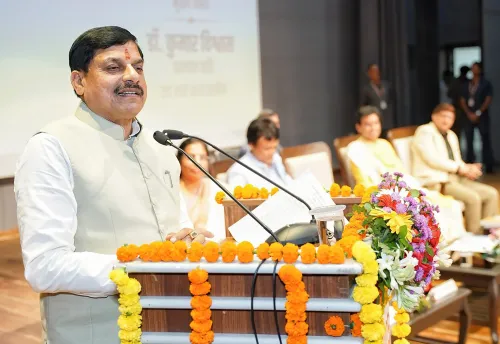
The Chief Minister's Office of Madhya Pradesh announced on Saturday, 4 July 2026 that the state is developing two new metropolitan regions, signalling a major push to accelerate infrastructure, connectivity, industry, and investment across Madhya Pradesh.
Context
The official post declared, 'Badalata Madhya Pradesh, badhata vikas' ('A changing Madhya Pradesh, growing development'), framing the metropolitan expansion as evidence of the state's transformation. The announcement was tagged to Chief Minister Dr. Mohan Yadav and the Madhya Pradesh Urban Development Department, underlining that the move carries both political and administrative weight. While the post does not name the two metropolitan areas, the declaration itself formalises an intent to extend planned urban governance to new regions beyond the state's existing major cities.Policy Backdrop
Madhya Pradesh's urban growth story has long centred on Bhopal and Indore, both of which were selected under the Smart Cities Mission (2015) for integrated infrastructure upgrades. The Atal Mission for Rejuvenation and Urban Transformation (AMRUT), also launched in 2015, channelled central funding into water, sewerage, and mobility projects across several MP cities. Designating new metropolitan regions typically unlocks higher investment norms, dedicated planning authorities, and eligibility for central scheme funding — making the announcement strategically significant for tier-2 and tier-3 cities in the state. The move aligns with a national pattern of formalising urban boundaries to support logistics corridors and industrial cluster development across central India.Stakeholders and Impact
For urban residents in the newly designated regions, metropolitan status promises improved civic infrastructure — roads, public transport, utilities, and digital connectivity. The private investment and industrial sector stands to benefit from clearer planning jurisdictions and streamlined approvals that metropolitan governance frameworks typically enable. CM Dr. Mohan Yadav, who has prioritised investment attraction since taking office in December 2023, has positioned metropolitan expansion as a vehicle to distribute economic activity more evenly across the state, reducing the concentration of growth in Indore and Bhopal alone. The Madhya Pradesh Urban Development Department will be the nodal agency responsible for translating the declaration into on-ground planning and project execution.What's Next
The immediate focus will be on formal gazette notifications naming the two metropolitan areas and specifying their boundaries, funding allocations, and governance structures. State budget documents and the next assembly session are expected to provide further detail on the financial architecture supporting these new regions. Investors and urban planners will watch for master plan timelines and infrastructure project tenders as the metropolitan declarations move from announcement to implementation. If executed at scale, the expansion could reshape Madhya Pradesh's economic geography, drawing industrial and real-estate investment toward emerging urban centres in the state's interior.Point of View
Signalling a maturing urban policy framework. Metropolitan status is not merely symbolic — it triggers planning authority formation, unlocks central funding streams, and sends a clear signal to private investors about governance readiness. This fits a broader BJP-governed state pattern of using urban administrative upgrades as a pre-investment announcement tool ahead of investor summits and state budget cycles. The real test will be how quickly the state translates the declaration into gazette notifications, master plans, and shovel-ready infrastructure projects.
NationPress
4 Jul 2026
Frequently Asked Questions
Which are the 2 new metropolitan areas declared in Madhya Pradesh?
The official announcement does not name the two metropolitan areas. Formal gazette notifications from the Madhya Pradesh Urban Development Department are expected to specify the regions and their boundaries.
What does metropolitan region status mean for a city in India?
Metropolitan region status establishes a dedicated planning authority, expands eligibility for central government scheme funding, and typically attracts higher levels of private investment by providing clearer governance and land-use frameworks.
Who announced the new metropolitan regions in Madhya Pradesh?
The announcement was made by the Chief Minister's Office of Madhya Pradesh and is associated with Chief Minister Dr. Mohan Yadav, with the Madhya Pradesh Urban Development Department as the nodal agency.
How does this relate to the Smart Cities Mission in Madhya Pradesh?
The Smart Cities Mission selected Bhopal and Indore for urban upgrades in 2015. The new metropolitan declarations extend the state's urban development ambition to additional cities beyond these two established centres.
What impact will the new metropolitan regions have on investment in Madhya Pradesh?
Metropolitan designation is expected to attract infrastructure investment, industrial clusters, and real-estate development by providing structured planning jurisdictions, streamlined approvals, and access to central government urban funding programmes.