CM Mohan Yadav Hails KJP21's Five Cubs, Cheetah Count Hits 60
Synopsis
Female cheetah KJP21 has given birth to five cubs at Kuno National Park, pushing India's total cheetah population to 60 — including 41 Indian-born animals. Madhya Pradesh CM Dr. Mohan Yadav hailed the birth as a landmark for Project Cheetah and national wildlife conservation.
Key Takeaways
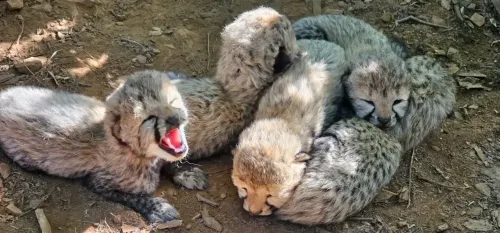
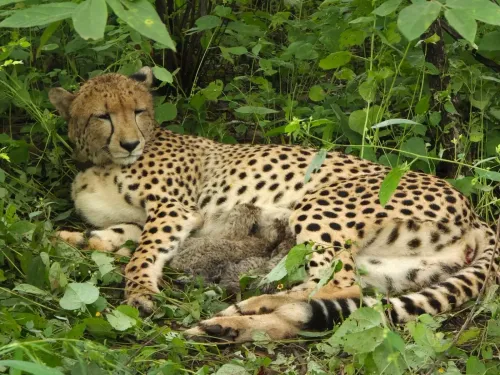
Indian-born female cheetah KJP21 delivered five healthy cubs at Kuno National Park , Madhya Pradesh.
India's total cheetah population has reached 60 , with 41 of those animals born on Indian soil.
Madhya Pradesh CM Dr.
Mohan Yadav congratulated the entire Project Cheetah and Kuno team on the milestone.
The cheetah was declared extinct in India in 1952 ; Project Cheetah began reintroductions with Namibian cheetahs in September 2022 .
KJP21 being Indian-born and successfully reproducing signals natural breeding competence in the second generation — a key conservation benchmark.
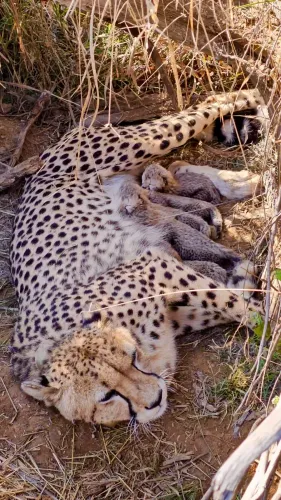
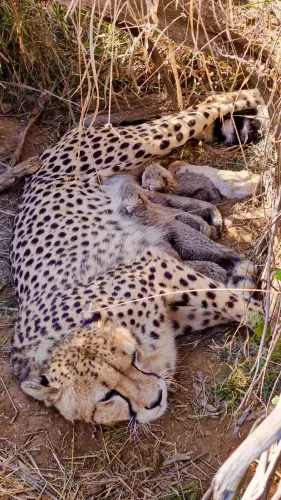
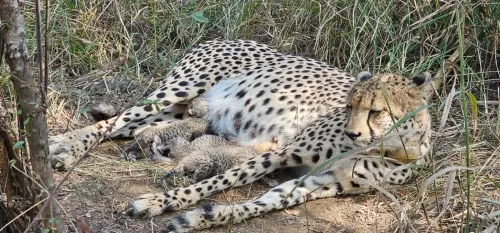
Five tiny cheetah cubs, born to an Indian-bred mother at Kuno National Park, have quietly rewritten a chapter of India's wildlife story — and Madhya Pradesh Chief Minister Dr. Mohan Yadav was among the first to mark the moment. The new litter, born to female cheetah KJP21, pushes India's total cheetah population to 60, with 41 of those animals now Indian-born.
KJP21's Five Cubs and What They Mean for the Count
The birth of five cubs to KJP21 — herself an Indian-born cheetah — is the kind of generational milestone that wildlife managers dream about. When a programme produces animals that then reproduce successfully in the same habitat, it signals more than survival: it signals genuine ecological establishment. India's cheetah population stood at zero for seven decades before Project Cheetah brought the first cohort from Namibia in September 2022. Reaching 60 individuals, with 41 born on Indian soil, is a trajectory that few reintroduction programmes achieve this early.
Chief Minister Dr. Mohan Yadav extended 'heartiest congratulations to the entire Project Cheetah and Kuno team,' calling the development 'another significant milestone in India's journey towards restoring its cheetah population and strengthening wildlife conservation.' Kuno National Park, located in Sheopur district of Madhya Pradesh, has been the primary site of the reintroduction — making the state government's stake in the programme both political and ecological.
From Extinction to 41 Indian-Born Cheetahs
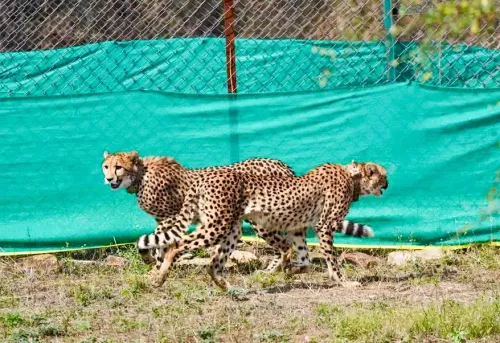
The cheetah was declared extinct in India in 1952. The species that once ranged across the subcontinent vanished due to overhunting, habitat loss, and a collapse in prey populations. Project Cheetah — a joint effort of the Union Ministry of Environment, Forest and Climate Change and the National Tiger Conservation Authority — brought 8 Namibian cheetahs in 2022, followed by a second cohort of 12 from South Africa in early 2023. The programme has faced scrutiny over mortality rates in its early phases, but a rising birth count — and particularly the emergence of a second Indian-born generation capable of reproducing — marks a clear shift in momentum.
KJP21's litter is notable because it demonstrates natural breeding competence in Indian-born animals, not just in the original imported stock. That distinction matters enormously to conservation scientists assessing whether a reintroduced population can sustain itself without ongoing imports.
Madhya Pradesh's Role at the Centre of the Project
For Madhya Pradesh — already home to more tigers than any other Indian state — the cheetah programme adds another layer to its wildlife identity. The state government has consistently positioned Kuno as a conservation showpiece, and Chief Minister Dr. Mohan Yadav's congratulatory post on Monday, 5 October 2026 underscores that political investment. A thriving cheetah corridor could eventually drive eco-tourism revenue and reinforce the state's credentials as India's wildlife heartland.
Sixty cheetahs. Forty-one of them born here. The grasslands of Kuno are no longer just a reintroduction site — they are beginning to look like home.
Point of View
Championing this milestone reinforces the party's 'development plus conservation' narrative ahead of continued federal scrutiny of India's environmental record. The 60-animal count, with 41 Indian-born, also strengthens the case for potential range expansion to secondary habitats, a policy question that wildlife managers and state governments will soon face in earnest.
NationPress
5 Oct 2026
Frequently Asked Questions
How many cheetahs are there in India now in 2026?
India's cheetah population stands at 60 as of October 2026, following the birth of five cubs to female cheetah KJP21 at Kuno National Park. Of these, 41 are Indian-born .
Who is KJP21 and why is her litter significant?
KJP21 is an Indian-born female cheetah at Kuno National Park in Madhya Pradesh. Her successful delivery of five healthy cubs is significant because it demonstrates that second-generation, Indian-born cheetahs can reproduce naturally — a key benchmark for a self-sustaining wild population.
When did Project Cheetah start in India?
Project Cheetah was launched in September 2022 when India reintroduced eight Namibian cheetahs at Kuno National Park, followed by twelve South African cheetahs in early 2023. The cheetah had been declared extinct in India in 1952 .
Where is Kuno National Park located?
Kuno National Park is located in Sheopur district of Madhya Pradesh and serves as the primary reintroduction site for India's Project Cheetah programme.
What did MP Chief Minister Mohan Yadav say about the cheetah cubs?
Madhya Pradesh Chief Minister Dr. Mohan Yadav called the birth 'another proud moment for Project Cheetah' and offered 'heartiest congratulations to the entire Project Cheetah and Kuno team,' describing it as a significant milestone in restoring India's cheetah population.