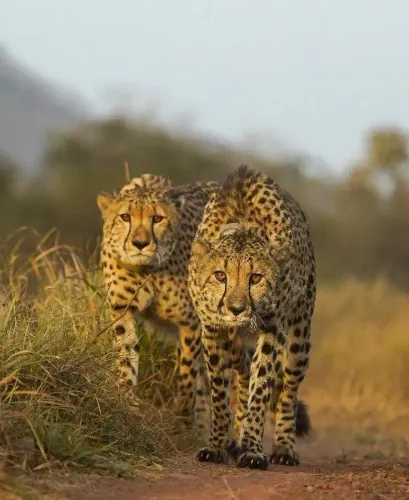
CM Mohan Yadav pitches MP as 'Cheetah State' on World Tourism Day
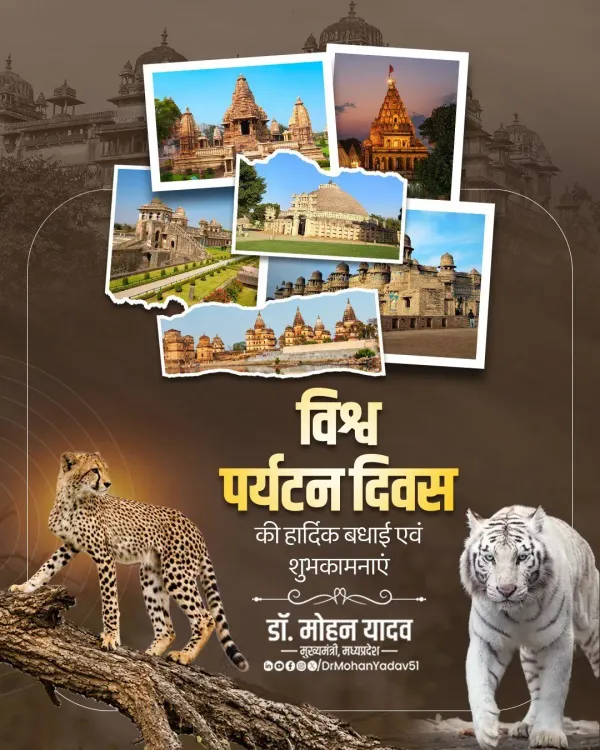
Synopsis
On World Tourism Day 2026, Madhya Pradesh Chief Minister Dr. Mohan Yadav branded his state as India's 'Cheetah State', spotlighting Project Cheetah at Kuno National Park alongside the state's wildlife reserves, spiritual landmarks, and tribal heritage to attract global tourists.
Key Takeaways
World Tourism Day (27 September) was the occasion for CM Dr.
Mohan Yadav's post pitching Madhya Pradesh as a premier tourism destination.
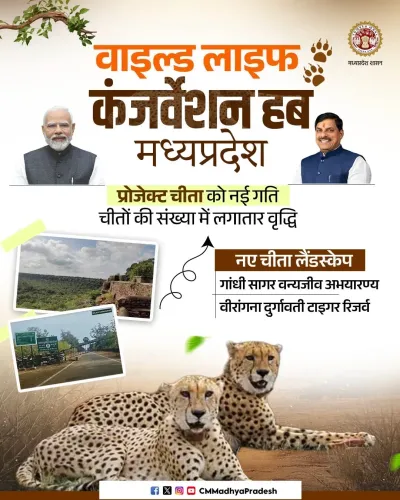
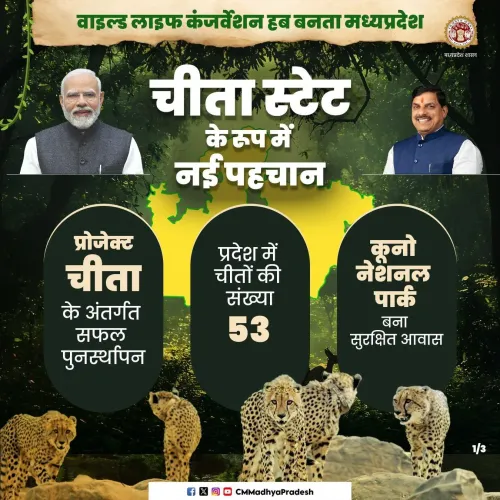
Madhya Pradesh holds the title of India's only 'Cheetah State' following the launch of Project Cheetah at Kuno National Park in 2022 .
The state's tourism identity rests on three pillars: wildlife conservation , spiritual sites (including Ujjain and Sanchi), and tribal traditions .
Madhya Pradesh has ranked among India's top states for tiger conservation for over a decade, with reserves including Bandhavgarh , Kanha , Pench , and Satpura .
Project Cheetah was the world's first intercontinental large-carnivore translocation, reintroducing cheetahs extinct in India since the 1950s .
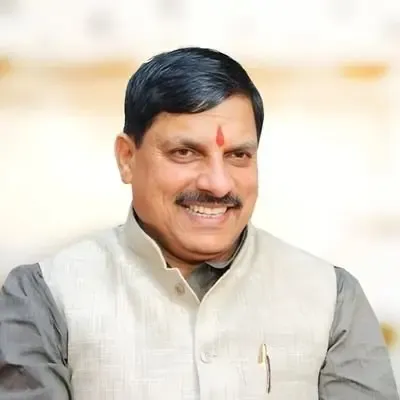
On World Tourism Day, 27 September 2026, Madhya Pradesh Chief Minister Dr. Mohan Yadav made a pointed pitch to tourists at home and abroad — positioning the state not just as a land of temples and tribal traditions, but as India's only cheetah state, a distinction earned through one of the most ambitious wildlife reintroduction projects in modern conservation history.
Posting in Hindi on the occasion, Dr. Mohan Yadav wrote: 'Vishwa Paryatan Divas ki hardik badhai evam shubhkamnayein' — 'Heartiest congratulations and best wishes on World Tourism Day.' He went on to describe Madhya Pradesh as a state that 'cherishes a rich heritage of natural beauty, spiritual sites, and tribal traditions,' and one that remains 'consistently at the forefront of wildlife conservation' — now also as a 'Cheetah State,' ready to give domestic and international tourists 'priceless memories.'
How the cheetah came back to Madhya Pradesh
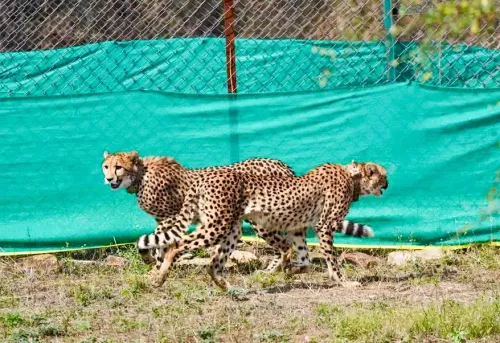
The 'Cheetah State' identity has a precise origin. In 2022, the Government of India launched Project Cheetah, the world's first intercontinental large-carnivore translocation programme, releasing the first batch of cheetahs at Kuno National Park in Madhya Pradesh's Sheopur district. The cheetah had been extinct in India since the 1950s. Kuno was chosen for its open grasslands, prey density, and minimal human encroachment — qualities Madhya Pradesh's protected-area network had preserved over decades.
Long before the cheetahs arrived, Madhya Pradesh had built a reputation as India's tiger capital, ranking among the top states in tiger numbers and wildlife management for over a decade. Reserves such as Bandhavgarh, Kanha, Pench, and Satpura have drawn wildlife tourists from across the globe. The cheetah reintroduction adds a new chapter — and a new marketing headline — to that long record.
Three pillars of a tourism identity
Dr. Yadav's message frames Madhya Pradesh's tourism appeal around three interlocking strengths. First, natural beauty and wildlife — anchored by its network of tiger reserves and now the cheetah corridor. Second, spiritual sites — the state is home to landmarks such as Ujjain, one of Hinduism's seven sacred cities, and Sanchi, a UNESCO World Heritage Buddhist monument. Third, tribal traditions — Madhya Pradesh has one of India's largest tribal populations, whose living culture, art, and festivals form a distinct eco-cultural tourism draw.
Indian states have increasingly leaned on flagship wildlife projects to sharpen their tourism identity in the post-2020 travel market. Madhya Pradesh's strategy — combining a mature protected-area network with the novelty of cheetah sightings — fits that national trend squarely, without requiring new central policy.
A World Tourism Day message with a competitive edge
World Tourism Day, observed every 27 September by the United Nations World Tourism Organization, focuses on tourism's role in economic and cultural development. For a state government, it is both a branding moment and a call to the sector. Dr. Yadav's post closes with a forward-looking note — 'taiyaar hai Madhya Pradesh', 'Madhya Pradesh is ready' — signalling that the state is actively courting visitors rather than simply marking an occasion on a calendar.
The next milestones to watch: survival and breeding data from Kuno National Park under the National Tiger Conservation Authority, and visitor-arrival figures at the state's wildlife and heritage circuits — numbers that will ultimately test whether the 'Cheetah State' brand translates into tourism revenue.
Point of View
One that threads together Madhya Pradesh's pre-existing wildlife equity with the novelty value of Project Cheetah to carve out a distinct national identity. For a BJP state government, positioning MP as an eco-tourism leader dovetails neatly with the Centre's push for heritage and nature circuits as economic multipliers. The real test will come when cheetah population data and tourist-arrival figures are made public — those numbers will determine whether 'Cheetah State' is a lasting differentiator or a temporary headline.
NationPress
27 Sept 2026
Frequently Asked Questions
Why is Madhya Pradesh called the Cheetah State?
Madhya Pradesh earned the 'Cheetah State' label after the Government of India launched Project Cheetah in 2022 , releasing cheetahs at Kuno National Park in the state — making it the only place in India where cheetahs live in the wild after the species went extinct here in the 1950s .
What is Project Cheetah and where is Kuno National Park?
Project Cheetah is the Government of India's initiative to reintroduce cheetahs to India after decades of extinction. Kuno National Park is located in the Sheopur district of Madhya Pradesh and was chosen for its grassland habitat and prey base.
What did CM Mohan Yadav say on World Tourism Day 2026?
CM Dr. Mohan Yadav extended greetings on World Tourism Day (27 September 2026) and highlighted Madhya Pradesh's natural beauty, spiritual sites, tribal traditions, and its status as a 'Cheetah State', inviting domestic and international tourists to the state.
Which famous wildlife reserves are in Madhya Pradesh?
Madhya Pradesh is home to several major tiger reserves including Bandhavgarh , Kanha , Pench , and Satpura , and has consistently ranked among India's top states for tiger conservation.
When is World Tourism Day celebrated?
World Tourism Day is observed every year on 27 September , under the aegis of the United Nations World Tourism Organization , to highlight the role of tourism in economic and cultural development.