CM Nayab Saini orders last-mile push for Haryana women's welfare schemes
Synopsis
Chief Minister Nayab Singh Saini on 25 September 2026 ordered Haryana officials to provide dedicated buildings for rented Anganwadi centres, distribute free quality sanitary pads to BPL women and girls under the Mahila Evam Kishori Samman Yojana, and install dispensing machines — backing each directive with a strict beneficiary-record mandate.
Key Takeaways
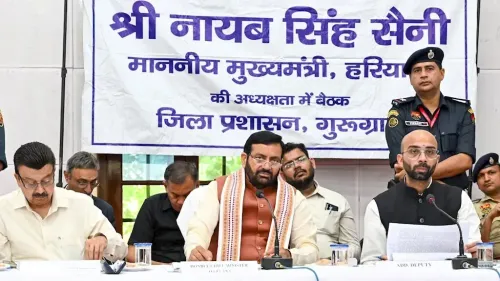
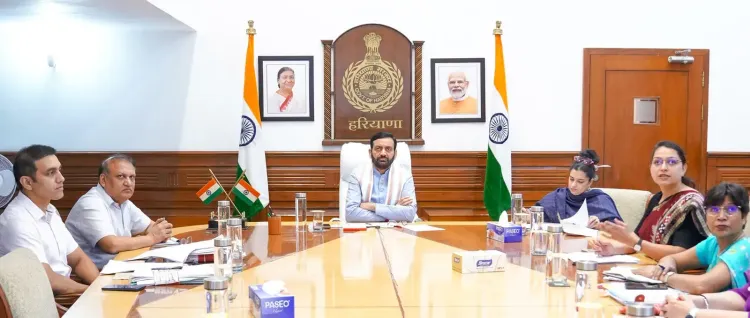
CM Nayab Saini chaired a review of the Women and Child Development Department on 25 September 2026 in Haryana.
Officials were directed to fast-track dedicated buildings for Anganwadi centres currently in rented premises, identifying available government and school land.
Under the Mahila Evam Kishori Samman Yojana , free sanitary pads must reach all eligible BPL women and adolescent girls with strict quality standards enforced.
Distribution to be channelled through Jan Aushadhi Kendras and schools in rural and urban areas, with dispensing machines installed where needed.
Proper beneficiary registration and transparent distribution records were made a mandatory accountability measure.
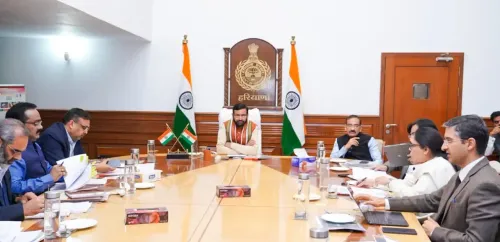
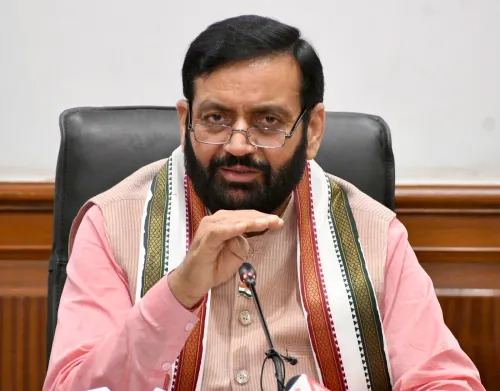
Every BPL woman and adolescent girl in Haryana should receive free, quality sanitary pads — and every Anganwadi centre still running out of a rented room should get its own building. Those were the blunt orders Chief Minister Nayab Singh Saini issued on Friday, 25 September 2026, after a top-level review of the Women and Child Development Department's schemes.
What the review directed — building by building, pad by pad
The Chief Minister's Office stated that Saini directed officials to fast-track the provision of dedicated buildings for Anganwadi centres currently operating out of rented premises — a long-standing gap in the state's grassroots welfare infrastructure. Officials were told to identify available land on government and school premises to construct new centres, treating the task as a priority rather than a routine administrative exercise.
On menstrual health, Saini reviewed the Mahila Evam Kishori Samman Yojana — Haryana's scheme for providing free sanitary napkins to eligible BPL women and girls — and ordered that quality standards be enforced strictly across all products. He asked officials to ensure proper registration of beneficiaries, maintain transparent distribution records, and guarantee availability through Jan Aushadhi Kendras and schools in both rural and urban areas.
The directive went further: wherever needed, dispensing machines are to be installed so access does not depend on a staffed counter or a fixed distribution window. The emphasis on machines signals a shift from periodic distribution drives toward always-on availability.
The infrastructure gap behind the order
Anganwadi centres, established under the national Integrated Child Development Services (ICDS) programme since 1975, are the bedrock of child nutrition and maternal health at the village level. In Haryana, a significant share of these centres still operate from rented buildings, limiting their permanence, capacity, and community trust. Shifting them to purpose-built or government-owned spaces is both a fiscal-efficiency and a service-quality argument.
The Jan Aushadhi Kendras — central government outlets that supply affordable generic medicines and health products — have become a convenient last-mile channel for sanitary pads in states that have plugged them into women-welfare pipelines. Haryana's instruction to route supply through these centres, alongside schools, reflects an attempt to use existing infrastructure rather than build parallel chains.
Delivery records and accountability as the real test
The sharpest signal from the review was the insistence on registration and distribution records. Welfare schemes that lack auditable beneficiary data routinely leak — pads don't reach girls, buildings stall in land disputes, and numbers on paper outpace reality on the ground. By making record-keeping an explicit directive, the Chief Minister's Office is, in effect, setting up a future accountability framework.
Whether district-level officials translate these instructions into measurable timelines — how many rented Anganwadi centres get land identified, how many dispensing machines get installed by when — will determine whether Friday's review becomes a course-correction or a ceremonial box-tick.
Point of View
Combining physical infrastructure targets with data-driven distribution mandates. By tying free sanitary pad delivery to auditable records and dispensing machines, the Saini administration is borrowing a page from direct-benefit transfer logic: make leakage visible and therefore correctable. The Anganwadi building directive, if backed by actual land-identification timelines, could address a structural vulnerability that has undermined ICDS delivery for decades. Together, the directives position the BJP government in Haryana ahead of a potential cycle of welfare-performance scrutiny, where delivery records — not just policy announcements — become the political currency.
NationPress
25 Sept 2026
Frequently Asked Questions
What is the Mahila Evam Kishori Samman Yojana in Haryana?
It is a Haryana state scheme that provides free sanitary napkins to eligible women and adolescent girls living below the poverty line (BPL), aimed at improving menstrual hygiene across rural and urban areas.
Why are Anganwadi centres in Haryana being moved out of rented buildings?
Many Anganwadi centres operate from rented premises, which limits their permanence and capacity. CM Nayab Saini has directed officials to identify government and school land to construct dedicated buildings, improving service stability and reducing recurring rental costs.
How will free sanitary pads be distributed to BPL women in Haryana?
CM Saini ordered distribution through Jan Aushadhi Kendras and schools in both rural and urban areas, with dispensing machines to be installed where needed, ensuring access without dependence on periodic distribution drives.
What is a Jan Aushadhi Kendra and how does it help women's health?
Jan Aushadhi Kendras are central government outlets that sell affordable generic medicines and health products, including sanitary pads. Haryana has directed these outlets to serve as distribution points under the state's menstrual hygiene initiative.
What accountability measures did CM Saini announce for welfare scheme delivery?
Saini directed officials to maintain proper beneficiary registration and transparent distribution records for sanitary pad schemes, creating an auditable trail to prevent leakage and ensure entitlements reach intended recipients.