CM Office: Bageshwar farmers gain from Vocal for Local push

Synopsis
The Uttarakhand Chief Minister's Office says farmers and rural families in remote parts of Bageshwar district are seeing income rise through collective efforts aligned with the Aatmanirbhar Bharat and Vocal for Local missions.
Key Takeaways
Bageshwar district in Uttarakhand's remote Himalayan terrain is the focal point of the state government's latest self-reliance outreach.
The Vocal for Local campaign — part of Aatmanirbhar Bharat Abhiyan launched in May 2020 — is credited with driving income gains for farmers and rural families.
The CMO highlights collective, community-driven efforts rather than individual enterprise as the mechanism of income growth.
Himalayan states have been early adopters of the self-reliance messaging, leveraging their organic farming traditions as a market advantage.
District-level income data and possible expansion of Vocal for Local infrastructure to other remote Uttarakhand districts remain the key developments to track.
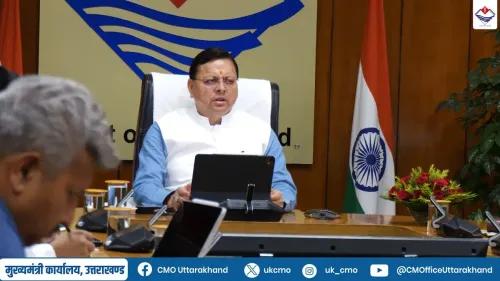
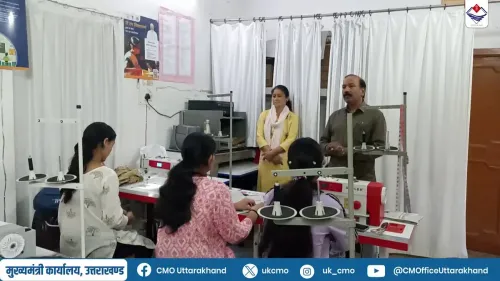
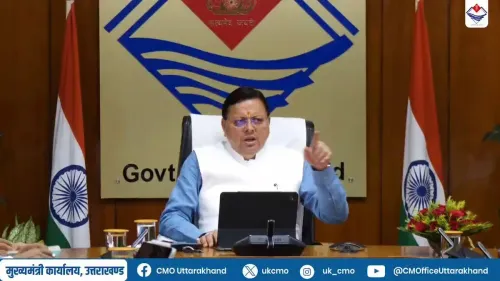
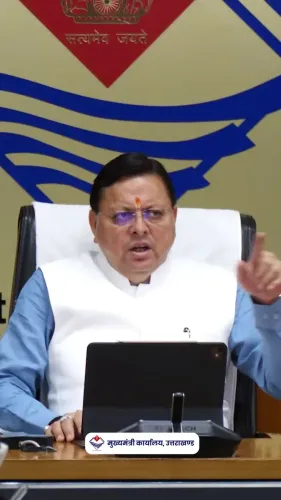
In the high-altitude villages of Bageshwar district, where roads thin out and markets feel distant, a collective push under the Aatmanirbhar Bharat and 'Vocal for Local' mission is quietly rewriting household income stories. The Chief Minister's Office of Uttarakhand highlighted on Saturday, 26 September 2026, that farmers and rural families in the district's most remote pockets are seeing income rise through community-driven agricultural efforts.
What Bageshwar's remote villages are doing differently
Bageshwar sits in the central Himalayas — a district defined by rugged terrain, scattered settlements, and an economy that has long leaned almost entirely on subsistence agriculture. The CMO's post describes saamuhik prayaas (collective efforts) as the engine of change, suggesting farmers are pooling resources, knowledge, or market access rather than working in isolation. The 'Vocal for Local' push gives that produce a demand signal: when consumers deliberately choose local goods, the price a hill farmer gets at the point of sale improves.
Aatmanirbhar Bharat reaches the Himalayan hinterland
The Aatmanirbhar Bharat Abhiyan was announced in May 2020 to fortify India's self-reliance across sectors, with agriculture and rural livelihoods placed at its centre. 'Vocal for Local' is one of its most visible consumer-facing pillars — urging Indians to favour domestically produced goods over imports or generic alternatives. Himalayan states, including Uttarakhand, adopted this messaging early, partly because their geographic isolation and organic farming traditions made local provenance a selling point rather than a liability.
Why the Uttarakhand state government is amplifying this now
State governments have increasingly used district-level success stories to demonstrate tangible delivery on national schemes. By spotlighting Bageshwar specifically — one of Uttarakhand's more remote and economically challenged districts — the CMO is making a pointed argument: that self-reliance messaging is not confined to plains-belt agribusiness, but is penetrating India's most difficult-to-reach communities. The signals to watch next are district-level income data and whether the Uttarakhand government rolls out targeted Vocal for Local infrastructure — cold chains, local market platforms, or agri-cooperatives — to other similarly remote districts in the state.
Point of View
A mountainous and economically marginal district, is deliberate: it signals that policy dividends are reaching beyond accessible plains communities. The unanswered question is whether verifiable income data will back the claim — without hard district-level numbers, the announcement functions more as political messaging than as documented development. If the state follows through with agri-cooperative or cold-chain investment in these areas, the narrative gains traction; without it, the pattern mirrors the broader challenge of translating self-reliance slogans into sustained rural income uplift.
NationPress
26 Sept 2026
Frequently Asked Questions
What is Vocal for Local and how does it help farmers?
'Vocal for Local' is a consumer-awareness campaign under the Aatmanirbhar Bharat Abhiyan that encourages Indians to buy domestically produced goods. For farmers, especially in remote areas like Bageshwar, it creates demand for local agricultural produce, which can improve the prices they receive at market.
What is the Aatmanirbhar Bharat Abhiyan?
Aatmanirbhar Bharat Abhiyan is a national self-reliance mission announced by the Prime Minister in May 2020 to reduce India's dependence on imports and boost domestic production, with a strong focus on agriculture and rural livelihoods.
Where is Bageshwar district and why is it significant?
Bageshwar is a district in the central Himalayas in Uttarakhand, characterised by remote, hilly terrain and a largely agriculture-dependent population. Its remoteness makes it a meaningful test case for whether national rural income schemes can reach the most isolated communities.
What collective efforts are farmers in Bageshwar using to raise income?
The Uttarakhand CMO's post refers to community-driven or collective efforts by farmers and rural families in Bageshwar's remote areas, though specific details of the programmes — such as cooperatives or joint marketing — have not been officially detailed in this announcement.
Is Uttarakhand expanding the Vocal for Local push to other districts?
No official announcement of expansion to other districts has been made. District-level income reports and any new Uttarakhand schemes extending Vocal for Local infrastructure to other remote Himalayan districts remain the key developments to watch.