CM Office: Haldwani women craft silk rakhis for Rakshabandhan
Synopsis
The Uttarakhand Chief Minister's Office has highlighted women artisans in Haldwani crafting handmade silk rakhis ahead of Rakshabandhan, showcasing the Vocal for Local campaign's reach into hill-district self-help groups and seasonal handicraft livelihoods.
Key Takeaways
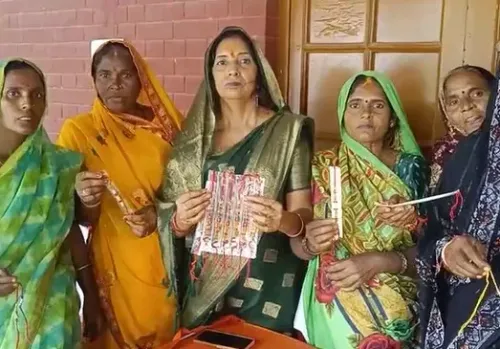
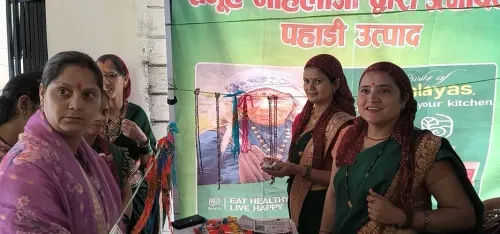
The Chief Minister's Office of Uttarakhand shared a video on 26 July 2026 featuring women from a self-help group in Haldwani making handmade silk rakhis.
The activity is framed under the Vocal for Local campaign, a core pillar of the Atmanirbhar Bharat Abhiyan launched in 2020 .
Haldwani in Nainital district serves as the commercial hub of the Kumaon region and has a tradition of silk and handloom craft.
Women's self-help groups (SHGs) are the primary vehicle for organising artisan production in Uttarakhand's hill districts.
Rakshabandhan drives peak seasonal demand for rakhis, giving SHG-produced handcrafted items a concentrated annual market window.
Sustained marketing and distribution support will be key to converting seasonal SHG activity into year-round livelihoods.
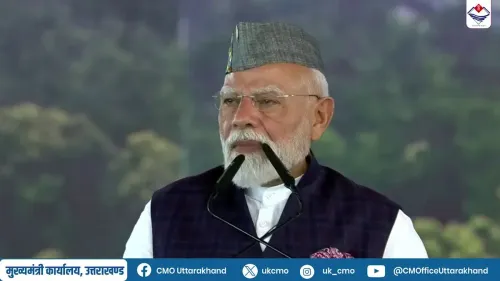
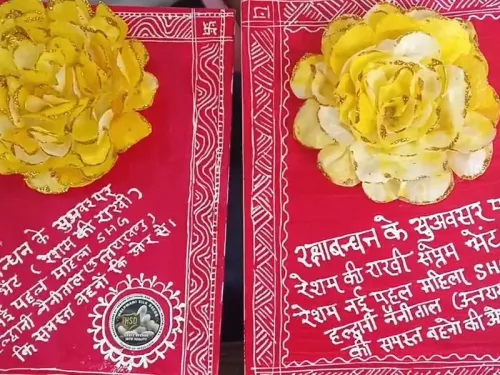
The Chief Minister's Office of Uttarakhand on Sunday, 26 July 2026, highlighted women artisans from Haldwani in Nainital district preparing handmade silk rakhis ahead of the Rakshabandhan festival, showcasing the 'Vocal for Local' campaign in action at the grassroots level.
The post, shared in Hindi, reads: 'Vocal for Local bani Haldwani ki mahilaen' — 'The women of Haldwani have embraced Vocal for Local' — noting that women from a self-help group are busy crafting handmade silk rakhis in preparation for the Rakshabandhan festival.
Context
Haldwani, the commercial nerve centre of the Kumaon region in Uttarakhand, has long been associated with traditional handloom and silk craft. The Rakshabandhan festival, which sees sisters tie protective threads on their brothers' wrists, generates significant seasonal demand for rakhis — and increasingly, consumers are seeking handcrafted alternatives to mass-produced imports.
The women featured in the CMO's post belong to a local self-help group (SHG), a model widely used across hill states to organise rural women into production and income-generating units. Their work directly taps into festival-season market demand for artisanal goods.
Policy Backdrop
The Vocal for Local campaign is a flagship plank of the Atmanirbhar Bharat Abhiyan, launched by the Government of India in 2020, which sought to strengthen domestic production chains and reduce dependence on imported goods. The initiative explicitly encouraged Indian consumers to prefer locally made products, and state governments were asked to amplify it through visible on-ground examples.
Uttarakhand has aligned its women's SHG ecosystem with this national push, using traditional crafts — particularly those tied to seasonal festivals — as vehicles for rural livelihoods. Silk rakhi production in the Kumaon hills fits squarely within this framework, combining indigenous craft knowledge with a guaranteed annual market window.
Stakeholders and Impact
The primary beneficiaries are women artisans organised under self-help groups in and around Haldwani. For these women, Rakshabandhan represents one of the most concentrated income opportunities of the year, with demand for handmade rakhis rising as buyers increasingly value authenticity and craftsmanship over cheaper machine-made alternatives.
Buyers across Nainital district and the broader Kumaon region stand to access locally produced, culturally rooted festival goods, while the state government gains a visible demonstration of its commitment to both women's economic empowerment and the Vocal for Local mandate.
What's Next
Attention will now turn to whether the Uttarakhand government expands marketing and distribution support for SHG-produced handicrafts ahead of Rakshabandhan, and whether budget provisions are made to scale silk production clusters in Kumaon. Sustained institutional backing — through procurement linkages, e-commerce platforms, and craft fairs — will determine whether this seasonal activity translates into a year-round livelihood model for women artisans in the hill districts.
Point of View
A specific craft, and a specific festival, the communication sidesteps policy jargon and lands directly with voters. The broader arc here is significant: hill states with limited industrial bases have found in women's SHGs and traditional crafts a politically and economically productive convergence point. The real test, however, lies beyond the post — whether promotional visibility translates into procurement support, fair pricing, and scalable distribution for these artisans.
NationPress
26 Jul 2026
Frequently Asked Questions
What is the Vocal for Local campaign in India?
Vocal for Local is a national initiative under the Atmanirbhar Bharat Abhiyan, launched in 2020, that encourages Indians to buy domestically produced goods to support local artisans, manufacturers, and businesses over imported alternatives.
Why are Haldwani women making silk rakhis?
Women from a self-help group in Haldwani, Uttarakhand, are preparing handmade silk rakhis ahead of the Rakshabandhan festival, leveraging the seasonal demand for artisanal rakhis while participating in the Vocal for Local campaign.
What is a self-help group (SHG) in India?
A self-help group is a community-based collective, typically of women, that pools resources and skills for income generation and economic empowerment; SHGs are widely used in rural and semi-urban India to organise artisan production and microfinance.
When is Rakshabandhan celebrated?
Rakshabandhan is an annual Hindu festival, typically falling in July or August on the full moon day of the Shravana month, during which sisters tie a protective thread called a rakhi on their brothers' wrists.
What is Haldwani known for in Uttarakhand?
Haldwani is the largest commercial city in the Kumaon division of Uttarakhand and serves as a major trade and transit hub for the hill districts; it also has a tradition of handloom and silk craft production.