CM Office: VB GRAM G Scheme Boosts Rural Jobs in Chhattisgarh
Synopsis
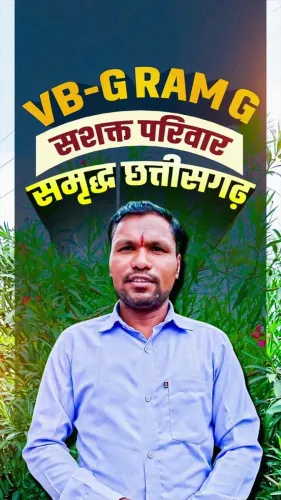
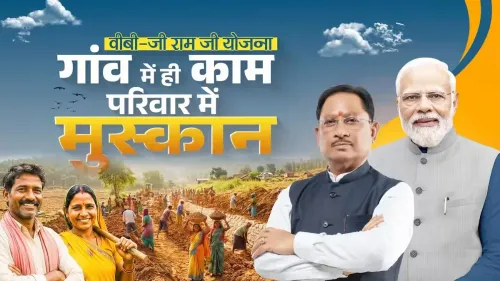
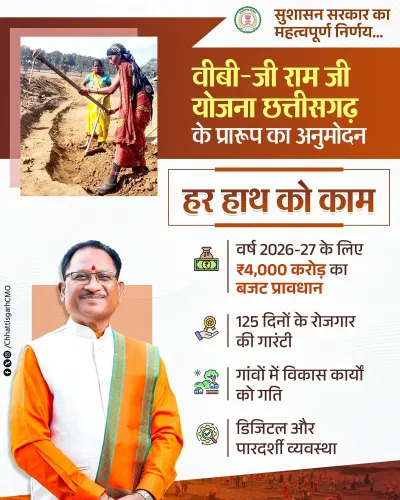
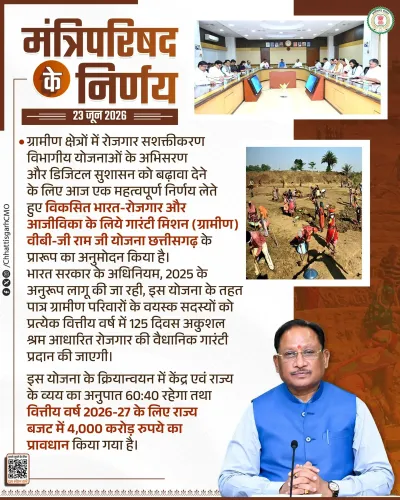
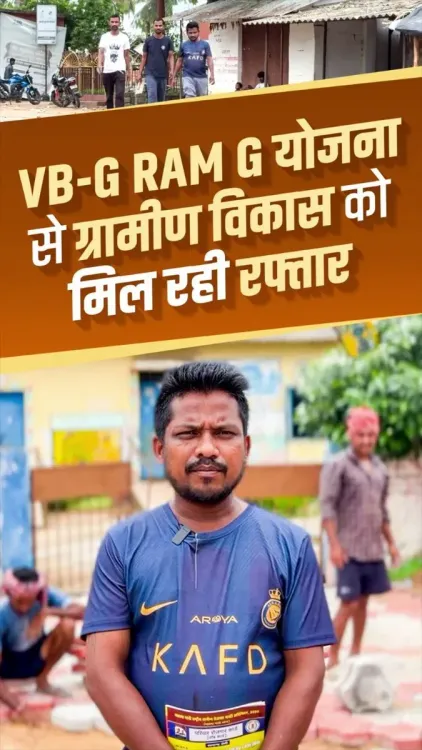
The Chief Minister's Office of Chhattisgarh says the VB GRAM G scheme is creating employment and self-reliance opportunities for rural families, with Sukma district in the Bastar division highlighted as an active area of implementation under the Viksit Chhattisgarh vision.
Key Takeaways
The Chief Minister's Office of Chhattisgarh announced on 18 July 2026 that the VB GRAM G scheme is generating new employment and self-reliance opportunities for rural families.
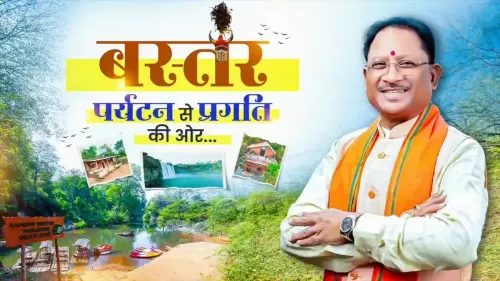
Sukma district in the Bastar division , a predominantly tribal and historically insurgency-affected region, is among the districts where the scheme is being actively promoted.
The scheme aims to connect every rural household to a 'dignified livelihood', aligning with the state's Viksit Chhattisgarh and national Viksit Bharat 2047 frameworks.
Chhattisgarh's rural livelihood programmes build on the foundation of the Mahatma Gandhi National Rural Employment Guarantee Act (MGNREGA) enacted in 2005 .
Formal budget outlays and evaluation data for VB GRAM G are yet to be publicly confirmed and may be detailed in the next state assembly session or the 2026-27 annual development plan .
The Chief Minister's Office of Chhattisgarh announced on Saturday, 18 July 2026 that the VB GRAM G scheme is generating new employment and self-reliance opportunities for rural families across the state, with a specific mention of Sukma district in the Bastar division.
Context
The CMO's post states that the scheme is creating dignified livelihoods for every household: 'हर हाथ को सम्मानजनक आजीविका से जोड़ने की दिशा में निरंतर आगे बढ़ रहा है' ('the journey continues in the direction of connecting every hand to a dignified livelihood'). The post was tagged to @SukmaDist, signalling that Sukma is among the active implementation areas for the programme. The announcement was made under the state government's #ViksitChhattisgarh and #Sushasansarkar (good governance) banners.
Policy Backdrop
Sukma is a predominantly tribal district in Chhattisgarh's Bastar division, historically affected by left-wing extremism and long identified as a priority zone for rural development and livelihood interventions. The district has been a focal point of successive state government programmes aimed at curbing seasonal migration and building local economic resilience.
The broader policy lineage traces back to the Mahatma Gandhi National Rural Employment Guarantee Act (MGNREGA), enacted in 2005, which established the legal framework for guaranteed wage employment in rural India. State-specific schemes like VB GRAM G are layered atop this foundation, targeting self-employment and entrepreneurship in addition to wage work. The Viksit Chhattisgarh vision referenced in the post mirrors the national Viksit Bharat 2047 framework, positioning the state's rural economy as central to long-term development goals.
Stakeholders and Impact
Rural families and tribal communities in districts such as Sukma are the primary beneficiaries of the VB GRAM G scheme. These communities have historically faced limited formal employment options, making state-backed livelihood programmes a critical economic lifeline. The emphasis on 'self-reliance' (aatmanirbharta) in the CMO's messaging aligns with a broader national push for economic self-sufficiency at the grassroots level.
The tagging of Sukma district specifically suggests the scheme is being actively promoted in one of Chhattisgarh's most underserved regions. Chhattisgarh governments have consistently run rural employment and self-employment programmes in the Bastar belt to address the twin pressures of insurgency and economic marginalisation.
What's Next
Formal scheme guidelines, budget outlays, and independent evaluation reports for VB GRAM G are expected to provide clarity on the programme's scale and reach. These details may be tabled during the next Chhattisgarh Legislative Assembly session or incorporated into the 2026-27 annual development plan. Continued tagging of district administrations in CMO communications suggests the rollout is being monitored at the district level, with further updates likely as implementation progresses across Bastar and other rural regions.
Point of View
A theme that has become central to the BJP-led government's political identity in Chhattisgarh since its return to power in 2023. The specific tagging of Sukma — one of the most conflict-affected and underdeveloped districts in the country — signals a deliberate effort to demonstrate state reach in areas where governance has historically been contested. This mirrors a national pattern of using targeted welfare delivery in insurgency-affected zones as both a development and a counter-insurgency tool. The absence of specific beneficiary numbers or budget figures in the announcement, however, makes independent assessment of the scheme's actual impact difficult at this stage.
NationPress
18 Jul 2026
Frequently Asked Questions
What is the VB GRAM G scheme in Chhattisgarh?
VB GRAM G is a rural livelihood and employment scheme being implemented by the Chhattisgarh government to create dignified employment and self-reliance opportunities for rural families, particularly in tribal and underserved districts.
Which districts are covered under the VB GRAM G scheme?
The Chief Minister's Office has specifically mentioned Sukma district in the Bastar division as an active area of implementation. The full list of covered districts has not been officially confirmed in this announcement.
How is VB GRAM G different from MGNREGA?
MGNREGA provides guaranteed wage employment under a central law enacted in 2005. VB GRAM G appears to be a state-specific scheme layered on top of that framework, with an added focus on self-employment and self-reliance, though detailed scheme guidelines have not been publicly released yet.
Why is Sukma district significant for rural welfare schemes?
Sukma is a predominantly tribal district in Chhattisgarh's Bastar division that has been long affected by left-wing extremism. It has been a priority zone for rural development interventions aimed at reducing economic marginalisation and seasonal migration.
What is the Viksit Chhattisgarh vision?
Viksit Chhattisgarh is the state government's development framework that aims for inclusive economic growth across the state. It is aligned with the national Viksit Bharat 2047 goal of making India a developed nation by the centenary of independence.