CM Bhupendra Patel Hails Gujarat's WWII Bond With Poland
Synopsis
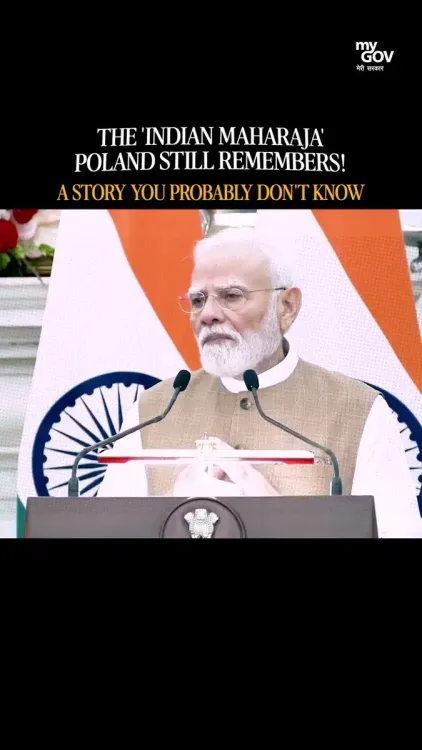
Gujarat CM Bhupendra Patel praised PM Modi for recalling how Jamnagar's Jam Sahib sheltered 640 Polish children during WWII — remembered as the 'Good Maharaja' — at a joint press meet with Polish PM Donald Tusk, highlighting the Jam Sahib Youth Exchange Programme as the living bridge between both nations.
Key Takeaways
Maharaja Jam Sahib Digvijaysinhji Ranjitsinhji Jadeja of Jamnagar sheltered approximately 640 Polish children in 1942 after their evacuation from the Soviet Union during World War II.
Poland commemorates him as the 'Good Maharaja' , a title that endures in Polish national memory more than 80 years later.
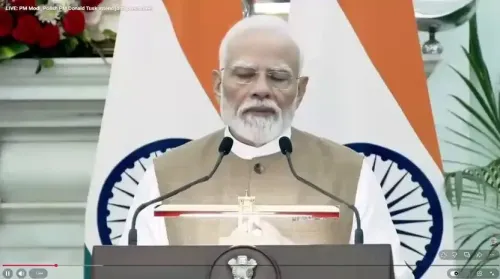
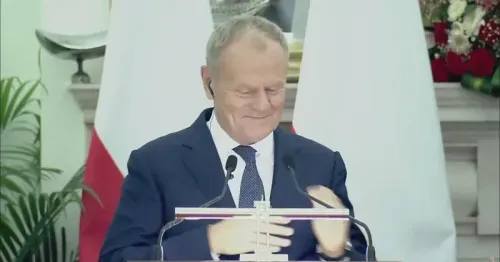
PM Narendra Modi referenced this history at a joint press meet with Polish PM Donald Tusk , grounding India–Poland diplomacy in a humanitarian legacy.
Gujarat CM Bhupendra Patel called the episode 'a matter of great pride for every Gujarati' and flagged the Jam Sahib Youth Exchange Programme as the active vehicle for continuing ties.
India and Poland have maintained formal diplomatic relations since 1950 , with the Jamnagar episode serving as a recurring people-to-people anchor at high-level engagements.
More than eight decades ago, a maharaja from Gujarat opened his doors to hundreds of desperate, war-displaced children from the other side of the world — and Poland never forgot. On Thursday, October 22, 2026, Gujarat Chief Minister Bhupendra Patel took to X to amplify a moment of remarkable diplomatic resonance: Prime Minister Narendra Modi invoking that very story during a joint press meet with Polish Prime Minister Donald Tusk, framing it as living proof of India and Poland's shared humanity.
The 'Good Maharaja' of Jamnagar and His 640 Children
The story begins in 1942, when Maharaja Jam Sahib Digvijaysinhji Ranjitsinhji Jadeja of Nawanagar sheltered approximately 640 Polish children in the princely state of Jamnagar. These children had been evacuated from the Soviet Union amid the catastrophic upheaval of World War II, stateless and thousands of miles from home. The Maharaja took them in, fed them, housed them, and gave them refuge until the war's end. Poland remembers him to this day as the 'Dobry Maharadża' — the 'Good Maharaja'.
It is one of history's quieter acts of generosity: no strategic alliance, no diplomatic obligation, just a ruler who looked at displaced children and chose compassion. That choice now anchors a bilateral relationship spanning continents and decades.
Modi and Tusk: History as Diplomatic Currency
PM Modi chose to place this episode at the heart of his public exchange with PM Donald Tusk, signalling that India–Poland friendship is not merely transactional — it has moral roots. Chief Minister Patel echoed that framing forcefully, calling it 'a matter of great pride for every Gujarati that the soil of Gujarat stood with humanity in its darkest hour.'
India and Poland established formal diplomatic relations in 1950, and high-level engagements have periodically leaned on this historical chapter to reinforce people-to-people ties. The Modi-Tusk meeting appears to be the most prominent invocation of the Jamnagar story at the summit level in recent memory.
The Jam Sahib Youth Exchange Programme Carries the Torch
The bond is not frozen in the past. The Jam Sahib Youth Exchange Programme — named in the Maharaja's honour — has institutionalised this connection, facilitating exchanges between Gujarati and Polish youth to keep the memory alive and productive. CM Patel specifically cited the programme as the living thread between the two nations' shared history and their present partnership.
Watch for implementation milestones from this programme and any bilateral agreements that may emerge from the Modi-Tusk meeting — the kind of follow-through that transforms a warm historical narrative into concrete ties.
One maharaja's act of kindness in a Gujarat princely state is now shaping twenty-first-century diplomacy. That is the kind of legacy that outlasts empires.
Point of View
And the Modi-Tusk press meet is a textbook example of that approach. By centering the Jamnagar story, New Delhi frames Gujarat — and by extension, India — as a moral actor in global history, not merely a rising economic partner. CM Patel's amplification of the moment is equally deliberate: it ties Gujarat's regional identity to India's foreign policy wins, reinforcing the state's symbolic weight in national narratives. The Jam Sahib Youth Exchange Programme is the institutional proof-point that separates rhetoric from relationship-building.
NationPress
22 Oct 2026
Frequently Asked Questions
Who was the 'Good Maharaja' of Jamnagar?
He was Maharaja Jam Sahib Digvijaysinhji Ranjitsinhji Jadeja of Nawanagar (Jamnagar), who sheltered around 640 Polish refugee children in Gujarat in 1942 during World War II. Poland still honours him with the title 'Good Maharaja' or 'Dobry Maharadża' in Polish.
Why did Polish children come to Jamnagar during World War II?
The children were evacuated from the Soviet Union during the chaos of World War II and found refuge when Maharaja Jam Sahib opened Jamnagar to them, providing shelter, food, and safety far from the frontlines of the European conflict.
What is the Jam Sahib Youth Exchange Programme?
The Jam Sahib Youth Exchange Programme is an initiative named after the Maharaja of Jamnagar that facilitates exchanges between Gujarati and Polish youth, keeping the WWII-era humanitarian bond alive and strengthening India–Poland people-to-people ties.
Why did PM Modi mention Jamnagar at the meeting with Polish PM Donald Tusk?
PM Modi invoked the story of Maharaja Jam Sahib sheltering Polish children during their joint press meet to highlight the deep historical and humanitarian roots of India–Poland friendship, beyond strategic or economic interests alone.
When did India and Poland establish diplomatic relations?
India and Poland formally established diplomatic relations in 1950, and the two countries have maintained periodic high-level engagement since then, frequently referencing the Jamnagar episode as a cornerstone of their bilateral relationship.