CM Pema Khandu Dedicates High Altitude Ayurvedic Park at Bomdir
Synopsis
Arunachal Pradesh Chief Minister Pema Khandu dedicated the High Altitude Ayurvedic Park at Bomdir in Tawang district on 21 June 2026, advancing the state's effort to harness Himalayan biodiversity for traditional medicine and rural livelihoods within India's broader AYUSH infrastructure push.
Key Takeaways
Arunachal Pradesh CM Pema Khandu dedicated the High Altitude Ayurvedic Park at Bomdir, Tawang district on 21 June 2026 .
Bomdir is a high-altitude village in Tawang district , situated in a biodiversity-rich Himalayan zone suited for medicinal plant cultivation.
The park aligns with the Ministry of AYUSH framework established in November 2014 to mainstream traditional Indian medicine systems.
Local tribal communities and Ayurveda practitioners are the primary beneficiaries, with potential for wellness tourism linkages.
The initiative may be connected with the National Medicinal Plants Board for sustained technical and financial support.
Arunachal Pradesh is part of a wider national pattern of expanding AYUSH infrastructure across Himalayan and northeastern states.
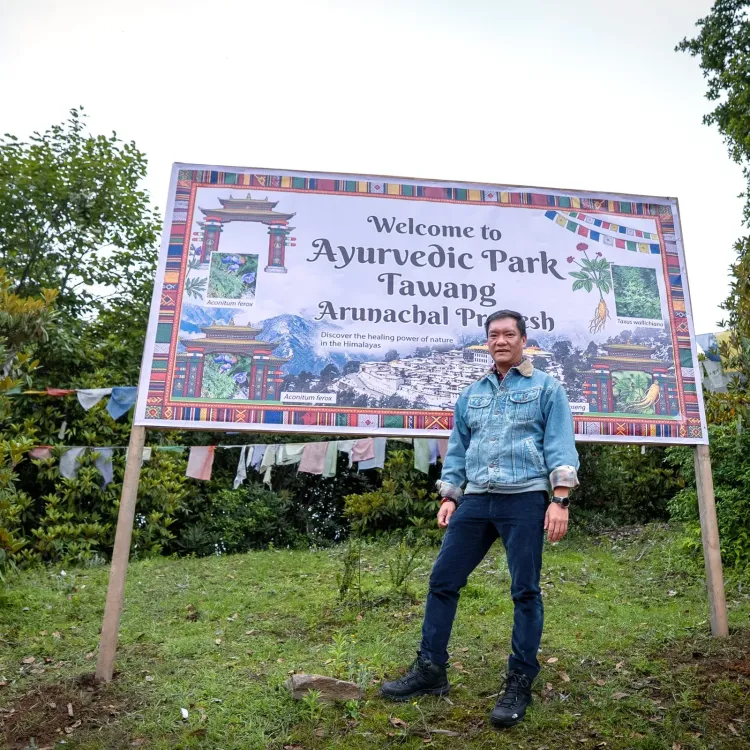
Arunachal Pradesh Chief Minister Pema Khandu on Sunday, 21 June 2026, shared further glimpses from the dedication ceremony of the High Altitude Ayurvedic Park at Bomdir, a high-altitude village in the Tawang district of Arunachal Pradesh, marking a significant step in the state's push to harness its Himalayan biodiversity for traditional medicine.
Context
Bomdir is situated in the ecologically rich upper reaches of Tawang district, a region known for its diverse Himalayan flora. The dedication of an Ayurvedic park at this altitude underscores the state government's intent to leverage the region's natural medicinal plant wealth for both public health and local livelihoods. Chief Minister Khandu shared multiple images from the event, offering a visual record of the park and its surroundings.
Policy Backdrop
The establishment of AYUSH-linked infrastructure in northeastern and Himalayan states has been a sustained national priority since the Ministry of AYUSH was constituted in November 2014 to mainstream traditional Indian systems of medicine — including Ayurveda, Yoga, Unani, Siddha, and Homeopathy. High-altitude regions like Tawang are particularly suited to medicinal plant cultivation, given their unique biodiversity and climatic conditions that support rare Himalayan herbs. Arunachal Pradesh's initiative at Bomdir fits squarely within this broader framework of integrating traditional medicine into public health delivery and rural economic development.
Across India's northeastern and Himalayan belt, such parks serve a dual purpose: preserving indigenous knowledge of plant-based medicine while creating structured ecosystems for cultivation, research, and wellness tourism. The National Medicinal Plants Board has been a key institutional anchor for such efforts at the national level, supporting states in developing medicinal plant conservation and cultivation sites.
Stakeholders and Impact
The most immediate beneficiaries of the High Altitude Ayurvedic Park at Bomdir are local tribal communities in and around Tawang district, who stand to gain from both employment opportunities and formalised access to traditional medicinal resources. Ayurveda practitioners and researchers working in the northeastern region also stand to benefit from a dedicated high-altitude site for plant study and sourcing. The park may further open pathways for wellness tourism in a district already known for its Buddhist heritage and scenic landscapes.
For the broader AYUSH ecosystem, a functional high-altitude park in Arunachal Pradesh adds a strategically located node in India's expanding network of medicinal plant infrastructure. It also signals the state government's alignment with centrally driven priorities around traditional medicine and biodiversity conservation.
What's Next
The dedication of the Bomdir park is likely to be followed by operational rollouts covering plant cultivation, visitor access, and possible linkages with Ayurveda training or certification programmes. State authorities may also seek to integrate the park with schemes under the National Medicinal Plants Board for sustained funding and technical support. As Arunachal Pradesh continues to position itself at the intersection of ecological wealth and traditional medicine, further announcements on similar high-altitude AYUSH infrastructure across the state's diverse districts can be expected.
Point of View
It reinforces a development narrative that pairs environmental stewardship with economic opportunity for tribal communities in border districts. Tawang's strategic location adds a layer of soft-power significance — cultivating traditional medicine infrastructure in a sensitive frontier zone signals both state presence and welfare commitment. The move also positions Arunachal Pradesh as a proactive participant in the national AYUSH expansion, potentially unlocking greater central funding and institutional partnerships.
NationPress
22 Jun 2026
Frequently Asked Questions
What is the High Altitude Ayurvedic Park at Bomdir?
The High Altitude Ayurvedic Park at Bomdir is a dedicated medicinal plant and Ayurveda facility situated in the high-altitude village of Bomdir in Tawang district, Arunachal Pradesh, inaugurated by Chief Minister Pema Khandu on 21 June 2026.
Where is Bomdir located in Arunachal Pradesh?
Bomdir is a high-altitude village in Tawang district, Arunachal Pradesh, located in the ecologically rich Himalayan belt of northeastern India.
What is the Ministry of AYUSH and how does it relate to this park?
The Ministry of AYUSH, established in November 2014, promotes traditional Indian medicine systems including Ayurveda. The Bomdir park aligns with its mandate to expand AYUSH infrastructure, particularly in biodiversity-rich Himalayan and northeastern regions.
Who benefits from the Ayurvedic Park at Bomdir?
Local tribal communities in and around Tawang district, Ayurveda practitioners, and researchers are the primary beneficiaries, with the park also offering potential for wellness tourism in the region.
What is the significance of a high-altitude Ayurvedic park in Tawang?
High-altitude zones like Tawang support rare Himalayan medicinal herbs that are central to Ayurveda. Establishing a dedicated park there enables structured cultivation, conservation of indigenous knowledge, and integration with national medicinal plant schemes.