CM Pema Khandu Dedicates High Altitude Ayurvedic Park at Bomdir, Tawang
Synopsis
Arunachal Pradesh CM Pema Khandu dedicated the High Altitude Ayurvedic Park at Bomdir in Tawang on June 21, 2026, integrating Ayurveda, biodiversity conservation, traditional knowledge, and sustainable eco-tourism in one of India's most biodiverse high-altitude districts.
Key Takeaways
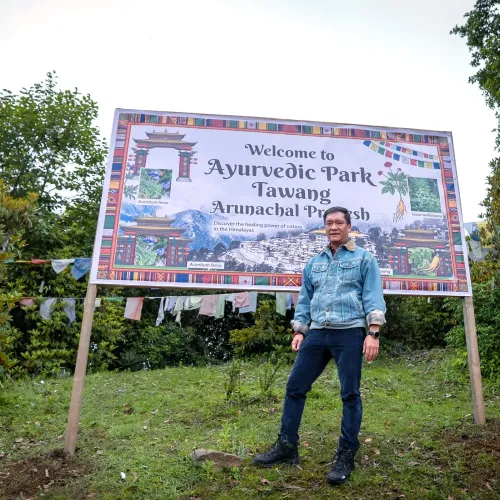
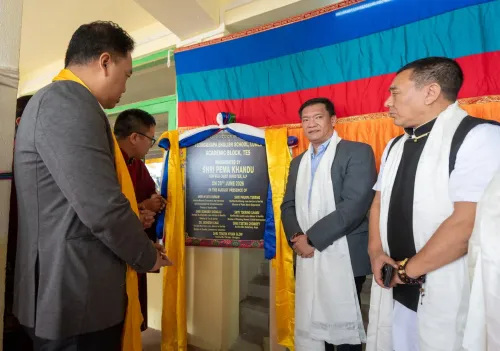
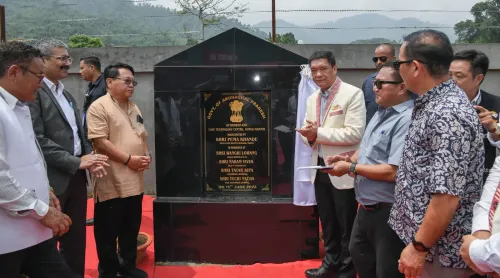
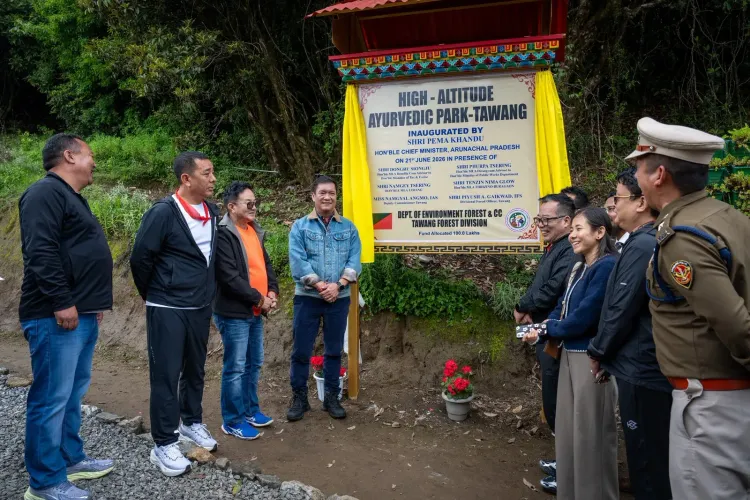
Chief Minister Pema Khandu dedicated the High Altitude Ayurvedic Park at Bomdir, Tawang to the people of Arunachal Pradesh on June 21, 2026 .
The park integrates Ayurvedic medicinal plant cultivation, biodiversity conservation, traditional knowledge, and sustainable eco-tourism.
Tawang district , bordering China and Bhutan, was chosen for its exceptional high-altitude biodiversity and cultural heritage.
The initiative aligns with the National AYUSH Mission (launched 2014) and India's Biological Diversity Act frameworks.
Primary beneficiaries include local communities, traditional healers, and eco-tourism operators in the Tawang region.
CM Khandu linked the project to the Viksit Arunachal and Viksit Bharat development vision, emphasising harmony between development and nature.
Arunachal Pradesh Chief Minister Pema Khandu on Sunday, June 21, 2026, dedicated the High Altitude Ayurvedic Park at Bomdir in Tawang district to the people of the state, describing the initiative as an investment in natural heritage and a model of development in harmony with nature.
Context
Tawang, perched at high altitude on Arunachal Pradesh's border with China and Bhutan, has long been recognised for its exceptional biodiversity and cultural richness. The Bomdir site, located within this ecologically sensitive district, now hosts a dedicated park that brings together Ayurvedic medicinal plant cultivation, biodiversity conservation, traditional knowledge systems, and sustainable eco-tourism infrastructure. Chief Minister Khandu stated that 'nature has always been Tawang's greatest strength,' framing the dedication as a generational commitment to protecting that strength.
The park represents a convergence of multiple policy priorities: promotion of Ayurveda and traditional medicine, conservation of high-altitude flora, economic upliftment of local communities, and responsible tourism development in a strategically sensitive border region.
Policy Backdrop
The initiative draws on a well-established national policy architecture. The National AYUSH Mission, launched in 2014, was specifically designed to strengthen state-level traditional medicine systems and support medicinal plant conservation programmes across India. Arunachal Pradesh, with its vast tribal areas and extraordinary plant diversity, is a natural candidate for such high-altitude medicinal plant projects.
India's Biological Diversity Act provides an additional regulatory and promotional framework for precisely this kind of initiative — one that links traditional knowledge documentation with conservation and sustainable use. Border states in the Northeast have increasingly leveraged such frameworks to anchor development projects that are ecologically grounded, aligning them with the broader Viksit Bharat and Viksit Arunachal development vision articulated by both the state and central governments.
Stakeholders and Impact
The primary beneficiaries of the High Altitude Ayurvedic Park at Bomdir are local communities in and around Tawang, including traditional healers who hold generational knowledge of high-altitude medicinal plants, and eco-tourism operators who stand to gain from a new, distinctive visitor destination. The park is positioned to create livelihoods that are tied to conservation rather than extraction, offering an economic model that reinforces ecological balance.
The dedication also carries significance for the broader Ayurveda and wellness sector. A high-altitude park in Tawang — one of India's most scenically dramatic and botanically rich districts — has the potential to attract researchers, wellness tourists, and policymakers interested in the intersection of traditional medicine and biodiversity. Chief Minister Khandu tagged Union Minister Prataprao Jadhav, who oversees the AYUSH portfolio at the Centre, signalling active coordination between the state and central governments on this initiative.
What's Next
The dedication of the Bomdir park is likely to prompt discussion about replicating the model across other high-altitude districts of Arunachal Pradesh, several of which share comparable biodiversity profiles and traditional knowledge ecosystems. Any follow-on announcements regarding central AYUSH Mission funding allocations for the state will be closely watched by conservation and wellness sector stakeholders.
For Tawang, the park adds a substantive eco-tourism anchor to a district already known for its Buddhist monasteries and dramatic Himalayan landscapes. If the model succeeds in generating community livelihoods while preserving high-altitude medicinal plant habitats, it could become a template for sustainable development across India's northeastern frontier.
Point of View
And the Northeast's growing role as India's eco-tourism and biodiversity frontier. By tagging the Union AYUSH Minister, Khandu is signalling that this is not a standalone state project but part of a coordinated federal strategy. The Tawang location adds a geopolitical subtext — investing visibly in the social and ecological fabric of a sensitive border district reinforces the state's integration with the national development narrative. If the model proves replicable, it could define a new template for sustainable border-area development across India's northeastern states.
NationPress
22 Jun 2026
Frequently Asked Questions
What is the High Altitude Ayurvedic Park at Bomdir, Tawang?
The High Altitude Ayurvedic Park at Bomdir is a new initiative in Tawang district, Arunachal Pradesh, that brings together Ayurvedic medicinal plant cultivation, biodiversity conservation, traditional knowledge systems, and sustainable eco-tourism in a single high-altitude site.
Who dedicated the Ayurvedic Park at Bomdir?
Arunachal Pradesh Chief Minister Pema Khandu dedicated the High Altitude Ayurvedic Park at Bomdir to the people of Arunachal Pradesh on June 21, 2026.
Where is Bomdir located?
Bomdir is located in Tawang district, Arunachal Pradesh, a high-altitude region bordering China and Bhutan, known for its rich biodiversity and Buddhist cultural heritage.
How does this park relate to the National AYUSH Mission?
The National AYUSH Mission, launched in 2014, supports state-level traditional medicine and medicinal plant conservation programmes. The Bomdir park aligns with this mission by promoting Ayurveda and high-altitude plant conservation in Arunachal Pradesh.
What are the benefits of the High Altitude Ayurvedic Park for local communities?
The park is expected to benefit local communities by creating livelihoods tied to conservation and eco-tourism, supporting traditional healers who hold knowledge of medicinal plants, and attracting wellness tourists and researchers to the Tawang region.