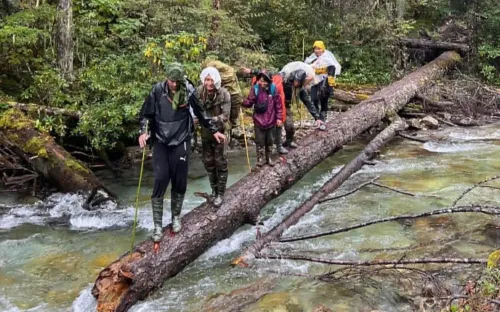
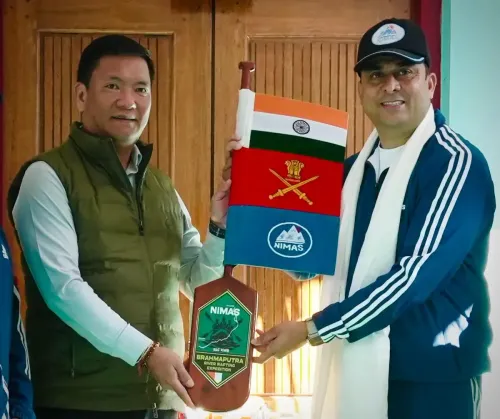
CM Pema Khandu flags off Operation Arunoday trek to Bajrang Peak
Synopsis
Arunachal Pradesh Chief Minister Pema Khandu flagged off Operation Arunoday on 27 June 2026 — a joint Indian Army-NIMAS expedition to open the high-altitude trekking route from Thingbu Village to Bajrang Peak (5,583 m), aiming to unlock frontier adventure tourism and create local livelihoods.
Key Takeaways
Operation Arunoday is a civil-military expedition jointly executed by the Indian Army and NIMAS to open a new trekking route in Arunachal Pradesh .
The route runs from Thingbu Village in Tawang district to Bajrang Peak , which stands at 5,583 metres .
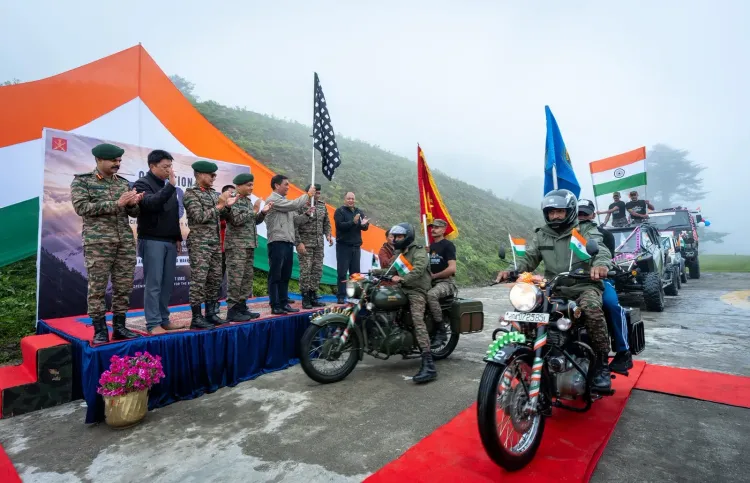
CM Pema Khandu flagged off the expedition on 27 June 2026 and cited its potential to unlock adventure tourism and benefit local communities.
The initiative aligns with the Vibrant Villages Programme (2023) , which promotes infrastructure and tourism in Arunachal's border villages.
India's dual-use approach to border regions combines military presence with regulated civilian tourism to assert visibility on the frontier.
Successful completion of the route could lead to formal designation of the corridor for regulated trekking and further frontier tourism expansion.
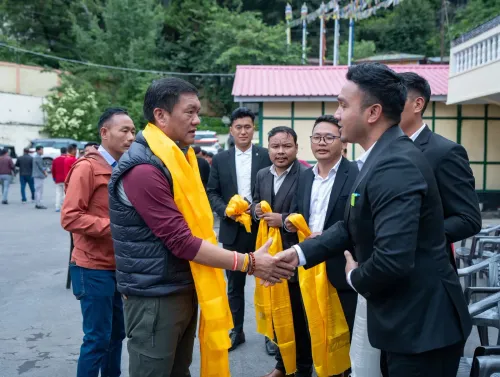
Arunachal Pradesh Chief Minister Pema Khandu on Saturday, 27 June 2026, flagged off Operation Arunoday, a civil-military expedition jointly undertaken by the Indian Army and the National Institute of Mountaineering and Allied Sports (NIMAS) to open a new trekking route from Thingbu Village to Bajrang Peak, standing at 5,583 metres, in Arunachal Pradesh.
Context
Announcing the flag-off on X, CM Khandu described the initiative as 'a unique civil-military initiative to open the trekking route from Thingbu Village to Bajrang Peak, unlocking the adventure tourism potential of Arunachal Pradesh while creating new opportunities for local communities and bringing greater visibility to our frontier.' He expressed being 'immensely happy' to have flagged off the expedition and wished the team 'a safe and successful mission.'
Thingbu Village is located in the Tawang district, one of the most strategically sensitive frontier zones in India, bordering China. The route to Bajrang Peak represents a high-altitude trekking corridor that has not previously been opened for civilian adventure tourism.
Policy Backdrop
Operation Arunoday fits within a broader policy framework that pairs security presence with economic development in India's northeastern border areas. The Vibrant Villages Programme, launched in 2023, has prioritised infrastructure and tourism development in border villages of Arunachal Pradesh to boost connectivity and local economic activity.
The Indian Army's tradition of civil engagement in frontier regions, established through programmes like Operation Sadbhavana since the 1990s, provides the institutional foundation for such civil-military collaborations. NIMAS, headquartered in Dirang, Arunachal Pradesh, has been a key institutional partner for mountaineering training and high-altitude expeditions in the Northeast, making it a natural co-executor for a route-opening mission of this nature.
India has increasingly pursued a dual-use approach in its border regions — combining military readiness with regulated tourism — as a means of asserting civilian presence and generating livelihoods in areas that have historically remained economically marginalised.
Stakeholders and Impact
The expedition is expected to benefit local communities in and around Thingbu Village by creating potential livelihoods in guided trekking, hospitality, and porter services once the route is formally opened to tourists. For the broader adventure tourism sector, a verified route to a 5,583-metre peak in a frontier zone adds a high-value destination to India's mountaineering calendar.
For the Indian Army, the initiative reinforces its role as a stakeholder in community development, complementing its operational mandate along the frontier. The participation of NIMAS lends technical credibility to the route assessment and safety protocols that will govern future civilian access.
What's Next
The immediate outcome to watch is the expedition team's successful completion of the route from Thingbu Village to Bajrang Peak, which will determine the viability of opening the corridor for regulated trekking. State and central government decisions on designating additional peaks or routes for adventure tourism in Arunachal Pradesh may follow, potentially linked to updates in India's national adventure tourism policy. Greater visibility for the frontier region, as explicitly cited by CM Khandu, also carries strategic significance in the context of India's ongoing emphasis on asserting civilian presence along its northeastern border.
Point of View
Packaged as adventure tourism. By deploying the Indian Army and NIMAS together, the state government signals that security and economic development are not competing priorities in Arunachal's border belt, but complementary ones. The initiative sits squarely within the Centre's broader Vibrant Villages Programme logic: make the frontier visible, inhabited, and economically active. If the route is formally opened, it could set a replicable template for other high-altitude frontier zones across the Northeast.
NationPress
27 Jun 2026
Frequently Asked Questions
What is Operation Arunoday in Arunachal Pradesh?
Operation Arunoday is a civil-military initiative jointly undertaken by the Indian Army and NIMAS (National Institute of Mountaineering and Allied Sports) to open a new trekking route from Thingbu Village to Bajrang Peak (5,583 m) in Arunachal Pradesh for responsible adventure tourism.
Where is Bajrang Peak located?
Bajrang Peak is a 5,583-metre summit in Arunachal Pradesh. The trekking route to it begins at Thingbu Village in the Tawang district, one of India's most sensitive frontier zones bordering China.
What is NIMAS and what is its role in Operation Arunoday?
NIMAS, or the National Institute of Mountaineering and Allied Sports, is headquartered in Dirang, Arunachal Pradesh, and is India's premier institution for mountaineering training and high-altitude expeditions. It is co-executing Operation Arunoday alongside the Indian Army to assess and open the Bajrang Peak trekking route.
How does Operation Arunoday connect to the Vibrant Villages Programme?
The Vibrant Villages Programme, launched in 2023, promotes infrastructure, connectivity, and tourism in India's border villages. Operation Arunoday directly advances these goals by opening a high-altitude trekking corridor that can generate livelihoods for communities in Tawang district.
What are the benefits of Operation Arunoday for local communities?
Once the Thingbu Village to Bajrang Peak route is formally opened, local communities stand to benefit through employment in guided trekking, porter services, and hospitality, while the region gains greater strategic visibility as a frontier destination.