CM Pema Khandu hails Usha Silai School teachers in Tawang
Synopsis
Arunachal Pradesh CM Pema Khandu congratulates freshly certified Usha Silai School teachers in Tawang, praising the vocational programme's teacher-multiplier model as a grassroots path to women's self-employment in a remote border district.
Key Takeaways
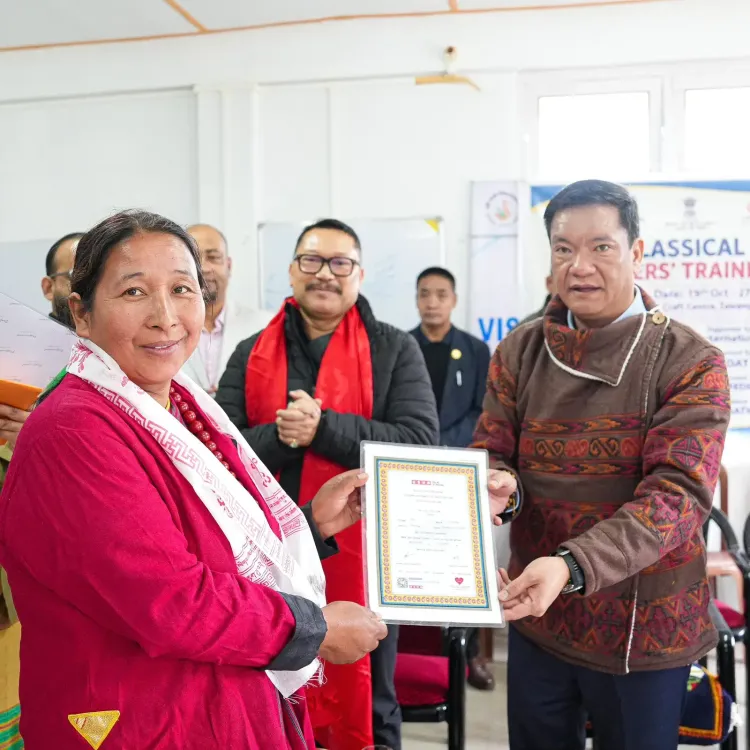
Arunachal Pradesh Chief Minister Pema Khandu congratulated newly certified Usha Silai School teachers in Tawang on 30 October 2026 .
The Usha Silai School programme, run by Usha International as a CSR initiative, trains women in sewing and embroidery and certifies them to train others in their communities.
Tawang is a remote, high-altitude border district in Arunachal Pradesh with limited economic infrastructure, making home-based skilling programmes especially significant.
The teacher-multiplier model means each certified teacher is expected to pass skills on to more women, expanding the programme's reach without proportional added cost.
The initiative aligns with national priorities for self-employment and women's economic participation in Northeast India .
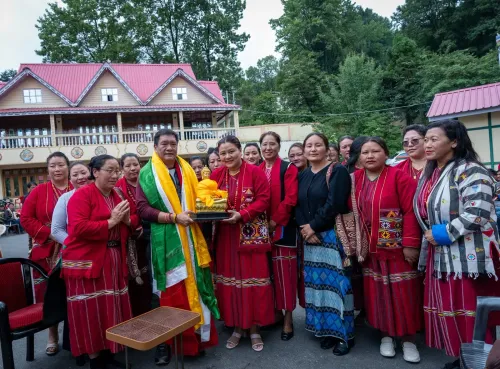
In the remote mountain district of Tawang, a quiet graduation just took place — one that trades mortarboards for needles and thread. Arunachal Pradesh Chief Minister Pema Khandu on Friday, 30 October 2026, congratulated a fresh cohort of women certified as teachers under the Usha Silai School programme, noting they are now ready to carry sewing and embroidery skills back into their own communities.
What the Usha Silai School programme does in Tawang
The Usha Silai School initiative is a long-running CSR programme by Usha International that has spent over a decade building self-employment skills among women in underserved regions across India. Its model is deliberately multiplying: train a woman, certify her as a teacher, send her home to train more women. In a district like Tawang — geographically isolated, economically limited, but rich in textile and craft traditions — that cascade effect matters.
Chief Minister Khandu described the development as 'a small step, but one with the potential to create many opportunities for women and families across Tawang.' The framing is deliberate: no grand announcement, just a steady push on grassroots livelihoods.
Tawang's place in Arunachal's border-district skilling push
Tawang sits at the intersection of two policy imperatives for Arunachal Pradesh — border-area development and women's economic participation. The state has increasingly partnered with private entities to plug the gap that government vocational infrastructure alone cannot fill in high-altitude frontier districts. Embroidery and tailoring are not just crafts here; they are scalable home-based income streams that do not require a woman to leave her village or family.
The broader national push for self-employment in the Northeast makes programmes like this a natural fit: low capital requirement, high cultural resonance, and a teacher-multiplier model that stretches every rupee of CSR investment further.
The teacher-multiplier: why certification, not just training, matters
The distinction Khandu's post draws — not just trained women, but certified teachers — points to the programme's structural ambition. Each new teacher is a node. She does not merely earn; she enables earnings for others. In communities where women often lack pathways into formal employment, that peer-to-peer skilling chain can quietly reshape household economics over a generation.
Whether the programme expands to other Arunachal districts, and whether income data eventually backs up the promise, will be the real measure of this small, determined step.
Point of View
He signals that Arunachal's development model increasingly relies on government-private partnerships to reach communities where state infrastructure alone falls short. The choice of Tawang is politically and symbolically significant — keeping frontier populations economically engaged is as much a security and integration priority as it is a welfare one. The teacher-multiplier design also insulates the initiative from the 'one-off camp' criticism that dogs many rural skill drives. If the model scales to other Arunachal districts, it could become a template for low-cost, high-reach skilling across the entire Northeast.
NationPress
30 Oct 2026
Frequently Asked Questions
What is the Usha Silai School programme?
The Usha Silai School is a CSR initiative by Usha International that has run for over a decade, training women in sewing and embroidery and certifying some as teachers who then train others in their own communities, particularly in rural and underserved areas of India.
Where in Arunachal Pradesh is the Usha Silai School programme running?
The programme is currently active in Tawang, a remote border district in Arunachal Pradesh known for its Buddhist heritage and high-altitude terrain.
What did CM Pema Khandu say about the Usha Silai School teachers in Tawang?
Chief Minister Pema Khandu called it 'a small step, but one with the potential to create many opportunities for women and families across Tawang,' and wished the newly certified teachers great success.
How does the Usha Silai School teacher-multiplier model work?
Women are first trained in sewing and embroidery skills, then certified as teachers. These certified teachers return to their own communities to train more women, creating a peer-to-peer skill chain that expands the programme's reach without large additional investment.
Why is vocational training important for women in Tawang?
Tawang is geographically isolated and economically constrained, with limited formal employment options. Home-based skills like sewing and embroidery allow women to generate income without leaving their villages, making such programmes especially impactful in the border district.