CM Pema Khandu holds talks after Hime village border incident
Synopsis
Arunachal Pradesh CM Pema Khandu convened urgent talks with AAPSU, the Galo Welfare Society, Galo Students Union and Dolok Bango Welfare Society on August 12, 2026, following a recent incident at Hime village near the Assam border, prioritising dialogue and early restoration of normalcy.
Key Takeaways
CM Pema Khandu held discussions on August 12, 2026 following a recent incident at Hime village , near the Arunachal Pradesh–Assam border.
Participants included the All Arunachal Pradesh Students' Union (AAPSU) , Galo Welfare Society , Galo Students Union , and Dolok Bango Welfare Society .
The stated priorities are facilitating dialogue, restoring normalcy, maintaining peace, and upholding mutual trust.
Hime village lies along the long-disputed Arunachal Pradesh–Assam inter-state boundary, where land and jurisdictional tensions have historically flared.
The government's approach — engaging apex student bodies and tribal welfare groups — follows the established Northeast model of community-led de-escalation.
Any follow-up joint statement or border peace mechanism between the two state governments will be the key indicator of whether de-escalation is holding.
A border village near the Assam frontier has put Arunachal Pradesh's inter-state fault lines back in the spotlight. Arunachal Pradesh Chief Minister Pema Khandu on Wednesday, August 12, 2026, convened discussions with key community and student organisations following a recent incident at Hime village, situated close to the Assam border.
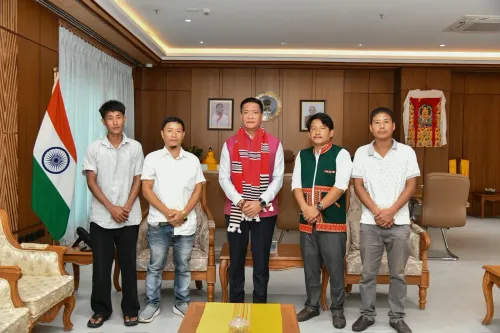
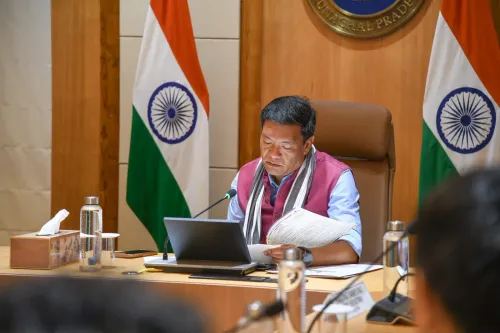
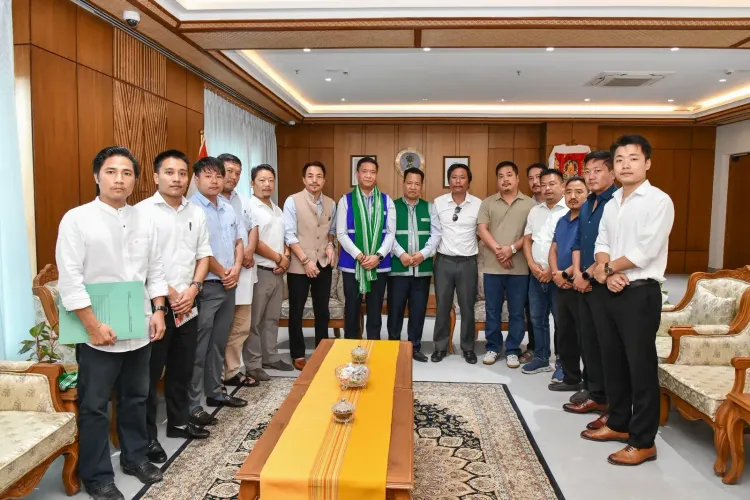
Khandu met representatives of the All Arunachal Pradesh Students' Union (AAPSU), the Galo Welfare Society, the Galo Students Union, and the Dolok Bango Welfare Society. 'The priority is to facilitate dialogue, and restore normalcy at the earliest,' Khandu stated, adding that all concerned stakeholders are being engaged to 'maintain peace, and uphold mutual trust.'
Hime village and the Arunachal-Assam border fault line
Hime village sits along one of the most contested stretches of the Arunachal Pradesh–Assam inter-state boundary — a boundary whose precise demarcation has remained disputed for decades. The two states share a long frontier where overlapping land claims, jurisdictional ambiguity, and community grievances have periodically flared into local tensions. Incidents in such border villages carry outsized risk: what begins as a local dispute can quickly mobilise tribal welfare networks and student unions across the region. The nature and immediate trigger of the Hime village incident have not been officially detailed, but the speed with which Khandu convened a multi-stakeholder meeting signals that the state government is treating the situation as requiring urgent de-escalation.Why AAPSU and Galo bodies are at the table
Bringing in AAPSU — the apex student union that has historically been a first responder on issues of indigenous rights and border security — alongside Galo community organisations is a deliberate choice. The Galo tribe is one of the major ethnic communities in the central Arunachal districts that border Assam, and the Galo Welfare Society, Galo Students Union, and Dolok Bango Welfare Society together represent a broad cross-section of community leadership in the affected area. This approach — engaging apex student bodies and tribal welfare groups before reaching for administrative or law-enforcement levers — is the established Northeast playbook for containing inter-community and inter-state border flare-ups. It prioritises community ownership of peace over top-down imposition, and it has historically helped prevent localised incidents from hardening into prolonged stand-offs.What the coming days will reveal
The immediate test is whether the dialogue framework Khandu has initiated produces a joint statement or a concrete peace mechanism between the two state governments. Any follow-up meeting between Arunachal Pradesh and Assam administrations — or a formal agreement on border peace committees — would signal that the de-escalation is holding. Until then, the situation at Hime village remains one to watch closely. A Chief Minister at the table with students and welfare societies is a signal, not a solution — the real measure will be what comes out of the next meeting.Point of View
Where community grievances can rapidly escalate into state-level confrontations. The inclusion of AAPSU alongside Galo-specific bodies signals an effort to build consensus at both the pan-state student level and the directly affected community level simultaneously. This twin-track engagement is consistent with the BJP-led state government's broader posture of projecting stability in a frontier state that carries significant strategic weight. The real test of Khandu's intervention will come if and when Arunachal and Assam governments sit together to formalise any border peace arrangement.
NationPress
12 Aug 2026
Frequently Asked Questions
What happened at Hime village near the Assam border?
A recent incident at Hime village, a border settlement near the Arunachal Pradesh–Assam inter-state boundary, prompted CM Pema Khandu to convene urgent talks with community and student organisations. The precise nature and trigger of the incident have not been officially detailed.
Who did Pema Khandu meet regarding the Hime village incident?
CM Pema Khandu met representatives of the All Arunachal Pradesh Students' Union (AAPSU), the Galo Welfare Society, the Galo Students Union, and the Dolok Bango Welfare Society on August 12, 2026.
What is the Arunachal Pradesh–Assam border dispute?
Arunachal Pradesh and Assam share a long-disputed inter-state boundary where overlapping land claims and jurisdictional ambiguities have led to periodic local tensions. The dispute covers multiple sectors and has remained unresolved across successive state governments.
What is AAPSU and why is it involved?
The All Arunachal Pradesh Students' Union (AAPSU) is the apex state-wide student body that frequently engages with the government on indigenous rights, border security, and state autonomy. Its inclusion in talks signals the government's intent to build broad community consensus for de-escalation.
What is the Galo tribe's connection to the Hime village incident?
The Galo tribe is one of the major ethnic communities in central Arunachal Pradesh districts that border Assam. The Galo Welfare Society, Galo Students Union, and Dolok Bango Welfare Society — all representing Galo community interests — were among the organisations consulted by CM Khandu.