CM Pinarayi flags constitutional breach in Kerala PSC removal bid
Synopsis
Kerala CM Pinarayi Vijayan has raised constitutional alarm over reports that the outgoing Governor recommended removing the PSC Chairman and dissolving the Commission, arguing only the Supreme Court can authorise such removal under Article 317, and demanding the UDF opposition take a clear stand.
Key Takeaways
Kerala CM Pinarayi Vijayan flagged media reports of the outgoing Governor recommending removal of the Kerala PSC Chairman and dissolution of the Commission.
Article 317 of the Constitution mandates that a PSC Chairman or member can be removed only after the Supreme Court conducts an inquiry and recommends removal — no gubernatorial shortcut exists.
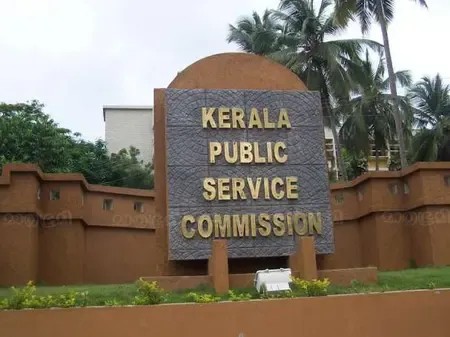
The Kerala Public Service Commission is a constitutional body under Articles 315–323 that oversees state civil service recruitment.
Vijayan accused the move of serving the BJP's political agenda and alleged misuse of Lok Bhavan for partisan purposes.
The CM called on the United Democratic Front (UDF) to publicly and unequivocally oppose any bypass of constitutional procedure.
The episode mirrors similar governor-versus-state clashes in Tamil Nadu and West Bengal over institutional autonomy.
A constitutional alarm has been sounded in Kerala. Kerala Chief Minister Pinarayi Vijayan on Sunday, October 25, 2026, accused the outgoing Governor of recommending the removal of the state's Public Service Commission (PSC) Chairman and the dissolution of the body — moves he called a grave violation of constitutional procedure and a suspected instrument of BJP's political agenda.
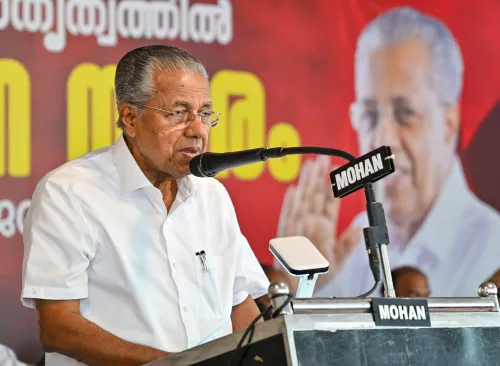
The Chief Minister's post stated: 'Media reports about the outgoing Governor's alleged recommendation to remove Kerala's PSC Chairman and dissolve the Commission raise grave constitutional concerns.' The charge is specific and pointed — and it goes straight to the text of the Constitution.
What Article 317 actually says — and why it matters here
Article 317 of the Constitution of India, in place since 1950, lays down the only lawful route to remove a PSC Chairman or member: the matter must go to the Supreme Court of India, which conducts an independent inquiry, and only if the apex court reports that removal is warranted can the President of India act. There is no shortcut — no gubernatorial recommendation can substitute for this process. Vijayan's post makes this procedural wall explicit, warning that any attempt to bypass it would undermine institutional autonomy built into the constitutional framework itself. The Kerala Public Service Commission is a constitutional body under Articles 315–323, entrusted with recruiting state civil servants through competitive examinations. Its independence is not incidental — it is the structural guarantee that appointments to the state bureaucracy remain insulated from political interference. An attempt to dissolve or decapitate it through executive fiat, if the media reports are accurate, would strike at that guarantee directly.The Raj Bhavan-state government fault line
Vijayan's post also takes aim at the use of Lok Bhavan — the official gubernatorial residence — for what he describes as the BJP's political agenda. The accusation slots into a well-documented pattern of federal friction: in Tamil Nadu, West Bengal, and Kerala itself, governors appointed by the Centre have repeatedly clashed with opposition-ruled state governments over institutional appointments, university chancellorships, and commission memberships. Critics in these states have long argued that governors are acting as political proxies rather than neutral constitutional functionaries. For the Left Democratic Front government in Thiruvananthapuram, this episode is the latest front in that larger battle over the boundaries of gubernatorial power.Vijayan's demand to the UDF opposition
The Chief Minister's post carries an explicit political challenge beyond the constitutional argument. Vijayan called on the United Democratic Front (UDF) — the Congress-led opposition alliance in Kerala — to 'clarify its stand and unequivocally oppose any attempt to bypass constitutional procedures or undermine institutional autonomy.' The framing is deliberate: it puts the UDF on notice that silence or ambiguity will be read as complicity with the Centre's alleged manoeuvre. It is a pressure play, aimed at forcing the opposition into a public constitutional commitment. The key question now is whether the matter is formally referred to the Supreme Court for inquiry under Article 317 — and how loudly the UDF chooses to answer the CM's challenge.Point of View
He insulates the LDF government from a charge of partisanship while simultaneously cornering both the Governor and the UDF opposition. The move reflects a wider LDF strategy of framing Centre-state friction in Kerala as an assault on constitutional institutions rather than a routine political dispute, a framing that has resonated across several opposition-ruled states. Forcing the UDF to declare a position is tactically astute: the Congress-led front risks appearing complicit with the Centre if it hesitates, yet publicly endorsing the LDF's constitutional argument cedes political ground to its main rival. The episode will be closely watched as a test case for the limits of gubernatorial power over constitutional bodies under the current federal arrangement.
NationPress
25 Oct 2026
Frequently Asked Questions
What does Article 317 say about removing a PSC Chairman?
Article 317 of the Constitution provides that a Public Service Commission Chairman or member can be removed by the President only after the Supreme Court has conducted an inquiry and reported that the person should be removed on grounds of misbehaviour — no other authority, including a Governor, can trigger removal independently.
Why is Kerala's PSC a constitutional body?
The Kerala Public Service Commission is established under Articles 315 to 323 of the Indian Constitution, which mandate that every state maintain a commission to conduct independent recruitment of civil servants, insulating state bureaucracy from direct political control.
What is the UDF in Kerala politics?
The United Democratic Front (UDF) is the Congress-led opposition alliance in Kerala that has alternated in power with the Left Democratic Front (LDF). Pinarayi Vijayan's LDF currently governs the state; the UDF forms the principal opposition.
Has a Kerala Governor clashed with the state government before?
Yes — Kerala has seen recurring tensions between Raj Bhavan and the state government over appointments, commissions, and university matters, a pattern also observed in Tamil Nadu and West Bengal, where governors appointed by the Centre have been accused of advancing the BJP's agenda in opposition-ruled states.
What happens next if the Governor's recommendation stands?
For any removal to be lawful, the matter would need to be referred to the Supreme Court for an inquiry under Article 317. Vijayan's demand that the UDF oppose any bypass of this procedure signals that the LDF intends to make the constitutional route a political litmus test for the opposition.