CM Pinarayi targets Congress over Kerala's 15,627 post removals
Synopsis
Kerala CM Pinarayi Vijayan has accused the Congress-led UDF government of removing 15,627 social media posts through police intervention in six months, citing the Home Minister's Assembly reply as proof that contradicts Chief Minister V.D. Satheesan's public denial.
Key Takeaways
Kerala CM Pinarayi Vijayan alleged the UDF government removed 15,627 social media posts via police in just six months .
The Home Minister's reply in the Kerala Assembly is cited as the primary source for the figure.
Satheesan had earlier publicly denied the allegation, creating a direct contradiction with the official Assembly record.
Vijayan charged Congress with applying civil-liberties arguments selectively — against the Sangh Parivar nationally while suppressing expression in Kerala.
Both LDF and UDF governments in Kerala have faced recurring opposition charges of using police and IT Act provisions to remove critical social media content.
Congress is yet to formally respond; the Assembly data and any official clarification will determine how far the controversy develops.
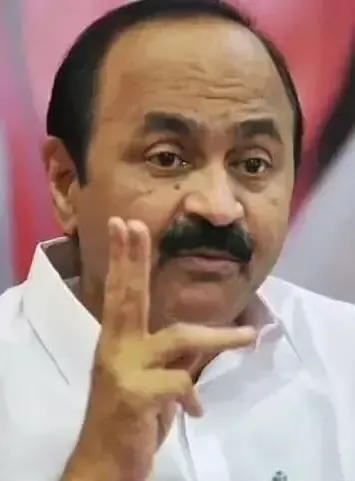
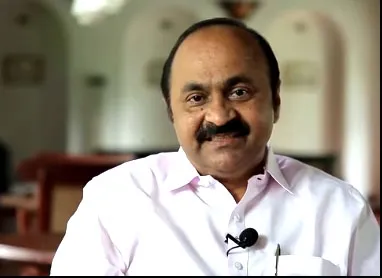
A Home Minister's reply in the Kerala Assembly has handed the opposition a live grenade — and Kerala Chief Minister Pinarayi Vijayan was quick to pull the pin. On Wednesday, November 18, 2026, Vijayan took to X to charge that the UDF government had overseen the removal of 15,627 social media posts through police intervention in just six months — even as Chief Minister V.D. Satheesan had publicly denied the allegation.
Vijayan's post states the charge plainly: 'The Congress's double standards on freedom of expression stand exposed once again.' He points to the Home Minister's own Assembly reply as the document that blew the cover, arguing that Satheesan's public denial was directly contradicted by his own government's official record.
Assembly reply versus public denial
The political sting in this exchange comes not from the number alone but from the sequence. Satheesan reportedly denied the allegation publicly — only for the Home Ministry's own tabled reply inside the Assembly to disclose that police had facilitated the removal of 15,627 posts in the period under question. In Kerala's combative legislative culture, an official government reply contradicting the Chief Minister's public position is rare and damaging ammunition for the opposition. Vijayan, leading the Left Democratic Front (LDF) from the opposition benches, framed the revelation as a test of institutional credibility: official data versus a leader's word to the public.Congress, the Sangh Parivar, and the civil-liberties argument
Vijayan sharpened the charge with a pointed contrast: the Indian National Congress, he argued, routinely lectures the Sangh Parivar on democratic freedoms — invoking that critique as a central pillar of its national political identity — while simultaneously using police powers to scrub social media content when it holds office in Kerala. The implication is a structural one: that civil-liberties rhetoric is deployed selectively, against ideological opponents, rather than applied as a principled standard. This is not a novel accusation in Kerala politics. Both the LDF and UDF have alternated in power for decades, and each cycle brings fresh opposition charges of using IT Act provisions and police machinery to target critical online content. CPI(M) leaders have consistently positioned LDF governments as defenders of free expression while pressing those same charges against Congress-led administrations — a pattern their opponents return in kind.What the data point means for Kerala's digital policing debate
The figure of 15,627 posts in six months is striking in scale. If the Assembly data holds, it would represent a significant use of police-led content removal — a tool that has drawn scrutiny across Indian states, regardless of which party governs. Social media users, journalists, and civil-liberties advocates in Kerala will now be watching for a detailed breakdown: who filed the complaints, under which sections, and what categories of content were targeted. Congress has yet to formally respond to Vijayan's charge. The question of whether the Assembly data matches what Satheesan said publicly — and what explanation his government offers — will shape how far this controversy travels. In Kerala's political arithmetic, a Home Ministry reply that contradicts the Chief Minister is not just an embarrassment. It is a legislative fact, and facts have a way of surviving the news cycle.Point of View
The reputational cost is compounded by the party's national positioning on democratic freedoms; being caught in an apparent inconsistency at home undermines that brand. The broader pattern suggests Kerala's digital policing debate is maturing into a structural governance question that will outlast any single government.
NationPress
18 Nov 2026
Frequently Asked Questions
How many social media posts did Kerala's UDF government remove?
According to Kerala CM Pinarayi Vijayan's post citing the Home Minister's Assembly reply, the UDF government facilitated the removal of 15,627 social media posts through police intervention in six months .
What did Kerala CM V.D. Satheesan say about social media removal?
Pinarayi Vijayan stated that V.D. Satheesan publicly denied the allegation of mass social media post removals, a denial that was then contradicted by his own Home Ministry's reply in the Kerala Assembly.
Why is Pinarayi Vijayan accusing Congress of double standards?
Vijayan argues that Congress lectures the Sangh Parivar on democratic freedoms nationally while using police machinery to remove social media content when it holds power in Kerala, constituting a double standard on free expression.
Under what law can police in India remove social media posts?
Indian state police typically use provisions of the Information Technology Act to request or compel the removal of social media content, a tool that has been used by governments across party lines in multiple states.
What happens next in Kerala's social media policing row?
Attention now turns to a formal Congress response , possible further Assembly questions demanding a category-wise breakdown of the removed posts, and whether the gap between Satheesan's public statement and the official Assembly data is explained or contested.