CM Pinarayi targets vlogger over Fort Kochi, Varkala hate content
Synopsis
Kerala Chief Minister Pinarayi Vijayan accused the Sangh Parivar of 'outsourcing' communal hate to an online vlogger targeting Fort Kochi and Varkala, demanding strict legal action against those spreading communal enmity across the state's iconic multicultural destinations.
Key Takeaways
Kerala CM Pinarayi Vijayan on October 24, 2026 publicly condemned an unnamed vlogger for spreading communal content about Fort Kochi and Varkala .
He accused the Sangh Parivar of 'outsourcing its hate campaign to online provocateurs' after failing to divide Kerala through other means.
Fort Kochi is a historic multicultural quarter of Kochi with Portuguese, Dutch, British and local heritage; Varkala is a popular cliffside beach town in Thiruvananthapuram district .
Vijayan called on the State Government to take 'strict legal action' against those spreading communal enmity — implying potential FIRs under hate-speech provisions.
The post reflects a decade-long pattern since 2016 of the CPI(M) -led Left Democratic Front government framing itself as a defender of Kerala's secular identity against Sangh Parivar mobilisation.
A vlogger peddling communal content about two of Kerala's most celebrated tourist destinations has drawn a sharp public rebuke from Kerala Chief Minister Pinarayi Vijayan, who on Saturday, October 24, 2026, accused the Sangh Parivar of 'outsourcing its hate campaign to online provocateurs' — and demanded strict legal action.
Fort Kochi and Varkala: the targets of a communal narrative
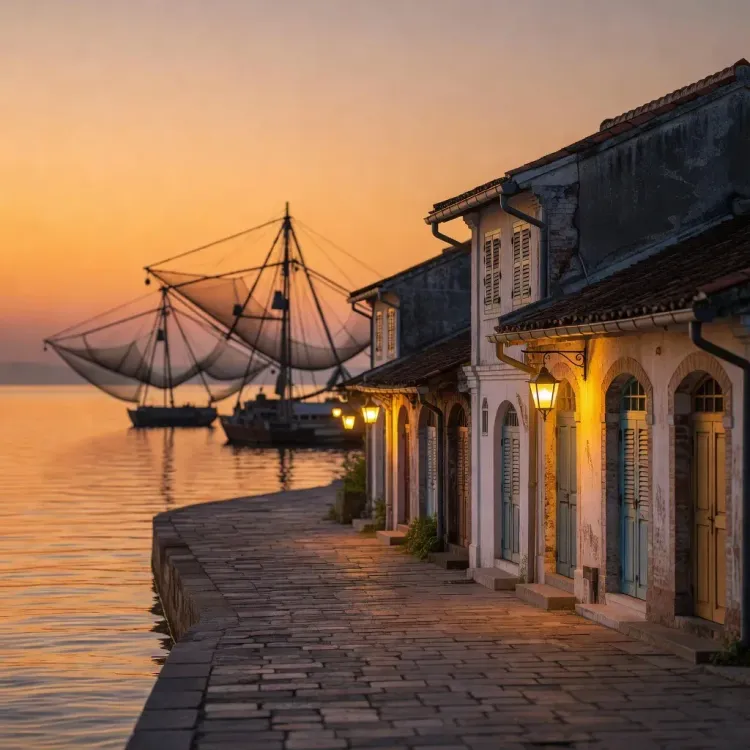
Fort Kochi — the historic coastal quarter of Kochi where Portuguese churches, Dutch trading houses, Chinese fishing nets, and a Jewish synagogue share the same waterfront — is among India's most layered multicultural landmarks. Varkala, a cliffside beach town in Thiruvananthapuram district, draws pilgrims, backpackers and international tourists alike to its blended coastal culture. Vijayan described both as places 'where cultures meet, histories intertwine and diversity thrives.'
It is precisely that identity, the Chief Minister argued, that an unnamed vlogger was attempting to weaponise. The post stops short of naming the individual or the specific video — the exact trigger remains unspecified — but the political framing is unambiguous: hate for profit, dressed up as commentary on cultural destinations.
The 'outsourcing' charge and what it signals
The most pointed phrase in Vijayan's post is the 'outsourcing' accusation. 'Having failed to divide Keralam,' he wrote, 'the Sangh Parivar is outsourcing its hate campaign to online provocateurs.' The formulation signals a deliberate strategic framing by the Left Democratic Front government — not just a one-off reaction to a viral video, but a characterisation of coordinated ideological effort operating through social media surrogates.
Since 2016, when Vijayan first took office, the CPI(M)-led state government has repeatedly accused Sangh Parivar outfits of attempting to disrupt Kerala's communal harmony through local campaigns. This post fits squarely into that decade-long pattern of state-level rebuttals — but the pivot to targeting online content creators marks an escalation in the terrain being contested. The battlefield has moved from streets and temples to comment sections and subscriber counts.
The call for legal action — and what follows
Vijayan's closing line was a directive, not a lament: 'The State Government must take strict legal action against those spreading communal enmity.' The call invokes hate-speech and communal enmity provisions under Indian law, and now sets up a measurable follow-through moment — whether Kerala Police or the state Home Department files an FIR against the vlogger in question will determine how serious the government's posture actually is.
Kerala's tourism economy — a sector that depends critically on the very multicultural image that sites like Fort Kochi and Varkala project — has a direct stake in how quickly the state responds. Communal profiling of tourist destinations carries a long tail of reputational damage that no government press release can fully reverse. The Chief Minister has drawn the line. The question now is whether law enforcement walks up to it.
Point of View
Not merely a civic caution. By branding the vlogger an 'outsourced' Sangh Parivar asset rather than an independent bad actor, the CPI(M) leadership converts a social-media controversy into a broader ideological argument about BJP-aligned networks operating through non-party proxies. The explicit call for 'strict legal action' is also notable — it sets a public accountability trap: if police do not act, the government is exposed for rhetoric without follow-through; if they do act swiftly, it reinforces the LDF's secular-defender brand ahead of any future electoral cycle. Kerala's tourism economy — deeply tied to the pluralist identity of sites like Fort Kochi — gives this dispute a concrete economic dimension that elevates it beyond routine political sparring.
NationPress
24 Oct 2026
Frequently Asked Questions
Why did Pinarayi Vijayan speak out about a vlogger targeting Fort Kochi and Varkala?
Vijayan condemned an unnamed vlogger he accused of spreading communal hatred about Fort Kochi and Varkala for profit, calling it an 'outsourced' hate campaign by the Sangh Parivar designed to paint these multicultural destinations in communal colours.
What legal action can Kerala take against communal hate speech online?
Kerala Police can invoke Indian Penal Code provisions on promoting enmity between groups and spreading communal disharmony, as well as relevant IT Act provisions, to register FIRs against creators of hate-inciting online content.
What makes Fort Kochi and Varkala significant as multicultural destinations?
Fort Kochi features centuries-old Portuguese, Dutch, British and local heritage in one coastal enclave, while Varkala is a cliffside beach town in Thiruvananthapuram district known for drawing diverse pilgrims, tourists and international visitors to its blended coastal culture.
What is the Sangh Parivar and why does the Kerala government criticise it?
The Sangh Parivar is a collective of Hindu nationalist organisations including the RSS and BJP affiliates. The CPI(M)-led Kerala government has since 2016 repeatedly accused Sangh Parivar groups of attempting to disrupt the state's communal harmony through local and now online campaigns.
Has Kerala acted against online hate speech targeting its tourist destinations before?
Kerala's Left Democratic Front government has a documented pattern since 2016 of issuing state-level rebuttals to communal narratives targeting cultural sites, though the explicit framing of online vloggers as Sangh proxies represents a newer escalation in that ongoing ideological conflict.