CM Rekha Gupta at 57th GST Council Meet in New Delhi
Synopsis
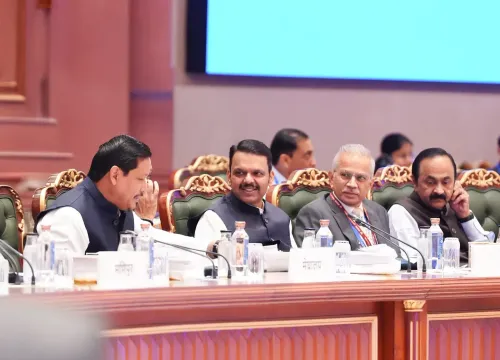
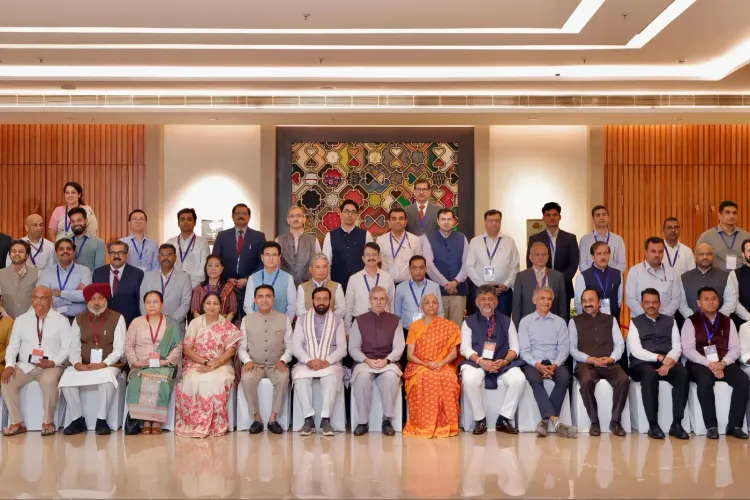
Delhi Chief Minister Rekha Gupta attended the 57th GST Council meeting at Bharat Mandapam, New Delhi, chaired by Finance Minister Nirmala Sitharaman. The session brought together Chief Ministers and state representatives to deliberate on India's unified tax framework under the spirit of cooperative federalism.
Key Takeaways
Delhi CM Rekha Gupta participated in the 57th GST Council meeting at Bharat Mandapam, New Delhi on October 8, 2026 .
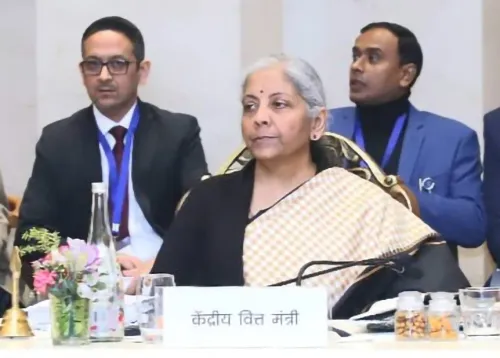
The meeting was chaired by Union Finance Minister Nirmala Sitharaman , with Chief Ministers and UT representatives present.
The GST Council is a constitutional body under Article 279A , responsible for setting and revising India's unified indirect tax framework.
CM Gupta emphasised the session's grounding in 'cooperative federalism' and Centre-State collaboration toward a 'growth-oriented economy.' The 57th sitting continues a multi-year track record of rate rationalisation, sector expansion, and revenue-sharing deliberations since GST's launch on July 1, 2017 .
Bharat Mandapam , inaugurated in 2023 for the G20 Summit, served as the venue, reflecting the institutional significance of the conclave.
Cooperative federalism took centre stage at Bharat Mandapam, New Delhi, on Thursday, October 8, 2026, as Delhi Chief Minister Rekha Gupta joined the 57th GST Council meeting — a high-stakes forum where the Centre and every state in India sit across the same table to shape the country's tax architecture.
Who was in the room — and why it matters
The meeting was chaired by Union Finance Minister Nirmala Sitharaman, with Chief Ministers and representatives from States and Union Territories in attendance. The GST Council is a constitutional body under Article 279A, and its decisions — taken by consensus wherever possible — carry direct consequence for prices, business compliance, and state revenues across 1.4 billion people.
CM Gupta described the deliberations as reflecting 'the spirit of cooperative federalism, with the Centre and States working together towards a stronger, more unified and growth-oriented economy.' That framing is significant: the GST Council has occasionally been a flashpoint between the Centre and opposition-ruled states over revenue-sharing and rate-setting, making a united tone at the table itself a political signal.
What the 57th Council session represents
The Goods and Services Tax, rolled out on July 1, 2017, replaced a maze of central and state levies with a unified indirect tax — one of the most sweeping fiscal reforms in post-Independence India. The Council meets periodically to revise rates, resolve disputes, and approve rule changes. By its 57th sitting, the body has a long track record: it has rationalised hundreds of commodity rates, brought new sectors under the GST net, and calibrated compensation cess timelines as states navigated revenue shortfalls.
Delhi, as the national capital, occupies a unique position in the Council — it is a Union Territory with a legislature, meaning its Chief Minister participates directly in deliberations that affect both the city's own fiscal position and its role as a commercial hub handling enormous volumes of inter-state trade.
Bharat Mandapam as the venue for national deliberation
Bharat Mandapam, the state-of-the-art convention complex inaugurated in 2023 ahead of the G20 Summit in New Delhi, has become a preferred venue for landmark national conclaves. Hosting the GST Council here underscores the event's institutional weight — this is not a routine administrative meeting but a constitutional exercise in inter-governmental fiscal governance.
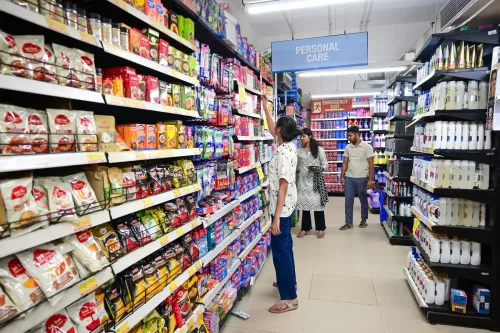
The specific agenda items and outcomes of the 57th Council session will shape tax policy for businesses and consumers alike in the months ahead. Every rate tweak decided in that room translates, almost immediately, to a change in what Indians pay at the checkout counter or invoice.
Point of View
And Delhi's participation carries outsized symbolic weight given the capital's role as a commercial and political nerve centre. CM Rekha Gupta's attendance — and her explicit invocation of 'cooperative federalism' — signals that the BJP-led Delhi government is positioning itself as a constructive player in national economic governance, a contrast to the adversarial Centre-Delhi dynamic that defined much of the previous administration. With the 57th session arriving as India navigates post-pandemic fiscal consolidation and ongoing GST rationalisation debates, the framing of unity over friction is itself a political choice. How the Council's decisions on rates and compensation translate into on-ground economic relief will be the real test of that stated solidarity.
NationPress
8 Oct 2026
Frequently Asked Questions
What is the 57th GST Council meeting about?
The 57th GST Council meeting, held on October 8, 2026, at Bharat Mandapam, New Delhi, brought together the Union Finance Minister, Chief Ministers, and state representatives to deliberate on India's goods and services tax framework, including potential rate revisions and policy updates.
Who chaired the 57th GST Council meeting?
Union Finance Minister Nirmala Sitharaman chaired the 57th GST Council meeting, as she does by constitutional mandate under Article 279A.
Why did Delhi CM Rekha Gupta attend the GST Council?
As Delhi's Chief Minister, Rekha Gupta is a member of the GST Council. Delhi, as a Union Territory with a legislature, participates directly in Council deliberations that affect its fiscal position and its status as a major commercial hub.
What is Bharat Mandapam and why was it used for the GST Council meeting?
Bharat Mandapam is a large convention and exhibition complex in New Delhi, inaugurated in 2023 ahead of the G20 Summit. It has since become a premier venue for major national and international conclaves, including constitutional bodies like the GST Council.
What does cooperative federalism mean in the context of the GST Council?
Cooperative federalism in the GST Council context refers to the Centre and States jointly deciding tax policy through consensus, rather than the Centre imposing rates unilaterally. The Council's design — where states collectively hold a majority vote — is itself an institutional expression of this principle.