CM Rekha Gupta: Delhi EV Policy 2026 Delivers ₹7.91 Cr in Incentives
Synopsis
Delhi Chief Minister Rekha Gupta announced that ₹7.91 crore in EV incentives has reached over 2,700 Delhiites since 1 July 2026, backed by a 100% waiver on road tax and registration fees — positioning the capital's EV policy as both a mobility and an air-quality intervention.
Key Takeaways
₹7.91 crore in EV incentives disbursed since 1 July 2026 under Delhi's EV Policy 2026.
More than 2,700 Delhi residents have received benefits in roughly three-and-a-half months.
Eligible EV buyers receive a 100% waiver on both road tax and registration fees .
Chief Minister Rekha Gupta linked the policy directly to improving Delhi's air quality .
The announcement was made on 12 October 2026 , as Delhi heads into its high-pollution winter season.
Delhi's electric-vehicle push is no longer just a promise on paper — it is money in pockets and cleaner skies overhead. Delhi Chief Minister Rekha Gupta on Monday, 12 October 2026, shared that ₹7.91 crore in incentives has already reached more than 2,700 Delhi residents since the policy's rollout on 1 July 2026, backed by a 100% waiver on road tax and registration fees for eligible electric vehicles.
₹7.91 crore out the door in just over three months
The numbers tell a brisk story. In roughly three-and-a-half months since 1 July 2026, the Delhi government has disbursed incentives to over 2,700 buyers — a clip that signals genuine uptake rather than a policy sitting idle on a shelf. The twin levers of direct cash incentives and a full waiver of road tax and registration fees substantially reduce the upfront cost that has historically made EVs a hard sell in price-sensitive markets.
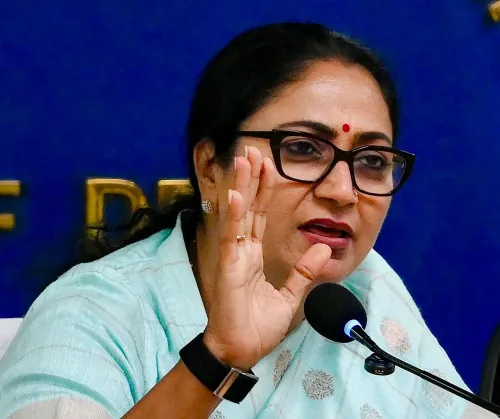
Chief Minister Gupta framed the rollout as a direct answer to air-quality concerns: 'Every EV on the road means cleaner air for the capital,' she wrote, linking individual purchasing decisions to a city-wide public-health dividend.
Why the registration-fee waiver is the policy's sharpest edge
In Delhi, road tax and registration costs on a mid-range petrol vehicle can run into tens of thousands of rupees — a friction point that nudges buyers toward conventional options. A 100% waiver on both charges effectively pulls that friction point to zero, making the on-road price of an eligible EV significantly more competitive at the moment a buyer signs the paperwork. Combined with the direct financial incentive, the policy attacks the cost barrier from two directions simultaneously.
Delhi has historically been among India's most aggressive states on EV policy, with earlier frameworks in preceding years laying the administrative groundwork — subsidy disbursement channels, dealer tie-ups, and registration-system integration — that the 2026 policy appears to be leveraging for faster delivery of benefits.
What 2,700 early adopters signal for Delhi's air
Each petrol or diesel vehicle displaced from Delhi's roads carries a measurable impact on particulate-matter levels in one of the world's most polluted major cities. 2,700-plus new EVs in three months is a meaningful number in absolute terms, though the capital's total vehicle fleet runs into millions — underscoring that the policy will need sustained momentum, not just a strong opening sprint, to move the pollution needle.
The Chief Minister's public communication of mid-term data points is itself a signal: the government is treating disbursement velocity as a performance metric worth broadcasting, which creates accountability pressure to keep the numbers moving.
Delhi is going electric — and the administration is now on record with a scoreboard. The real test is whether the incentive pipeline stays funded and the beneficiary count keeps climbing as winter pollution season arrives.
Point of View
Chief Minister Rekha Gupta is using the EV policy as a governance credibility signal — concrete numbers are harder to contest than intent. The timing is politically astute: Delhi's notorious winter pollution season is arriving, and a visible subsidy scoreboard shifts the conversation from 'what will you do?' to 'here is what we have already done.' For the BJP administration in Delhi, rapid EV uptake also offers a clean-air narrative that transcends traditional political lines — pollution is a concern that cuts across every constituency. The sustained test will be whether the incentive corpus scales proportionally if uptake accelerates beyond projections.
NationPress
12 Oct 2026
Frequently Asked Questions
What is Delhi's EV Policy 2026?
Delhi's EV Policy 2026 is the capital government's framework to accelerate electric vehicle adoption through direct financial incentives and a 100% waiver on road tax and registration fees for eligible EV buyers, launched on 1 July 2026.
How much has Delhi paid out in EV incentives so far?
As of the CM's announcement on 12 October 2026, Delhi has disbursed ₹7.91 crore in EV incentives to more than 2,700 residents since the policy began on 1 July 2026.
Who is eligible for Delhi EV incentives in 2026?
While the post does not detail full eligibility criteria, the policy targets EV buyers in Delhi, offering direct monetary incentives plus a 100% road tax and registration fee waiver for qualifying electric vehicles.
Does Delhi waive road tax for electric vehicles?
Yes. Under Delhi's EV Policy 2026, eligible electric vehicle buyers receive a 100% waiver on both road tax and registration fees, significantly reducing the upfront cost of purchasing an EV.
Why is Delhi promoting electric vehicles?
Delhi promotes EV adoption primarily to combat severe air pollution. Chief Minister Rekha Gupta has stated that every additional EV on the road contributes to cleaner air for the capital, which faces some of the worst air-quality levels in the world — particularly in winter.