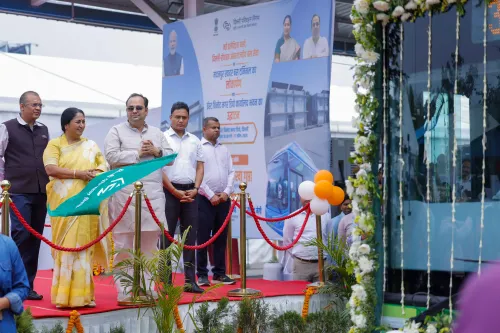
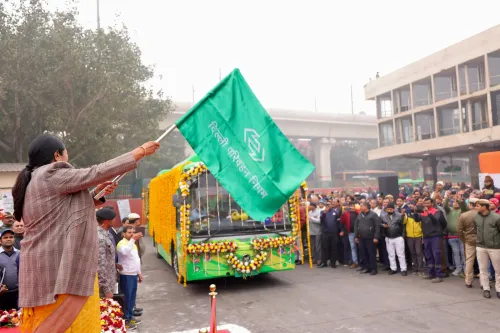
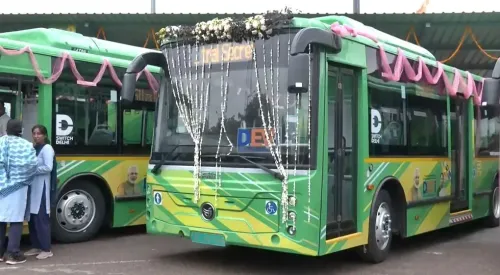
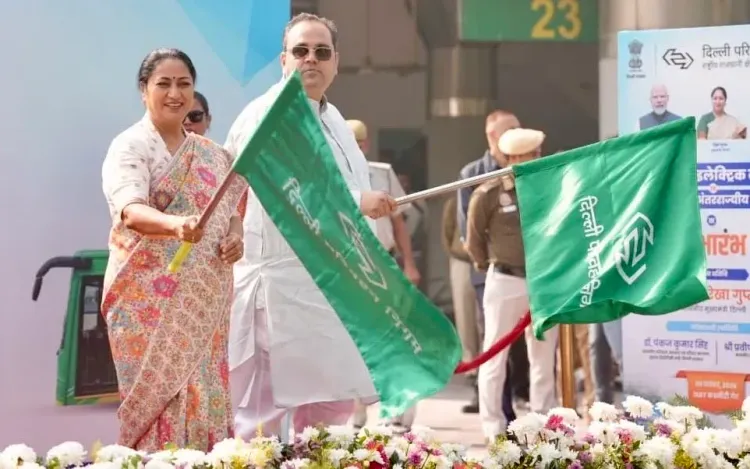
CM Rekha Gupta flags off 100 new electric buses in Delhi
Synopsis
Delhi CM Rekha Gupta flagged off 100 new electric buses from ISBT Kashmiri Gate on 20 November 2026 and launched the Delhi-Hapur interstate electric service, claiming Delhi now has India's largest electric bus fleet and pledging full DTC fleet electrification.
Key Takeaways
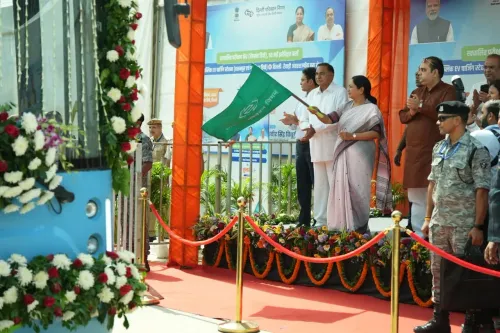
100 new electric buses flagged off by Delhi CM Rekha Gupta from ISBT Kashmiri Gate on 20 November 2026 .
A new Delhi-Hapur interstate electric bus service was inaugurated at the same event.
CM Gupta claimed Delhi now has the largest electric bus fleet in India .
The government committed to switching the entire DTC fleet to electric buses.
Delhi's EV push is rooted in its Electric Vehicle Policy of 2019 and supported by the central government's FAME scheme .
CM Gupta appealed to residents to shift from private vehicles to public transport to complement government efforts.
Delhi's war on winter smog just got reinforced with steel and batteries. Delhi Chief Minister Rekha Gupta on Friday, 20 November 2026, flagged off 100 new electric buses from ISBT Kashmiri Gate in north Delhi — and in the same breath inaugurated a brand-new Delhi-Hapur interstate bus service, signalling that the capital's clean-air push is no longer stopping at city limits.
100 buses and a bigger declaration at Kashmiri Gate
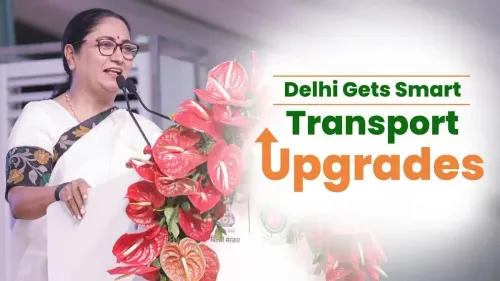
Speaking at the launch, CM Gupta framed the fleet expansion in unambiguous terms: 'दिल्ली की बसें दिल्ली की हवा खराब नहीं करें, बल्कि उसे साफ करने की लड़ाई में सबसे आगे रहें' — 'Delhi's buses should not pollute Delhi's air; they should lead the fight to clean it.' That is the government's stated goal, she said, and today's flag-off is a step towards it.
Alongside the new buses, the inauguration of the Delhi-Hapur interstate route as an electric service marks a meaningful extension: emission-free public transport now crosses state boundaries, linking the capital to the neighbouring Uttar Pradesh city of Hapur without adding diesel exhaust to the airshed shared by millions across the National Capital Region.
Claiming India's largest electric bus fleet
CM Gupta stated that Delhi now holds the largest electric bus fleet in the entire country — a claim that, if borne out, would mark a significant milestone for a city that has long battled some of South Asia's worst air-quality readings. The capital's Delhi Transport Corporation (DTC) has been on an accelerated procurement drive, and Thursday's addition of 100 buses builds on that trajectory.
The Chief Minister went further, announcing a firm commitment: 'Our resolve is that the entire DTC bus service will soon be switched to electric buses.' No specific deadline was announced at the event, but the pledge puts the full electrification of Delhi's public bus fleet formally on the policy agenda.
Delhi's EV push — from a 2019 policy to a 2026 fleet race
Delhi's electric-vehicle ambitions date to its EV Policy of 2019, which set targets for electric buses and incentivised private EV adoption. That framework, combined with central government procurement support under the FAME scheme, has helped the capital accelerate fleet replacement. The pattern mirrors moves by other large Indian cities, but Delhi's scale — and its notoriety as a pollution hotspot — gives each bus addition outsized political and public-health significance.
Cabinet colleague Dr. Pankaj Kumar Singh was present at the event, along with other dignitaries. The Chief Minister also made a direct appeal to Delhi residents: 'Wherever possible, leave your car behind and choose public transport. Delhi's air will change only when the government's efforts are matched by the people's participation.'
That last sentence might be the most consequential one. Rolling out a green fleet solves half the equation. Getting commuters off private vehicles and onto those buses — in a city where car ownership has surged — is the half that no policy alone can deliver.
Point of View
CM Rekha Gupta is doing two things simultaneously: delivering a tangible infrastructure win and staking the BJP government's credibility on a clean-air promise that Delhi voters have demanded for years. The Delhi-Hapur interstate extension is a subtle but smart move — it signals regional cooperation and shifts the pollution conversation beyond the city's borders, where NCR airshed politics are perpetually fraught. The pledge to fully electrify the DTC fleet is bold, but without a published timeline and funding roadmap, it risks becoming a recurring campaign talking point rather than a binding policy commitment. The public-participation appeal is also notable: it acknowledges, implicitly, that hardware alone cannot fix Delhi's air.
NationPress
20 Nov 2026
Frequently Asked Questions
How many electric buses did Delhi launch on 20 November 2026?
100 new electric buses were flagged off by Delhi CM Rekha Gupta from ISBT Kashmiri Gate on 20 November 2026 .
What is the Delhi-Hapur electric bus service?
The Delhi-Hapur interstate bus service is a new electric-bus route connecting Delhi to Hapur in Uttar Pradesh, inaugurated by CM Rekha Gupta on 20 November 2026 to extend emission-free public transport beyond city limits.
Does Delhi have the largest electric bus fleet in India?
CM Rekha Gupta claimed on 20 November 2026 that Delhi holds the largest electric bus fleet in the entire country , though independent verification of exact fleet sizes across all states is pending.
When will all DTC buses become electric?
CM Gupta pledged that the entire DTC fleet would 'soon' be switched to electric buses, but no specific deadline or phased timeline was announced at the 20 November 2026 event.
What is Delhi's Electric Vehicle Policy?
Delhi notified its Electric Vehicle Policy in 2019 to accelerate adoption of electric buses and other EVs and reduce vehicular emissions across the National Capital Region, forming the backbone of the city's ongoing fleet electrification drive.