CM Rekha Gupta Greets MP on Foundation Day, Cites Rewa Solar Link
Synopsis
Delhi CM Rekha Gupta greeted Madhya Pradesh on its Foundation Day on 1 November 2026, spotlighting the Rewa solar project's supply to Delhi Metro as a living symbol of interstate cooperation and the 'Ek Bharat, Shreshtha Bharat' vision.
Key Takeaways
Madhya Pradesh marks its 70th Foundation Day on 1 November 2026 , having been established on 1 November 1956.
Delhi CM Rekha Gupta extended greetings to all MP residents, invoking the Narmada river and the Mahakaleshwar temple as the state's cultural pillars.
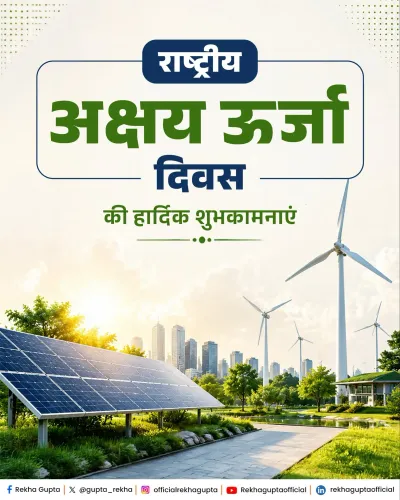
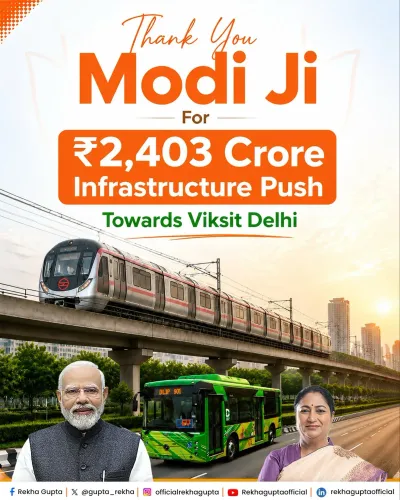
Gupta highlighted that solar energy from Rewa in Madhya Pradesh powers Delhi Metro trains — a concrete example of interstate renewable energy cooperation.
She framed the Delhi–MP energy link as a living illustration of 'Ek Bharat, Shreshtha Bharat' (One India, Excellent India).
The message extended wishes for MP's continued development under PM Narendra Modi and CM Dr.
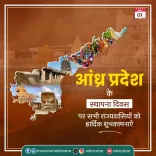
Seventy years after Madhya Pradesh was carved into being on 1 November 1956, Delhi Chief Minister Rekha Gupta marked the state's foundation day with a warm tribute that stretched well beyond protocol — pointing to a living, humming connection between the two: solar power flowing from Rewa to keep Delhi Metro trains moving.
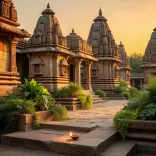
Writing in Hindi on Sunday, 1 November 2026, CM Gupta offered greetings to all residents of Madhya Pradesh, invoking the cultural weight of the occasion: 'मां नर्मदा की पावन धारा, बाबा महाकाल का आशीर्वाद' — 'the sacred flow of Mother Narmada, the blessings of Baba Mahakal.' The references to the Narmada river and the Mahakaleshwar temple at Ujjain are not mere poetry; they are the twin symbols most closely associated with Madhya Pradesh's identity.
Rewa's sunlight powering Delhi's trains
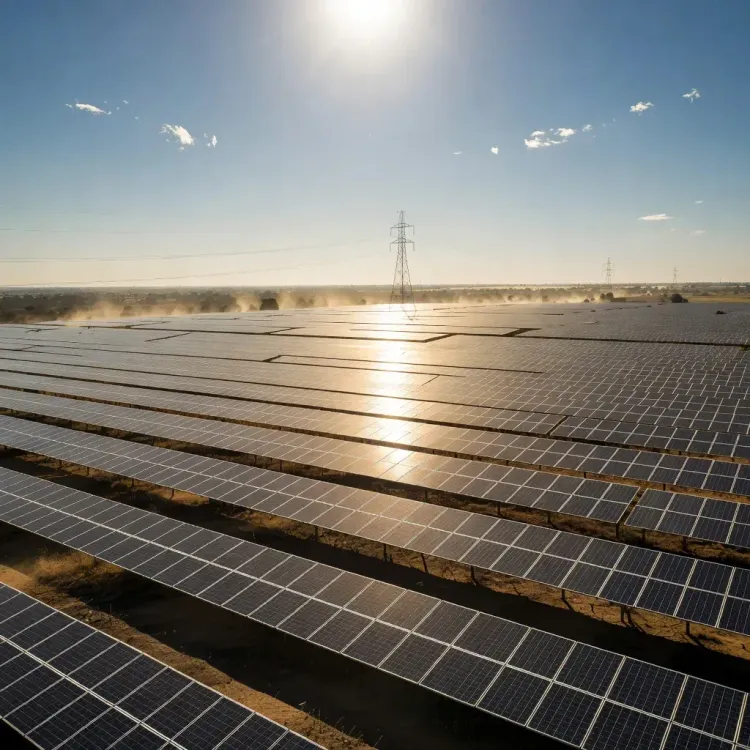
The sharpest line in the post is also the most concrete: 'When sunrays in Rewa turn into energy, Delhi Metro gains speed.' The Rewa Ultra Mega Solar Project in northern Madhya Pradesh, one of the largest solar parks in Asia when it was commissioned, supplies a portion of its output to the Delhi Metro Rail Corporation — a rare and visible example of one state's renewable capacity directly serving another's urban infrastructure. CM Gupta used this single image to illustrate 'Ek Bharat, Shreshtha Bharat' — 'One India, Excellent India' — the Centre's cooperative-federalism theme.
Wishes for Mohan Yadav and PM Modi's continued stewardship
CM Gupta closed with a forward-looking wish, expressing hope that Madhya Pradesh reaches new heights of prosperity and development under the guidance of Prime Minister Narendra Modi and the leadership of Madhya Pradesh Chief Minister Dr. Mohan Yadav. The mention of both figures in a foundation-day message is standard inter-party courtesy within the BJP family, but the bracketing of central and state leadership in a single benediction also reinforces the party's unified-governance narrative heading into the state's anniversary events.
For Delhi commuters who ride a Metro partly powered by Madhya Pradesh sunshine, the connection is neither symbolic nor rhetorical. It is, as Gupta framed it, the most vivid possible portrait of what cooperative federalism looks like from the inside.
Point of View
She gives the BJP's cooperative-federalism slogan a tangible, everyday face. The choice to name a specific infrastructure example rather than speak in generalities signals a communications strategy that prizes visible, verifiable proof points over abstract party rhetoric. It also reinforces intra-party solidarity — placing Modi and Mohan Yadav in the same sentence of benediction — at a moment when the Centre and BJP state governments are keen to present a unified development narrative ahead of multiple state-level milestones.
NationPress
1 Nov 2026
Frequently Asked Questions
When is Madhya Pradesh Foundation Day celebrated?
Madhya Pradesh Foundation Day is celebrated on 1 November every year, marking the state's establishment on 1 November 1956.
What is the Rewa solar project and its connection to Delhi Metro?
The Rewa Ultra Mega Solar Project in Madhya Pradesh is one of Asia's largest solar parks; it supplies a portion of its solar-generated electricity to the Delhi Metro Rail Corporation , making it a prominent example of interstate renewable energy cooperation.
Who is the Chief Minister of Madhya Pradesh?
Dr. Mohan Yadav is the Chief Minister of Madhya Pradesh.
What does 'Ek Bharat Shreshtha Bharat' mean?
'Ek Bharat, Shreshtha Bharat' translates to 'One India, Excellent India' — a Central Government initiative aimed at promoting cultural exchange and cooperative links between different Indian states.
Why did Delhi CM Rekha Gupta post about Madhya Pradesh Foundation Day?
CM Rekha Gupta posted greetings to highlight the cultural and infrastructural bond between Delhi and Madhya Pradesh, specifically the Rewa solar-to-Delhi-Metro energy link, framing it as an example of cooperative federalism on the occasion of MP's annual Foundation Day.