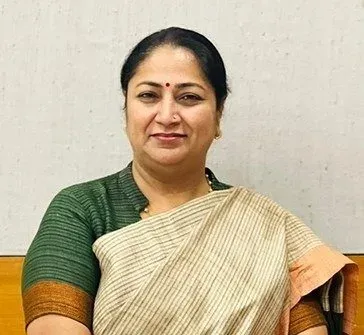
CM Rekha Gupta Hails ₹14,500 Cr Cabinet Nod for Energy Storage
Synopsis
The Union Cabinet has approved ₹14,500 crore for energy storage infrastructure under PM Modi, a move Delhi CM Rekha Gupta says will boost power reliability, affordability, and energy security for the capital and India as a whole.
Key Takeaways
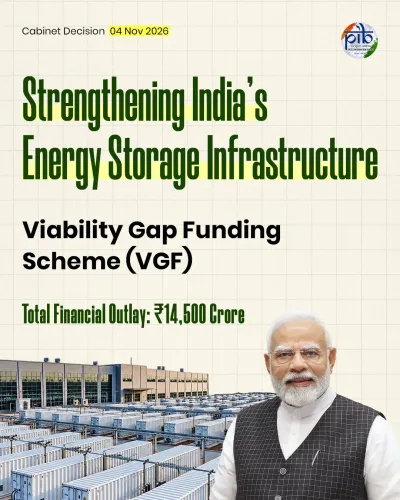
The Union Cabinet approved ₹14,500 crore to strengthen India's energy storage infrastructure.
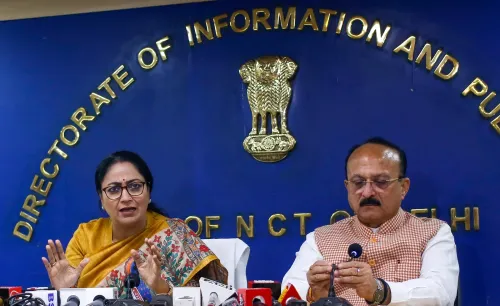
Delhi CM Rekha Gupta welcomed the decision on 4 November 2026 , highlighting benefits for power reliability and affordability.
The outlay addresses grid intermittency caused by India's rapid renewable energy expansion.
India has a target of 500 GW non-fossil fuel capacity by 2030 , for which storage is a critical enabler.
A Production Linked Incentive scheme for advanced chemistry cells (approved 2021) complements this storage push with domestic manufacturing intent.
Next steps include fund allocation to states and timelines for storage project tenders and commissioning.
India just placed a ₹14,500 crore bet on the future of its power grid — and Delhi Chief Minister Rekha Gupta wants the capital's residents to know exactly what that means for their electricity bills and reliability. On Wednesday, 4 November 2026, Gupta welcomed the Union Cabinet's approval of the massive energy storage outlay, calling it a 'forward-looking decision' that will strengthen 'power reliability, affordability and energy security for Delhi and the entire nation.'
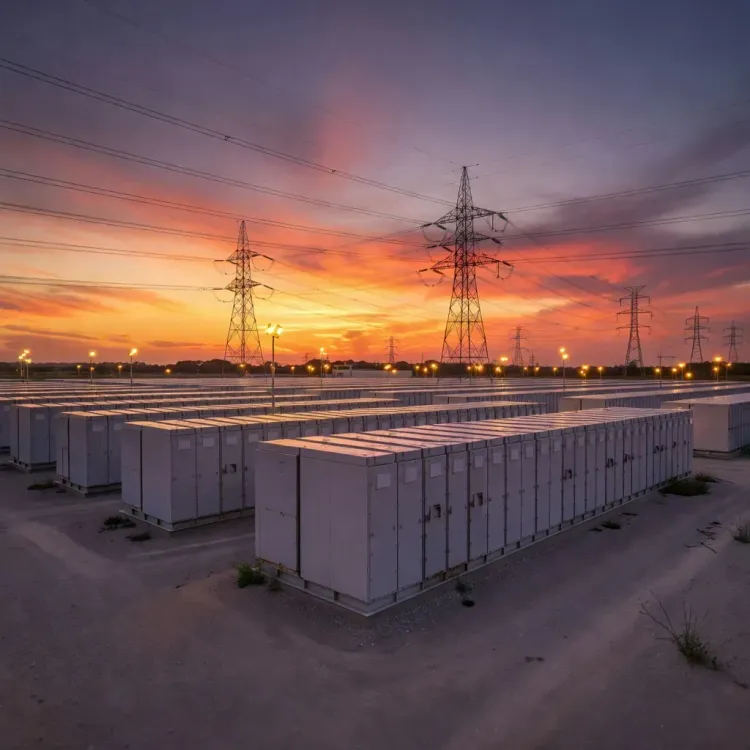
What ₹14,500 Crore Buys India's Grid
The Cabinet approval targets a specific, structural problem: India's renewable energy buildout has raced ahead faster than the infrastructure needed to store that power. Solar panels generate electricity at noon; peak demand hits in the evening. Without large-scale storage, that mismatch forces grid operators to either curtail clean energy or lean on expensive, polluting peaker plants. ₹14,500 crore directed at storage infrastructure is designed to close exactly that gap.
India committed at COP26 in 2021 to reach 500 GW of non-fossil fuel capacity by 2030 — a target enshrined in its Panchamrit climate strategy. Storage is the unglamorous but indispensable backbone that makes that number real. Without it, intermittent wind and solar power cannot be reliably dispatched when households and industries actually need it.
Delhi's Stake in the National Storage Push
Delhi is a dense, high-demand urban grid with significant peak-load pressure and a power mix increasingly reliant on renewable procurement. For Chief Minister Gupta, the Cabinet decision is both a national policy milestone and a direct constituency argument: cheaper, more reliable power for the capital's residents. Her post explicitly names 'affordability' alongside reliability — signalling that storage investment is being framed as a consumer-side benefit, not just a generation-side engineering fix.
The Union Cabinet, chaired by Prime Minister Narendra Modi, is India's apex executive decision-making body. Cabinet-level approvals of this scale typically trigger a cascade of state-level implementation: fund allocation formulas, project tenders, and commissioning timelines. The critical question now is how quickly those downstream steps move — and how much of the ₹14,500 crore flows to states like Delhi that are already procuring renewable power at scale.
The Domestic Manufacturing Angle
India's push for energy storage is not purely about infrastructure spending — it carries an industrial policy dimension. The government approved a Production Linked Incentive scheme for advanced chemistry cells in 2021, aimed at building domestic battery manufacturing capacity rather than importing cells. A large Cabinet outlay for storage deployment now creates the downstream demand that makes that manufacturing push viable. Build the factories; then build the grid that needs their output. The logic is deliberate.
What to watch next: how the approved funds are allocated across states, the timeline for storage project tenders, and whether commissioning targets are tied to India's 2030 renewable capacity goals. The money is committed. The execution clock has started.
Point of View
500 crore approval is part of a deliberate sequencing in India's energy transition: scale up renewable generation first, then build the storage layer that makes it dispatchable — a logic that mirrors strategies in the United States and China. For the BJP, framing storage investment as an affordability measure for consumers is politically shrewd, connecting a technical grid fix to household electricity bills ahead of potential state elections. Delhi CM Rekha Gupta's endorsement also signals that state-level leaders are being mobilised to amplify central Cabinet decisions as direct local benefits. The real test of the policy's ambition will be execution speed: India has a history of approving large energy schemes whose on-ground rollout lags targets by years.
NationPress
4 Nov 2026
Frequently Asked Questions
What did the Union Cabinet approve for India's energy storage?
The Union Cabinet approved ₹14,500 crore to strengthen India's energy storage infrastructure, aimed at improving power reliability, affordability, and energy security.
Why is energy storage important for India's power grid?
India's rapid renewable energy expansion — targeting 500 GW of non-fossil fuel capacity by 2030 — creates grid intermittency. Storage systems allow solar and wind power generated during off-peak hours to be dispatched when demand is highest.
How does this Cabinet decision affect Delhi's electricity supply?
Delhi CM Rekha Gupta stated the decision will strengthen power reliability and affordability for Delhi specifically, as the capital's grid increasingly relies on renewable energy procurement.
What is India's Production Linked Incentive scheme for batteries?
Approved in 2021 , the PLI scheme for advanced chemistry cells is designed to build domestic battery manufacturing capacity in India, reducing dependence on imported cells for energy storage systems.
What is India's net-zero and renewable energy target?
India committed at COP26 in 2021 to achieve 500 GW of non-fossil fuel power capacity by 2030 and net-zero emissions by 2070 as part of its Panchamrit climate strategy.