CM Rekha Gupta Hails ₹2,711 Cr Rail Budget for Delhi
Synopsis
Delhi Chief Minister Rekha Gupta has highlighted a record ₹2,711 crore railway allocation for FY 2026-27, covering the world-class redevelopment of 13 major Delhi stations and the launch of the New Delhi–Varanasi Vande Bharat Sleeper, crediting PM Modi and Railway Minister Ashwini Vaishnaw for the push.
Key Takeaways
A record ₹2,711 crore has been provisioned for Delhi's railway development in FY 2026-27 .
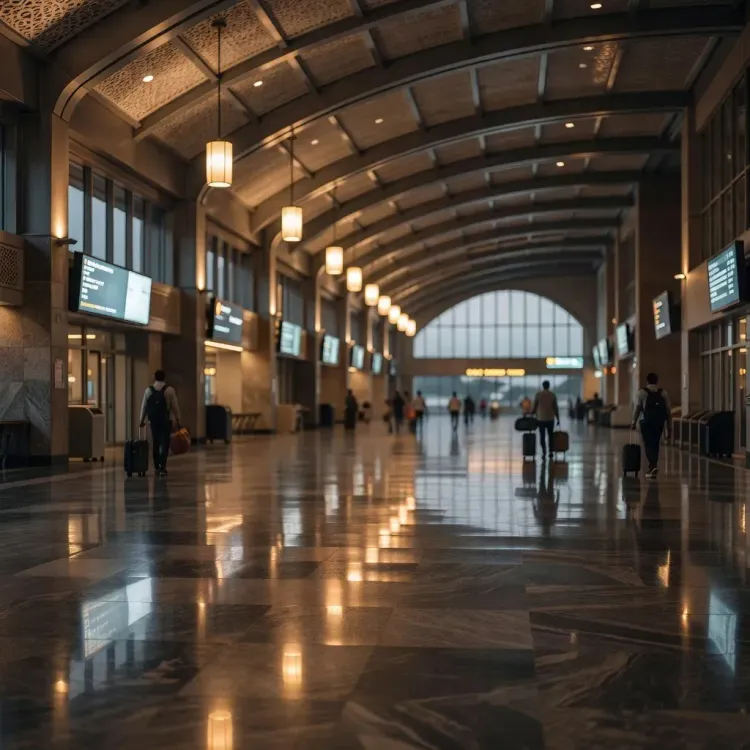
13 major railway stations in Delhi are being redeveloped with world-class passenger amenities under the central government's programme.
The New Delhi–Varanasi Vande Bharat Sleeper train has been launched, improving overnight connectivity to Kashi.
The station upgrades align with the Amrit Bharat Station Scheme , announced in Union Budget 2023, targeting over 1,300 stations nationwide.
CM Rekha Gupta credited PM Narendra Modi and Railway Minister Ashwini Vaishnaw for driving the capital's railway transformation.
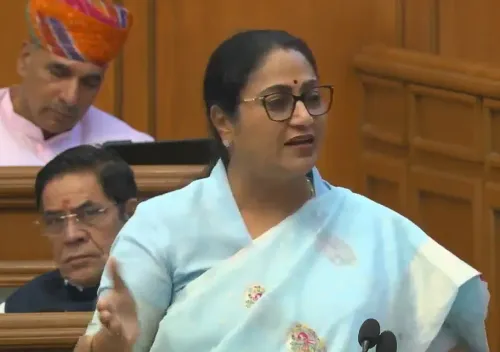
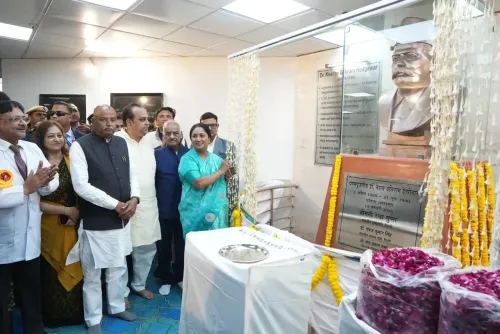
Thirteen railway stations. One record budget. And a promise that every passenger in India's capital deserves a world-class journey. Delhi Chief Minister Rekha Gupta on Wednesday, 18 November 2026 took to X to highlight an unprecedented railway overhaul under way across Delhi, crediting Prime Minister Narendra Modi and Union Railway Minister Ashwini Vaishnaw for driving the transformation.
A record ₹2,711 crore earmarked for Delhi's rails
The headline figure is striking: a record ₹2,711 crore has been provisioned for Delhi's railway development in the financial year 2026-27, according to Gupta's post. She described the allocation as central to an effort to equip 13 major railway stations in the capital with world-class passenger amenities. The sheer scale of the outlay signals that Delhi — already the nation's busiest rail hub for originating long-distance services — is being repositioned as a showcase for India's modernisation ambitions.
The station redevelopment drive aligns with the Centre's Amrit Bharat Station Scheme, announced in the Union Budget of 2023, which targets the upgrade of over 1,300 stations nationwide with improved waiting areas, better accessibility, enhanced security, and contemporary design. Delhi stations figure among the highest-footfall nodes in that programme.
New Delhi–Varanasi Vande Bharat Sleeper joins the picture
Beyond bricks and mortar, Gupta also pointed to the New Delhi–Varanasi Vande Bharat Sleeper train as fresh evidence of the upgrade in service quality. The overnight sleeper variant of the semi-high-speed Vande Bharat Express — a service first launched in 2019 and progressively expanded since — brings the pilgrim city of Kashi (Varanasi) within more comfortable, faster reach for Delhi travellers. The sleeper configuration marks a step beyond the chair-car versions that have run intercity routes, extending the platform's reach to overnight journeys.
Gupta framed the railway push in explicitly human terms, writing: 'Har safar aasan ho, har yatri ko samman mile' — 'every journey should be easy, every passenger should receive respect' — articulating a compact that connects infrastructure spend to everyday dignity.
Delhi as the centrepiece of Modi's rail modernisation drive
The capital's prominence in the railway upgrade is not coincidental. Delhi sits at the apex of India's northern rail network, with multiple trunk routes radiating to Mumbai, Kolkata, Chennai, Varanasi, Amritsar, and beyond. Any improvement to its major terminals — currently handling millions of passengers weekly — has an outsized multiplier effect on the network's overall efficiency and passenger experience.
Gupta's post is as much a political statement as an infrastructure update: by crediting Modi and Vaishnaw by name, she ties the BJP-governed Centre's national infrastructure vision directly to tangible outcomes in the AAP-turned-BJP-led capital. The timing — mid-financial year — also serves as a progress marker, reminding Delhi voters that the budgeted funds are actively in motion rather than on paper alone.
The real test, of course, will be in the execution: whether the ₹2,711 crore is fully utilised within the financial year and whether the 13 stations emerge on schedule with the promised amenities. Watch the physical progress at Delhi's major terminals through the remaining months of FY 2026-27 — that is where the promise will be measured.
Point of View
She reinforces the BJP's 'delivery narrative' in a city where the party only recently consolidated executive control. The ₹2,711 crore figure and the 13-station mandate, if executed on schedule, would represent one of the most visible urban rail upgrades in India's post-pandemic infrastructure cycle. The inclusion of the Vande Bharat Sleeper broadens the story from static infrastructure to premium mobility, a segment increasingly central to the Centre's railway brand. The unanswered question is utilisation: large railway allocations in Indian budgets have historically faced slippage, and actual physical delivery by March 2027 will determine whether this becomes a lasting legacy or a campaign talking point.
NationPress
18 Nov 2026
Frequently Asked Questions
How much money has been allocated for Delhi railway development in 2026-27?
A record ₹2,711 crore has been provisioned for Delhi's railway development in the financial year 2026-27 , according to Delhi Chief Minister Rekha Gupta's post.
Which Delhi railway stations are being upgraded to world-class standards?
13 major railway stations in Delhi are being redeveloped with world-class amenities. The specific list of all 13 stations has not been officially detailed in the current announcement.
What is the Amrit Bharat Station Scheme?
The Amrit Bharat Station Scheme is a central government programme announced in the Union Budget 2023 for the modernisation and redevelopment of over 1,300 railway stations across India with improved passenger facilities, accessibility, and contemporary design.
What is the Vande Bharat Sleeper train from New Delhi to Varanasi?
The New Delhi–Varanasi Vande Bharat Sleeper is an overnight sleeper variant of the semi-high-speed Vande Bharat Express, connecting Delhi to Kashi (Varanasi) more comfortably and quickly. It extends the Vande Bharat platform — originally launched in 2019 — to overnight travel.
Who is responsible for Delhi's railway modernisation?
The railway modernisation drive is being led at the national level by Prime Minister Narendra Modi and Union Railway Minister Ashwini Vaishnaw , with Delhi CM Rekha Gupta highlighting the capital-specific outcomes on behalf of the state government.