CM Rekha Gupta Hails Bastar's Shift from Naxal Violence to Mainstream
Synopsis
Delhi Chief Minister Rekha Gupta praised Bastar's shift from Naxal violence to development on August 13, 2026, saying former cadres are now walking a path of skill, dignity, and self-reliance — echoing the BJP's security-plus-development narrative in Chhattisgarh.
Key Takeaways
Delhi CM Rekha Gupta posted on August 13, 2026 celebrating Bastar's transformation away from Naxal violence.
Bastar division, Chhattisgarh has historically been one of India's most severe Left-Wing Extremism hotspots.
The SAMADHAN strategy , launched by the Ministry of Home Affairs in 2017 , combines security operations with development in LWE-affected districts.
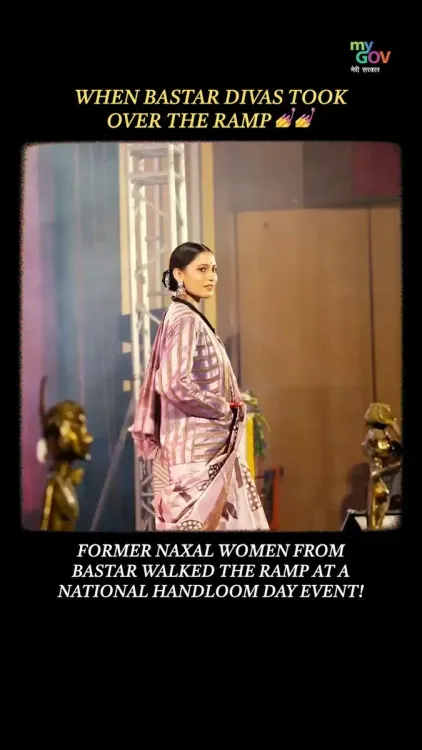
Gupta's post highlights former Naxal cadres joining skill and livelihood programmes — framed as hunar, samman, swavalamban (skill, dignity, self-reliance).
BJP-led governments have consistently linked declining Naxal incident counts to surrender-rehabilitation schemes as evidence of progress.
Ministry of Home Affairs annual LWE reports remain the key benchmark for measuring real-world progress in the region.
From the barrel of a gun to the tools of a trade — Bastar, once synonymous with Naxal terror in the heart of Chhattisgarh, is being held up as a symbol of transformation. Delhi Chief Minister Rekha Gupta on Thursday, August 13, 2026, took to X to celebrate what she called a deeply heartening change in the region.
In her post, CM Gupta wrote: 'नक्सलमुक्त भारत के बस्तर की यह बदलती तस्वीर बेहद सुखद है।' — 'This changing picture of a Naxal-free India's Bastar is deeply heartening.' She added that those who once walked the path of the gun are today joining the mainstream of development, moving forward on a new road of skill, dignity, and self-reliance.
Bastar's Long Shadow: Decades of Left-Wing Extremism
Bastar division in southern Chhattisgarh has for decades been one of India's most severe Left-Wing Extremism (LWE) hotspots, with Naxalite networks deeply embedded among tribal communities. The violence disrupted schooling, healthcare, and economic activity across vast forested stretches, leaving generations caught between armed groups and security forces.
The human cost was borne most heavily by the region's tribal population — both as victims of insurgent violence and as communities denied basic development because of conflict. Surrendered cadres, many of them young men and women drawn in by ideology or coercion, faced the challenge of re-entering a society with few skills and fewer opportunities.
SAMADHAN and the Security-Plus-Development Push
The shift CM Gupta references has roots in a sustained policy framework. The Ministry of Home Affairs launched the SAMADHAN strategy in 2017, combining intensified security operations with development outreach — roads, schools, banking access, and livelihood schemes — targeted at LWE-affected districts. Chhattisgarh has been central to that effort.
BJP-led administrations at both the Centre and in Chhattisgarh have consistently highlighted declining Naxal incident counts alongside rehabilitation and skill programs for surrendered individuals as evidence that the twin-track approach is working. Gupta's post amplifies that political narrative, framing Bastar's story as proof that development can follow security gains.
Skill, Dignity, Self-Reliance: The Rehabilitation Arc
At the core of the transformation story are surrender-and-rehabilitation schemes that offer former cadres vocational training, financial assistance, and social reintegration. The language CM Gupta uses — hunar, samman, swavalamban (skill, dignity, self-reliance) — maps directly onto the stated goals of these programmes: giving surrendered individuals an economic identity that does not depend on the movement they left behind.
Whether the scale of that reintegration matches the political rhetoric is a question the Ministry of Home Affairs annual LWE reports will continue to answer. But the direction of travel — fewer incidents, more surrenders, more infrastructure — has been documented over several successive years across the region.
Bastar's story is not finished. But if the guns are going quieter and the workshops are filling up, that is a headline worth watching.
Point of View
She connects Delhi's political voice to a broader national story the Centre has been building since the SAMADHAN framework of 2017. The framing of former insurgents as self-reliant skilled workers is both a governance claim and an electoral asset. The credibility of that claim will ultimately rest on verifiable data from LWE district reports — not social media posts.
NationPress
13 Aug 2026
Frequently Asked Questions
What did Delhi CM Rekha Gupta say about Bastar?
CM Rekha Gupta said Bastar's transformation is deeply heartening, noting that those who once followed the path of the gun are now joining the development mainstream through skill, dignity, and self-reliance.
What is the SAMADHAN strategy for Naxal areas?
SAMADHAN is a Ministry of Home Affairs strategy launched in 2017 that combines security operations with development initiatives — including roads, schools, and livelihood schemes — in Left-Wing Extremism-affected districts like those in Bastar.
Is Bastar Naxal-free now?
The situation in Bastar has improved significantly over successive years with declining LWE incidents, but a verified 'Naxal-free' status for the entire division cannot be confirmed from available data as of August 2026.
What rehabilitation schemes exist for surrendered Naxalites?
Central and state governments run surrender-and-rehabilitation programmes offering former Naxal cadres vocational training, financial assistance, and social reintegration support to help them re-enter civilian life.
Why is Bastar significant in India's Naxal conflict?
Bastar division in southern Chhattisgarh has been one of the most entrenched Left-Wing Extremism strongholds in India for decades, making any sustained reduction in violence and increase in development there a major policy benchmark.