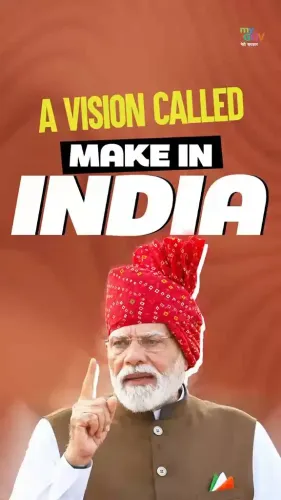
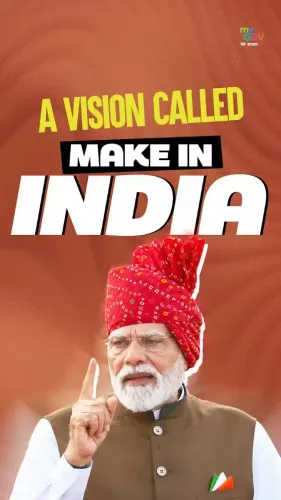
CM Rekha Gupta Marks 12 Years of Make in India

Synopsis
Delhi Chief Minister Rekha Gupta marked 12 years of Make in India on 25 September 2026, crediting PM Modi's 2014 initiative — bolstered by PLI schemes and the Atmanirbhar Bharat campaign — with elevating India from a consumer market to a global manufacturing powerhouse.
Key Takeaways
Make in India was launched by PM Narendra Modi on 25 September 2014 , completing its twelfth year on the date of CM Gupta's post.
Production Linked Incentive (PLI) schemes introduced from 2020 across sectors including electronics, pharma and defence gave the initiative structural backing.
The Atmanirbhar Bharat Abhiyan (2020) extended the manufacturing push to emphasise import substitution and export growth simultaneously.
CM Gupta used the phrase 'chip to ship, mobile to missile' to illustrate the width of India's manufacturing ambitions across civilian and strategic industries.
The post frames the next phase as 'Make for the World' — India as a net exporter to global supply chains, anchored to the Viksit Bharat 2047 goal.
Twelve years after Prime Minister Narendra Modi stepped onto a stage in New Delhi and dared India to manufacture for the world, Delhi Chief Minister Rekha Gupta invoked that founding moment on Friday, 25 September 2026 — and argued the bet has paid off.
Writing on X in Hindi, CM Gupta recalled the clarity of intent behind the 2014 launch: 'भारत केवल दुनिया का बाजार नहीं बनेगा, भारत दुनिया के लिए निर्माण करेगा' ('India will not merely be the world's market — India will manufacture for the world'). The resolution, she said, was that 'Made in India' would become a globally recognised mark of quality, skill, and capability.
From a 2014 rally cry to a manufacturing arc
Make in India was formally launched on 25 September 2014 — exactly twelve years before Gupta's post — as a centrepiece of the Modi government's effort to reposition the country as a production hub rather than a consumption market. The initiative combined liberalised foreign direct investment norms with a push to simplify industrial regulation, targeting sectors from defence to electronics.
The programme gained structural muscle from 2020 onward when the government rolled out Production Linked Incentive (PLI) schemes across more than a dozen sectors, including mobile phones, pharmaceuticals, semiconductors, and defence manufacturing. The same year, the Atmanirbhar Bharat Abhiyan — the self-reliant India campaign — was announced, explicitly linking domestic manufacturing growth with reduced dependence on imports and the expansion of export capacity.
Chip to ship, mobile to missile
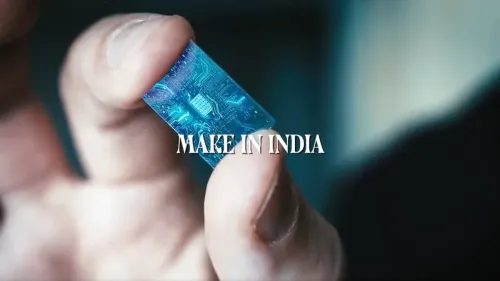
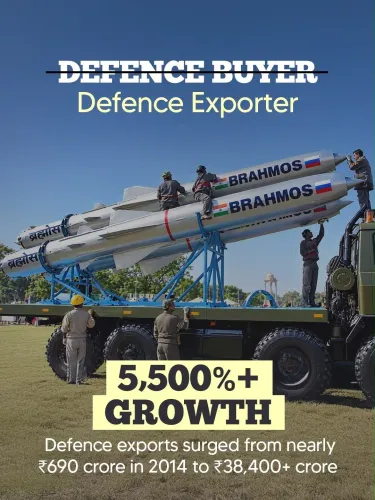
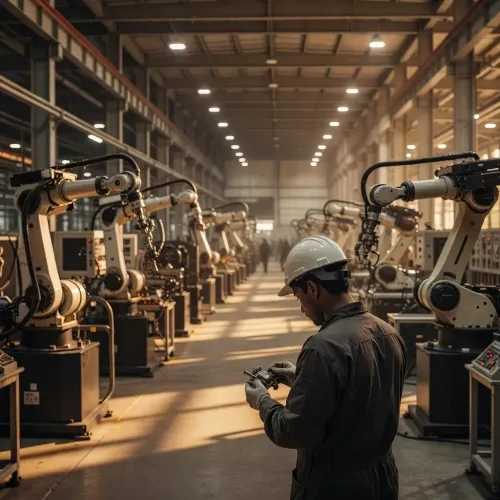
CM Gupta's post marshals a vivid shorthand for the breadth of that expansion: 'चिप से शिप तक, मोबाइल से मिसाइल तक' — 'from chip to ship, from mobile to missile' — framing India's industrial footprint as stretching from consumer electronics at one end to strategic defence production at the other. The phrase is designed to signal that manufacturing ambition is no longer confined to low-cost, labour-intensive assembly.
She credited PM Modi with giving the country more than a slogan: 'He gave our entrepreneurs confidence, our youth opportunity, and India's capability a global platform.' The post cites record FDI inflows and the success of PLI schemes as evidence that the original vision is being realised — though specific figures for 2026 await confirmation in official economic data releases.
The 'Make for the World' framing
The political messaging in Gupta's post represents a deliberate evolution of the original brand. Where Make in India emphasised attracting investment and building domestic capacity, the newer phrase 'Make for the World' positions India as a net exporter of manufactured goods — a supplier to global supply chains rather than a recipient of them. CM Gupta describes this journey as the 'strong foundation of Atmanirbhar Bharat's strength and the resolve of Viksit Bharat' (विकसित भारत, or Developed India), the government's overarching target framing for 2047.
Twelve years in, the anniversary marks not just a policy birthday but a consolidation of narrative: the story India's ruling party wants told about what has changed since that September evening in 2014.
Point of View
It signals that the party sees industrial policy — not just welfare — as an electoral asset going forward. The chip-to-ship, mobile-to-missile framing also subtly raises the stakes: it positions India's defence indigenisation under the same umbrella as consumer-tech success, a bundling that appeals simultaneously to nationalist sentiment and investor confidence. Whether the 2026 FDI and export data fully validate the rhetoric will be the test that follows the celebration.
NationPress
25 Sept 2026
Frequently Asked Questions
When was Make in India launched?
Make in India was launched by Prime Minister Narendra Modi on 25 September 2014 in New Delhi, with the goal of transforming India into a global manufacturing hub.
What are PLI schemes and how do they relate to Make in India?
Production Linked Incentive (PLI) schemes were introduced from 2020 onward as a key pillar supporting Make in India, offering financial incentives to manufacturers in sectors like electronics, pharmaceuticals, and defence to boost domestic output and exports.
What is 'Make for the World' and how is it different from Make in India?
'Make for the World' is a narrative evolution of Make in India : while the original initiative focused on attracting investment and building domestic manufacturing capacity, the newer phrase positions India as an active exporter to global supply chains rather than primarily a consumer market.
What is Atmanirbhar Bharat and how does it connect to Make in India?
Atmanirbhar Bharat Abhiyan (Self-Reliant India) was announced in May 2020 and is closely linked to Make in India — it extends the manufacturing push by emphasising both import substitution and export-led growth as twin objectives of India's industrial policy.
Why did Delhi CM Rekha Gupta post about Make in India?
Delhi Chief Minister Rekha Gupta posted on 25 September 2026 to mark the 12th anniversary of the Make in India initiative, praising PM Modi's original vision and citing PLI successes, FDI growth, and rising exports as evidence of its impact.