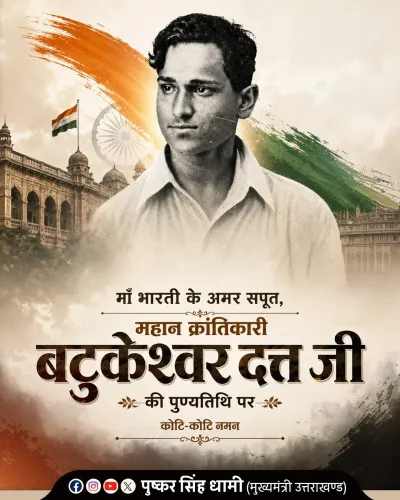
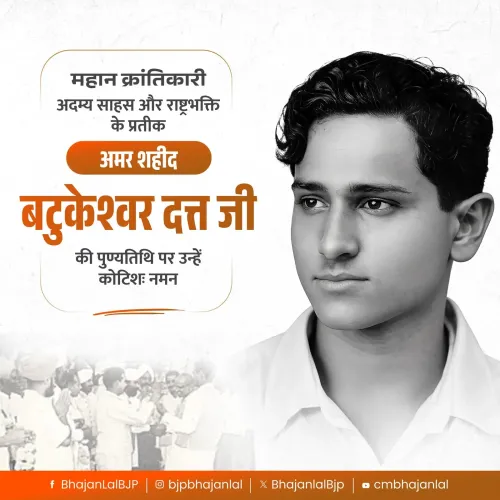
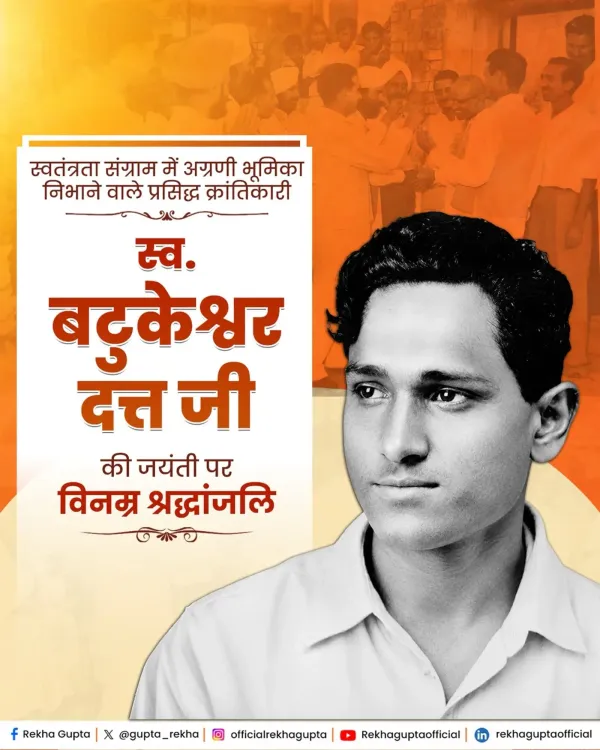
CM Rekha Gupta pays tribute to revolutionary Batukeshwar Dutt on birth anniversary
Synopsis
Delhi Chief Minister Rekha Gupta on 18 November 2026 paid tribute to revolutionary Batukeshwar Dutt on his birth anniversary, honouring his 1929 Central Assembly bombing alongside Bhagat Singh and his endurance through the Cellular Jail's brutal imprisonment.
Key Takeaways
Delhi CM Rekha Gupta posted a tribute on 18 November 2026 marking the birth anniversary of revolutionary Batukeshwar Dutt .
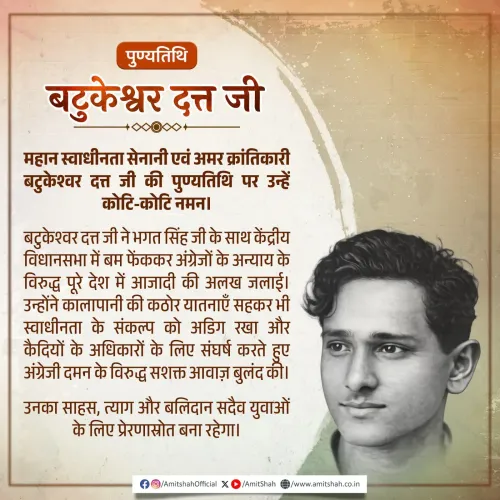
Dutt and Bhagat Singh threw bombs in the Central Legislative Assembly on 8 April 1929 to protest colonial legislation, then surrendered deliberately.
Dutt was sentenced to life transportation and imprisoned in the Cellular Jail (Kala Pani) in the Andaman Islands.
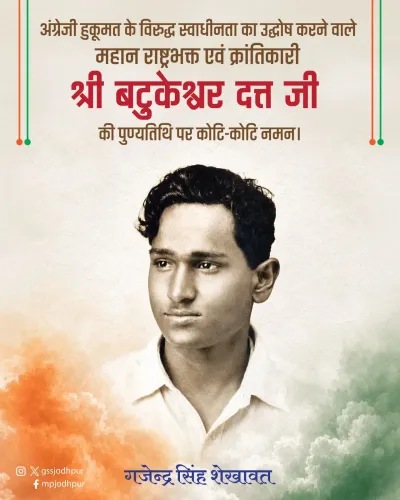
CM Gupta described his courage and patriotism as 'unparalleled' and said his sacrifice would remain immortal in national history.
Bhagat Singh was executed in 1931 ; Dutt survived and was released after Indian independence.
A bomb in the Central Legislative Assembly. A defiant slogan ringing through colonial halls. And a life sentence to the dreaded Kala Pani — none of it enough to break him. On the birth anniversary of revolutionary Batukeshwar Dutt, Delhi Chief Minister Rekha Gupta on Wednesday, 18 November 2026 paid solemn tribute to the freedom fighter, calling his courage and patriotism unparalleled.
CM Gupta wrote in Hindi: 'माँ भारती के वीर सपूत' — 'the brave son of Mother India' — saluting Batukeshwar Dutt's indomitable spirit alongside Bhagat Singh, with whom he shook the very foundations of British rule. She noted that even the inhuman tortures of the Cellular Jail — the feared Kala Pani — could not waver his resolve, and that his sacrifice and struggle would remain immortal in the nation's history.
The 1929 Assembly bombing that echoed through history
On 8 April 1929, Batukeshwar Dutt and Bhagat Singh hurled two smoke bombs into the Central Legislative Assembly in Delhi to protest the Public Safety Bill and the Trade Disputes Bill — both instruments of colonial suppression. They did not flee. They scattered leaflets, raised slogans, and waited to be arrested. The act was not designed to kill; it was designed to be heard.
Both were tried and sentenced. Dutt received transportation for life — exile to the Cellular Jail in the Andaman Islands, where colonial authorities had perfected isolation and hard labour into instruments of psychological destruction. Bhagat Singh was later hanged in 1931. Dutt endured, emerging only after independence to live a life that received far less recognition than the sacrifice warranted.
Born in 1910, remembered across a century
Batukeshwar Dutt was born in 1910 in what is now the Burdwan district of West Bengal. He became active in the revolutionary movement at a young age, drawn into Bhagat Singh's circle and the broader resistance against British economic and political control. His willingness to stand trial publicly — turning the courtroom into a platform — was itself a statement that outlived the verdict.
Indian political leaders across parties mark the birth anniversaries of independence-era revolutionaries as a consistent feature of public life — an acknowledgment that the freedom struggle was waged not only by those whose names fill textbooks, but by those who endured in quieter, harder ways. CM Gupta's tribute places Dutt firmly in that front rank.
A century on, the assembly he walked into as a defiant young man is gone, the empire that tried him is history — but the name Batukeshwar Dutt endures precisely because he chose not to run.
Point of View
And they correct a historical imbalance that long overshadowed figures who survived their most famous acts. CM Gupta's specific emphasis on Dutt's endurance through the Cellular Jail — rather than just the 1929 bombing — signals a conscious effort to honour the full arc of sacrifice, not just its most dramatic moment. For the BJP, anchoring such tributes to icons associated with armed resistance is also consistent with its broader nationalist narrative of valorising revolutionary, as distinct from purely constitutional, paths to independence.
NationPress
18 Nov 2026
Frequently Asked Questions
Who was Batukeshwar Dutt?
Batukeshwar Dutt was an Indian revolutionary born in 1910 who, alongside Bhagat Singh , threw bombs in the Central Legislative Assembly in 1929 to protest British colonial laws. He was sentenced to life imprisonment in the Cellular Jail and survived to see Indian independence.
What was the 1929 Central Assembly bombing?
On 8 April 1929 , Batukeshwar Dutt and Bhagat Singh detonated two smoke bombs inside the Central Legislative Assembly in Delhi to protest the Public Safety Bill and Trade Disputes Bill . They did not attempt to escape, using the subsequent trial as a public platform against British rule.
What is Kala Pani or Cellular Jail?
The Cellular Jail , known as Kala Pani , is located in the Andaman Islands. Under British rule it was used to isolate and punish Indian political prisoners through hard labour and solitary confinement. Batukeshwar Dutt was transported there after his life sentence.
Why did Delhi CM Rekha Gupta pay tribute to Batukeshwar Dutt?
18 November marks the birth anniversary of Batukeshwar Dutt. Delhi CM Rekha Gupta posted a tribute honouring his revolutionary role alongside Bhagat Singh and his resilience during imprisonment, calling his sacrifice immortal in national history.
What happened to Bhagat Singh after the 1929 Assembly bombing?
Bhagat Singh was subsequently tried for a separate case involving the killing of a British police officer and was hanged by colonial authorities on 23 March 1931 . He is widely regarded as one of India's most iconic independence-era martyrs.