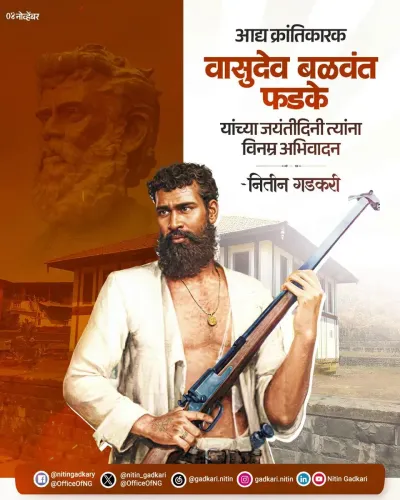
CM Rekha Gupta pays tribute to revolutionary Vasudev Balwant Phadke
Synopsis
Delhi Chief Minister Rekha Gupta paid tribute to 19th-century Maharashtrian revolutionary Vasudev Balwant Phadke on his birth anniversary, hailing his armed resistance against British rule as a glorious chapter of India's independence struggle.
Key Takeaways
Delhi Chief Minister Rekha Gupta paid tribute to revolutionary Vasudev Balwant Phadke on his birth anniversary on 4 November 2026 .
Phadke was a 19th-century Maharashtrian revolutionary who organised armed resistance against British colonial rule.
CM Gupta described his courage and patriotism as a 'glorious chapter of India's freedom struggle.' The tribute follows a consistent BJP pattern of publicly honouring revolutionary freedom fighters on key anniversaries.
Phadke is widely regarded as a pioneer of the armed-resistance tradition within India's independence movement.
A freedom fighter who raised the flag of armed revolt against the British more than a century before independence — Delhi Chief Minister Rekha Gupta paused on Wednesday, 4 November 2026, to honour one of Maharashtra's most defiant sons: Vasudev Balwant Phadke, on his birth anniversary.
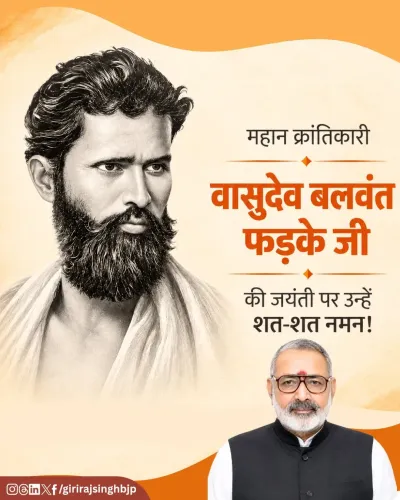
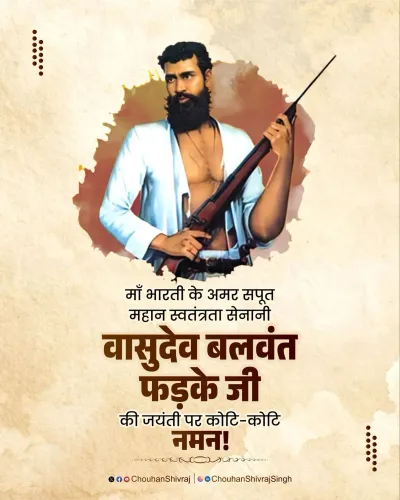
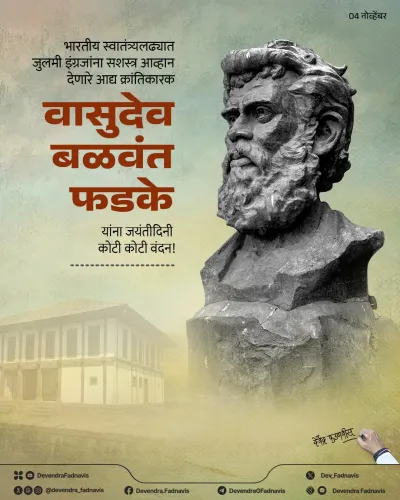
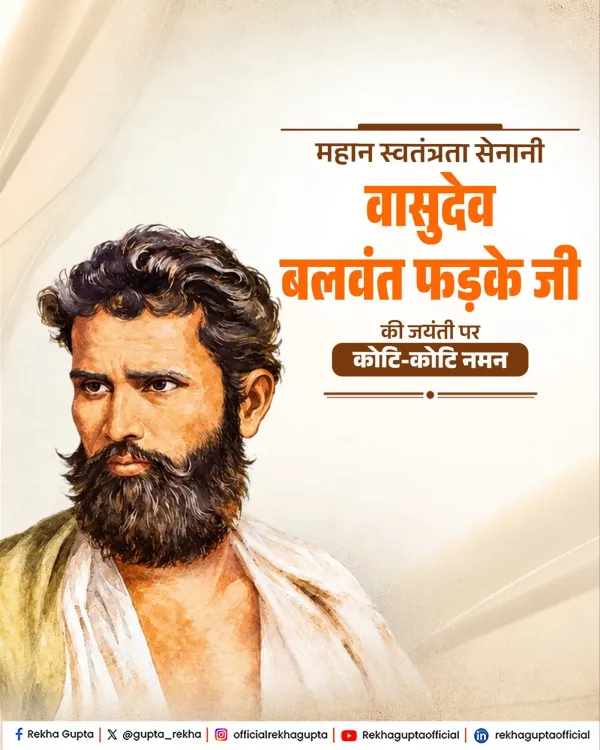
Posting in Hindi, CM Gupta wrote: 'महान स्वतंत्रता सेनानी एवं क्रांतिकारी श्री वासुदेव बलवंत फड़के जी की जयंती पर कोटि-कोटि नमन' — 'Countless salutations on the birth anniversary of great freedom fighter and revolutionary Shri Vasudev Balwant Phadke.' She described his 'indomitable courage, sacrifice and patriotism' as a 'glorious chapter of India's freedom struggle' and specifically remembered him as the man who 'sounded the bugle of armed revolution against British rule.'Who was Vasudev Balwant Phadke?
Vasudev Balwant Phadke was a 19th-century Indian revolutionary from Maharashtra who is widely regarded as a pioneer of the armed resistance stream within the broader independence movement. At a time when organised political agitation was still nascent, Phadke mobilised fighters and took the battle against colonial rule beyond petitions and protests — directly into confrontation. His courage made him a touchstone for later generations of revolutionaries who believed that freedom could only be seized, not petitioned for.
BJP's pattern of honouring revolutionary icons
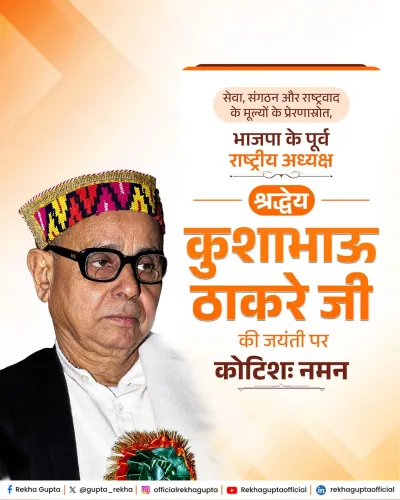
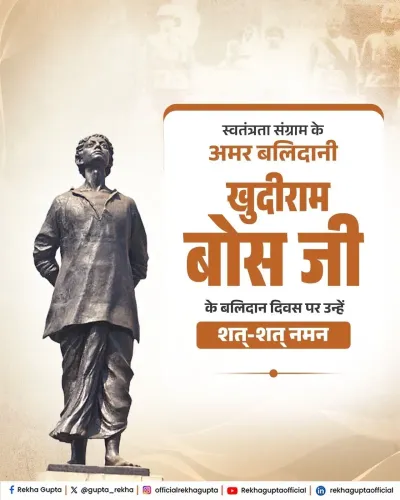
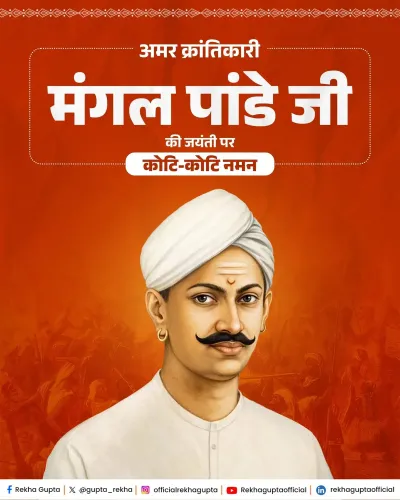
BJP leaders and governments across India have made it a consistent practice to publicly commemorate revolutionary freedom fighters on their birth and death anniversaries. The tributes form part of a deliberate effort to spotlight the armed-resistance strand of the independence movement — figures like Bhagat Singh, Subhas Chandra Bose, and Phadke — alongside the more prominently memorialised non-violent tradition. For CM Gupta, invoking Phadke's name carries a clear message: sacrifice and revolutionary zeal are as central to India's national memory as civil disobedience.
Phadke's legacy endures not just in history books but in the living argument over what kind of courage built the nation. That argument, it turns out, never really ends.
Point of View
Armed-resistance figures in the national memory — positioning the party as custodian of a broader, more militant freedom-struggle heritage. By invoking Phadke specifically, the post signals continuity with a tradition that valorises sacrifice and confrontation over negotiation. Such commemorations serve a dual purpose: cultural messaging for core supporters and a wider claim on historical legitimacy beyond the Gandhian mainstream.
NationPress
4 Nov 2026
Frequently Asked Questions
Who was Vasudev Balwant Phadke?
Vasudev Balwant Phadke was a 19th-century Indian revolutionary from Maharashtra who organised armed resistance against British colonial rule and is considered a pioneer of the revolutionary stream within India's independence movement.
Why is Vasudev Balwant Phadke remembered?
He is remembered for being among the first Indians to mount an organised armed revolt against British rule, inspiring later generations of revolutionaries who believed independence had to be fought for, not just petitioned.
What did Delhi CM Rekha Gupta say about Phadke?
CM Rekha Gupta saluted Phadke on his birth anniversary, describing his indomitable courage, sacrifice, and patriotism as a glorious chapter of India's freedom struggle and praising him for sounding the bugle of armed revolution against British rule.
Why do BJP leaders regularly pay tribute to revolutionary freedom fighters?
BJP leaders consistently commemorate revolutionary figures on birth and death anniversaries as part of a broader effort to highlight the armed-resistance strand of the independence movement alongside the non-violent tradition.
When is Vasudev Balwant Phadke's birth anniversary?
Vasudev Balwant Phadke's birth anniversary falls on 4 November, which was marked in 2026 by tributes from Delhi Chief Minister Rekha Gupta and other public figures.