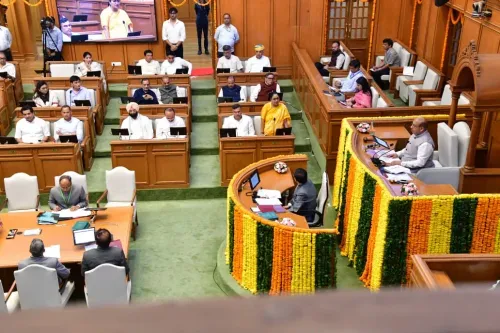
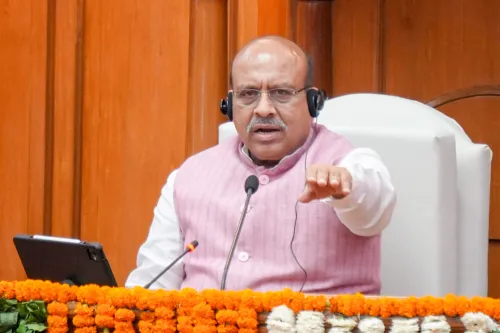
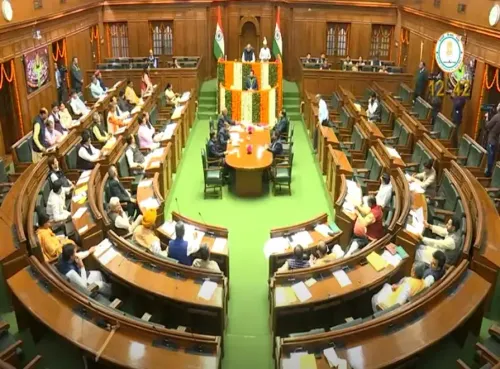
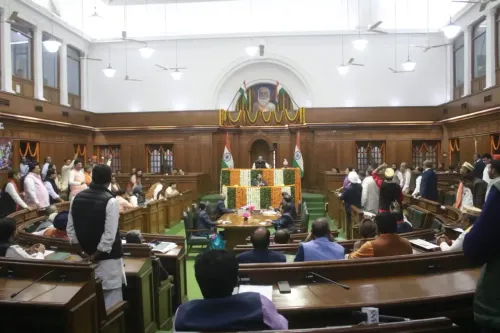
CM Rekha Gupta tables 19 CAG reports, targets AAP's Delhi tenure

Synopsis
Delhi CM Rekha Gupta has tabled 19 CAG audit reports in the assembly targeting the previous AAP government, citing the Satyendra Jain-linked Jal Board case as proof that agencies are already acting on the findings.
Key Takeaways
19 CAG reports on the previous AAP government have been formally tabled in the Delhi Legislative Assembly by the Gupta administration.
CM Rekha Gupta stated that action is under way on all reports and that investigating agencies are operating independently.
Former AAP minister Satyendra Jain was arrested by the Enforcement Directorate in 2022 in a money laundering case linked to alleged Delhi Jal Board irregularities.
Tabling CAG reports is constitutionally necessary before agencies can formally act on audit findings at the state level.
The AAP governed Delhi from 2015 to 2025 ; the current BJP-led government has framed the audit exercise as a systematic accountability drive.
Nineteen audit reports, one after another — Delhi Chief Minister Rekha Gupta has placed before the Delhi Legislative Assembly a stack of Comptroller and Auditor General (CAG) findings that she says expose the full ledger of the previous Aam Aadmi Party government's alleged wrongdoing. The move marks one of the most sweeping accountability offensives by an incoming Delhi administration in recent memory.
Speaking on Wednesday, 19 August 2026, Gupta said the reports collectively document 'every single scam' of the Kejriwal government. 'सभी CAG रिपोर्टों पर कार्रवाई चल रही है' — 'Action is under way on all CAG reports,' she stated, signalling that the exercise is not merely legislative theatre but the opening of active enforcement files.
Satyendra Jain, the Jal Board, and a case already in motion
The sharpest line Gupta drew was around Satyendra Jain, the former AAP minister who she says engineered a scam inside the Delhi Jal Board — the statutory body that manages the capital's water supply and sewerage network. Jain was arrested by the Enforcement Directorate in 2022 in a money laundering investigation tied to alleged irregularities during his ministerial tenure, and Gupta cited his incarceration as evidence that accountability mechanisms are already biting.
'Agencies are doing their job,' she said — a pointed message that the investigative machinery is running independently of political timelines. The framing is deliberate: by tethering the CAG tabling to an arrest already on record, the BJP-led administration presents the audit exercise as part of a chain of consequences, not a fresh allegation.
Why tabling CAG reports matters — and what comes next
In India's constitutional framework, CAG reports only become actionable once they are formally tabled in the state legislature. AAP governed Delhi from 2015 through multiple terms until 2025, and critics had long alleged that several of those audit findings were delayed in reaching the assembly floor. By placing all 19 reports in the house in one move, the Gupta government has simultaneously cleared a procedural backlog and handed investigating agencies the formal legislative basis to act.
The broader pattern is familiar in Indian state politics — incoming governments routinely weaponise their predecessors' audit records — but the volume here is notable. Whether the investigations translate into convictions or remain at the charge-sheet stage will be the real test of the accountability narrative CM Gupta is now staking her early tenure on.
Point of View
CM Rekha Gupta is doing more than clearing a procedural backlog — she is constructing an accountability narrative that anchors her early tenure in contrast to the AAP era. Linking the reports directly to Satyendra Jain's arrest is a calculated signal: the BJP wants voters to see audit findings and criminal proceedings as a single, connected chain. The risk is that if investigations stall or fail to yield convictions, the political weight of the exercise diminishes sharply. For AAP, now in opposition, the pressure is to contest the framing without appearing to shield its own record.
NationPress
19 Aug 2026
Frequently Asked Questions
What are the 19 CAG reports tabled by Delhi CM Rekha Gupta?
Delhi CM Rekha Gupta says her government has placed 19 Comptroller and Auditor General reports before the Delhi Legislative Assembly, each documenting alleged financial irregularities during the previous AAP government led by Arvind Kejriwal.
What is the Satyendra Jain Delhi Jal Board scam?
Satyendra Jain, a former AAP minister, was arrested by the Enforcement Directorate in 2022 in a money laundering investigation linked to alleged irregularities at the Delhi Jal Board during his ministerial tenure. CM Gupta cited his arrest as evidence of ongoing accountability action.
Why does tabling a CAG report in the assembly matter?
Under India's constitutional framework, a CAG report must be formally tabled in the state legislature before investigating agencies can use it as the basis for official action, making the tabling a legally significant step beyond a mere political statement.
How long did AAP govern Delhi?
The Aam Aadmi Party governed Delhi from 2015 through multiple assembly terms until 2025, when the BJP-led government under Rekha Gupta came to power.
What happens next after the CAG reports are tabled in Delhi?
Once tabled, the reports form the formal basis for legislative committee scrutiny and agency investigations. CM Gupta has indicated that central investigative agencies are already acting on the findings, and further judicial or legislative proceedings are expected.