Rajasthan CM Bhajanlal champions PM-KUSUM as farmers' income lifeline
Synopsis
The Chief Minister's Office of Rajasthan, citing CM Bhajanlal Sharma, declared that the PM-KUSUM solar scheme is becoming a dual-purpose tool — cutting input costs for farmers and generating additional income through surplus solar power sales.
Key Takeaways
PM-KUSUM (Pradhan Mantri Kisan Urja Suraksha evam Utthaan Mahabhiyan) was launched in 2019 by the Ministry of New and Renewable Energy.
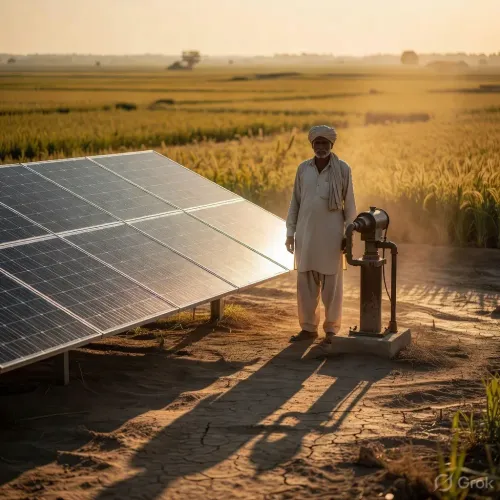
The scheme has three components: standalone solar pumps, grid-pump solarisation, and solar power plants on farm or barren land.
Rajasthan CM Bhajanlal Sharma is positioning the scheme as an income and self-reliance tool for small and marginal farmers.
Rajasthan's high solar irradiance makes it structurally well-suited to maximise PM-KUSUM benefits compared to most other states.
Farmers can sell surplus solar power to the grid, creating a new revenue stream beyond crop income.
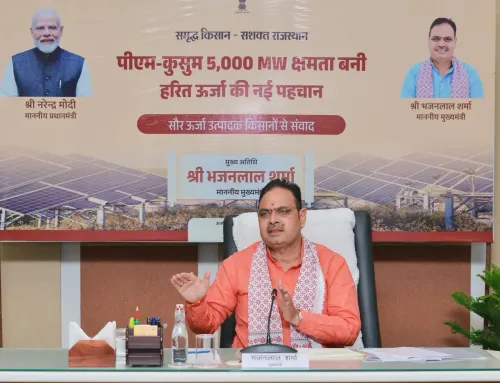
Solar energy is quietly rewriting the economics of farming in Rajasthan. The Chief Minister's Office of Rajasthan, amplifying the voice of Chief Minister Bhajanlal Sharma, declared on Wednesday, 19 August 2026 that the PM-KUSUM scheme is emerging as a vehicle for additional income and self-reliance for the state's farmers.
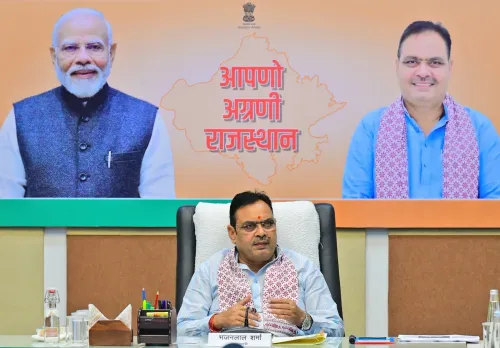
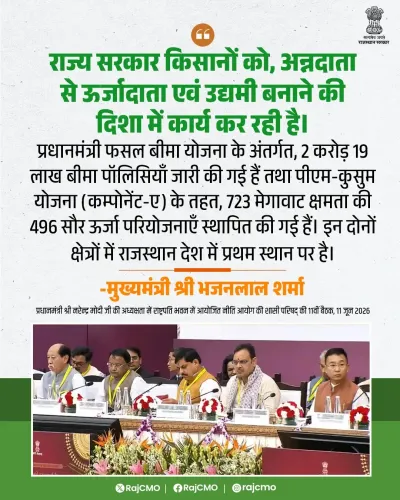
The post, shared under the hashtag #आपणो_अग्रणी_राजस्थान ('Our Leading Rajasthan'), states: 'PM-KUSUM Yojana is becoming a medium of additional income and self-reliance for farmers.' The framing is deliberate — this is not just an irrigation upgrade, it is positioned as an economic transformation.
What PM-KUSUM actually does for a Rajasthan farmer
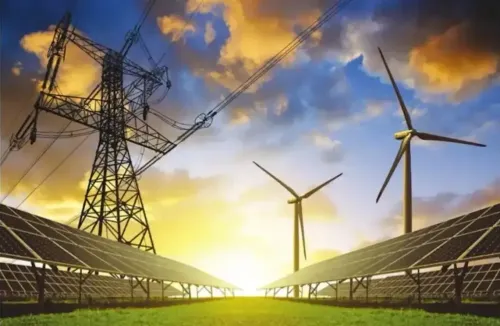
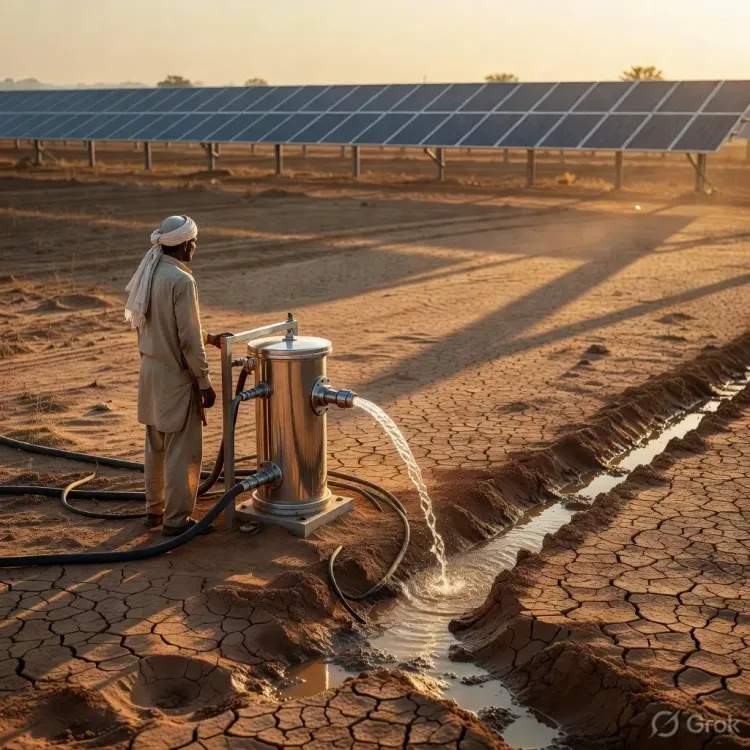
Launched in 2019 by the Ministry of New and Renewable Energy, the Pradhan Mantri Kisan Urja Suraksha evam Utthaan Mahabhiyan (PM-KUSUM) has three working components: standalone solar pumps for off-grid areas, solarisation of existing grid-connected pumps, and small solar power plants on barren or agricultural land. The third component is the income-generation engine — farmers can sell surplus solar power back to the grid, converting their fields into micro power stations. For Rajasthan, a state blessed with some of India's highest solar irradiance across its vast arid and semi-arid belt, the logic is almost too obvious. Diesel pump costs have long eaten into margins for small and marginal farmers. Solar pumps eliminate that recurring expense. Surplus generation adds a revenue line where none existed before.Bhajanlal's agricultural-energy bet in context
CM Bhajanlal Sharma's government has placed agriculture and rural development at the centre of its policy identity since taking office. Championing PM-KUSUM fits that arc: it is a central scheme the state can accelerate through faster implementation of Component B (grid-pump solarisation) and Component C (solar power plants), both of which directly determine how quickly farmers see the income benefit. Rajasthan is not alone — states across India have been scaling solar pump deployment under the same scheme since 2019, aligning with national renewable targets and rural electrification goals. But Rajasthan's solar geography gives it a structural advantage that few others can match. The real test will be in the installation numbers and grid-purchase agreements that follow. A scheme that works on paper becomes a lifeline only when the pump is in the ground and the cheque is in the farmer's hand.Point of View
The bigger question is implementation velocity: the state's solar advantage is real, but progress on Component C grid-purchase agreements has been uneven across India. If Bhajanlal's administration can show measurable installation and income numbers, this becomes a genuine electoral asset; without them, it remains a hashtag.
NationPress
20 Aug 2026
Frequently Asked Questions
What is the PM-KUSUM scheme and how does it help farmers?
PM-KUSUM (Pradhan Mantri Kisan Urja Suraksha evam Utthaan Mahabhiyan), launched in 2019, helps farmers by providing solar-powered irrigation pumps and enabling them to sell surplus solar electricity to the grid, creating an additional income source beyond farming.
What did Rajasthan CM Bhajanlal Sharma say about PM-KUSUM?
The Chief Minister's Office of Rajasthan, attributing the statement to CM Bhajanlal Sharma, said PM-KUSUM is becoming a medium of additional income and self-reliance for farmers in the state.
Which farmers benefit from PM-KUSUM in Rajasthan?
Small and marginal farmers in Rajasthan are the primary beneficiaries, particularly those in arid and semi-arid areas who previously depended on expensive diesel pumps for irrigation.
How many components does PM-KUSUM have?
PM-KUSUM has three components: standalone solar pumps for off-grid areas (Component A), solarisation of existing grid-connected pumps (Component B), and small solar power plants on agricultural or barren land (Component C).
Why is Rajasthan well-suited for PM-KUSUM?
Rajasthan receives some of the highest solar irradiance in India due to its large arid and semi-arid geography, making solar pump deployment and surplus power generation especially viable compared to other states.