CM Rekha Gupta: Tricolour is not a shield for anarchy

Synopsis
Delhi CM Rekha Gupta accused Rahul Gandhi of misusing the tricolour after a court jailed him for allegedly breaching a bond pledged four days earlier, warning Congress, AAP, and CJP that democracy grants the right to protest — not to break the law.
Key Takeaways
Delhi CM Rekha Gupta posted a sharp attack on Rahul Gandhi on 14 October 2026 , accusing him of invoking the tricolour after a court jailed him.
Gandhi allegedly signed a legal bond four days before the court order, then violated its conditions, according to Gupta's post.
Gupta stated: 'The tricolour is a symbol of the nation's self-respect, not a shield for anarchy.' Congress , AAP , and civil-liberties NGO CJP were all named as engaging in political opportunism over the episode.
Gupta drew a firm line: the right to protest exists in a democracy; the right to break the law does not.
The post ends with a constitutional declaration: 'The country will run by the Constitution, not by anarchy.'
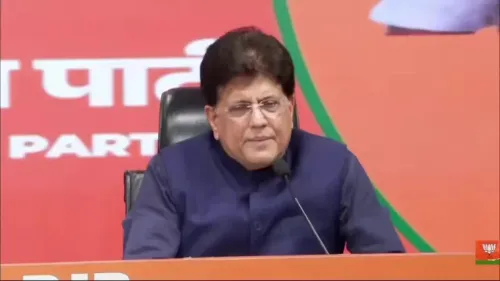
A court order, a broken bond, and the tricolour at the centre of a political storm — Delhi Chief Minister Rekha Gupta fired a sharp broadside at Rahul Gandhi on Wednesday, 14 October 2026, accusing the Congress leader of invoking the national flag as political cover after a court sent him to jail for allegedly violating conditions he had agreed to just four days earlier.
Posting in Hindi, CM Gupta did not mince words: 'राहुल गांधी को स्पष्ट समझ लेना चाहिए कि तिरंगा राष्ट्र के स्वाभिमान का प्रतीक है, अराजकता का कवच नहीं।' ('Rahul Gandhi must clearly understand that the tricolour is a symbol of the nation's self-respect, not a shield for anarchy.')
Bond signed, conditions broken — what the CM alleges
According to Gupta's post, Gandhi had submitted an undertaking in court four days before 14 October, pledging to abide by the law. Within that window, she alleges, he violated the conditions of that bond — prompting the court to order his incarceration. The specific case and order remain a matter of ongoing judicial proceedings whose full details are yet to be publicly verified.
What followed, Gupta argues, was a calculated political pivot: Gandhi and his supporters wrapped the episode in the imagery of the national flag, framing judicial consequences as an attack on democratic protest. That framing, the Chief Minister insists, is a misuse of India's most potent national symbol.
Congress, AAP, and CJP in Gupta's crosshairs
The BJP leader widened her attack beyond Gandhi alone, naming Congress, AAP, and civil-liberties NGO CJP (Citizens for Justice and Peace) in the same breath. Her message was pointed: in a democracy, the right to protest is protected — the right to break the law is not. 'देश संविधान से चलेगा, अराजकता से नहीं,' she wrote — 'The country will run by the Constitution, not by anarchy.'
The triangulation of Congress, AAP, and CJP is deliberate. It frames the episode as a coordinated opposition effort rather than an individual legal dispute, a rhetorical move the BJP has deployed in similar confrontations over protest rights and court orders in recent years.
The tricolour as a political battleground
Disputes over who 'owns' the national flag have a long and combustible history in Indian politics. The BJP has consistently positioned itself as the guardian of national symbols, while opposition parties argue that civic protest — including flag-bearing marches — is itself a constitutional expression of patriotism. Gupta's post lands squarely inside this fault line, daring the opposition to defend both the flag and the conduct that led to the court order in the same breath.
For Rahul Gandhi, the optics are genuinely complicated. A court-issued jail order is not easily reframed as political martyrdom without inviting exactly the kind of counter-punch Gupta has delivered here — one that shifts the debate from government overreach to personal accountability.
The Constitution, Gupta is saying, is the opposition's only legitimate weapon. Everything else is noise.
Point of View
AAP, and CJP together, she signals a coordinated opposition front rather than an isolated incident, amplifying the stakes. The tricolour framing is the sharper play — it forces the opposition to defend both the flag and conduct a court found objectionable in a single breath. This fits a broader BJP pattern of wrapping constitutional supremacy messaging around moments when the judiciary constrains opposition figures.
NationPress
14 Oct 2026
Frequently Asked Questions
Why did Rekha Gupta criticise Rahul Gandhi over the tricolour?
Rekha Gupta accused Rahul Gandhi of using the national flag as political cover after a court jailed him for allegedly violating the conditions of a legal bond he had signed just four days earlier.
What bond did Rahul Gandhi sign in court?
According to CM Gupta's post, Gandhi submitted an undertaking in court pledging to abide by the law roughly four days before 14 October 2026. She alleges he violated those conditions, leading to a court order sending him to jail. The specific case details are part of ongoing judicial proceedings.
Why did Rekha Gupta also name AAP and CJP?
Gupta named Congress, AAP, and civil-liberties NGO CJP together to frame the episode as a coordinated opposition effort to convert a legal matter into a political protest, arguing all three were exploiting the situation.
What did CM Rekha Gupta say about the right to protest?
Gupta acknowledged that the right to protest exists in a democracy but drew a clear distinction: democracy grants the right to dissent, not the right to break the law. She declared the country runs by the Constitution, not by anarchy.
What does the tricolour dispute between BJP and Congress represent?
The dispute reflects a long-running political battle over ownership of national symbols in India. The BJP consistently positions itself as the guardian of the flag, while opposition parties argue that carrying the tricolour during protests is itself a constitutional expression of patriotism.