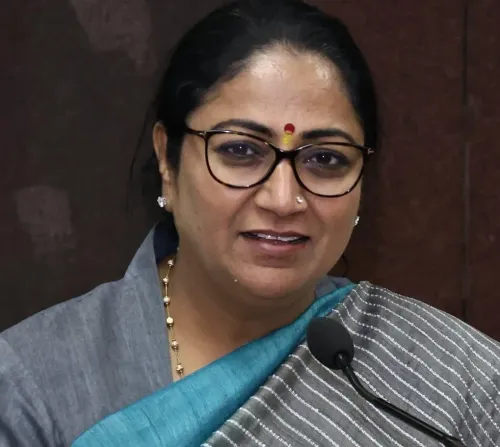
CM Rekha Gupta Urges Delhi to Get Tested on World Hepatitis Day
Synopsis
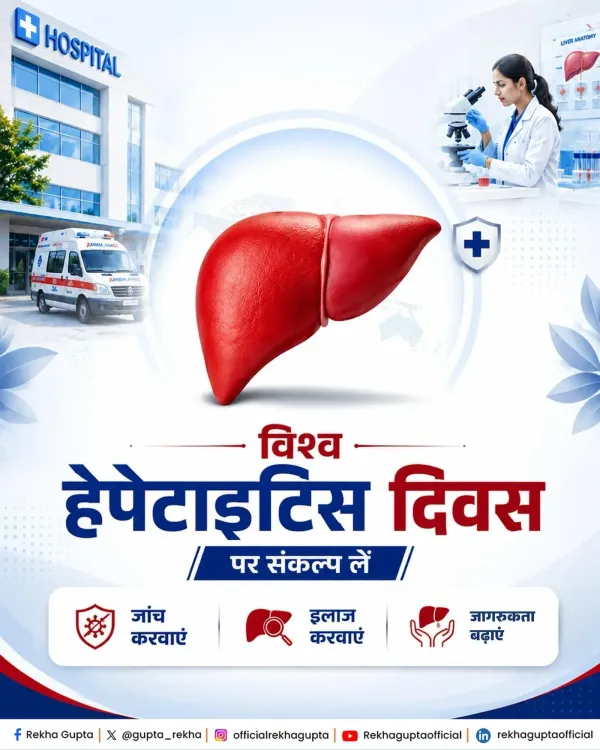
On World Hepatitis Day, Delhi Chief Minister Rekha Gupta urged citizens to embrace timely testing, vaccination, and treatment as the most effective defence against hepatitis, calling it a vital step toward a healthy, safe, and aware Delhi.
Key Takeaways
Delhi Chief Minister Rekha Gupta posted a public health message on World Hepatitis Day, 28 July 2026 , urging timely screening, vaccination, and treatment.
She stated that 'the right information and a step taken in time can protect many lives' from hepatitis.
World Hepatitis Day is observed on 28 July every year to raise awareness of viral hepatitis and advance the WHO 2030 elimination targets .
India's National Viral Hepatitis Control Programme , launched in 2018 , provides free testing, vaccination, and treatment for hepatitis B and C nationwide.
Delhi has historically integrated hepatitis B vaccination into routine immunisation drives and run periodic free testing camps.
Experts and policymakers consider public awareness messaging from senior leaders a key driver of community uptake of preventive health services.
Delhi Chief Minister Rekha Gupta on Tuesday, 28 July 2026, marked World Hepatitis Day by calling on residents of the capital to adopt timely screening, vaccination, and treatment as the most effective tools against hepatitis — urging a commitment to a health-conscious lifestyle as a step toward a safer, more aware Delhi.
In her post, the Chief Minister wrote: 'हेपेटाइटिस से बचाव का सबसे प्रभावी उपाय समय पर जांच, टीकाकरण और उचित उपचार है' — 'The most effective way to prevent hepatitis is timely testing, vaccination, and proper treatment.' She added that 'the right information and a step taken in time can protect many lives,' and called on citizens to resolve, on this day, to adopt a health-aware lifestyle.
Context
World Hepatitis Day is observed every year on 28 July by the World Health Organization and its member states to raise awareness of viral hepatitis — a group of infectious diseases that can cause acute and chronic liver disease. The date marks the birthday of Nobel laureate Dr Baruch Blumberg, who discovered the hepatitis B virus. This year's global observance continues to spotlight the WHO 2030 elimination targets, which call for a 90 per cent reduction in new infections and a 65 per cent reduction in hepatitis-related deaths.
India remains one of the countries with a significant burden of viral hepatitis, particularly hepatitis B and C, which together are responsible for the majority of chronic liver disease and liver cancer cases in the country.
Policy Backdrop
The Central government launched the National Viral Hepatitis Control Programme (NVHCP) in 2018 under the National Health Mission, providing free testing, vaccination, and treatment for hepatitis B and C across the country. The programme is aligned with India's National Action Plan for Viral Hepatitis, which mirrors the WHO elimination roadmap.
At the state level, Delhi has periodically run free hepatitis testing camps and integrated hepatitis B vaccination into routine immunisation drives — part of a broader pattern seen across Indian states to reduce the burden of chronic liver disease. CM Rekha Gupta's message reinforces the state's role in amplifying the national strategy through public awareness and community outreach.
Stakeholders and Impact
Delhi's dense, diverse population — including migrant workers, healthcare workers, and communities with limited access to preventive care — represents a significant at-risk group for viral hepatitis. Early detection and vaccination remain the most cost-effective interventions, and public messaging from senior political leaders is considered a key driver of uptake in community health programmes.
The Chief Minister's call to action directly addresses residents who may be unaware of free government-run screening facilities available through Delhi government hospitals and primary health centres under the national programme.
What's Next
Attention will now turn to whether Delhi's health department follows the Chief Minister's message with expanded free hepatitis screening camps or targeted outreach drives at the district level. Any linkage of such initiatives with Ayushman Bharat coverage — which provides financial protection for hospitalisation — could significantly widen access for economically vulnerable residents. The broader push toward the 2030 WHO elimination targets means that state-level action in large urban centres like Delhi will be critical to India meeting its national commitments.
Point of View
Vaccination, and treatment in a single breath, the message tracks the three-pillar framework that WHO and the Union health ministry have consistently promoted. For a BJP-led state government, such messaging also serves to reinforce visible ownership of national health schemes at the local level. The real test will be whether the statement translates into measurable on-ground activity — expanded screening camps, hospital outreach, or district-level targets — in the weeks that follow.
NationPress
28 Jul 2026
Frequently Asked Questions
What is World Hepatitis Day and why is it observed on 28 July?
World Hepatitis Day is observed every year on 28 July to raise global awareness of viral hepatitis. The date marks the birthday of Dr Baruch Blumberg , who discovered the hepatitis B virus and won the Nobel Prize for his work.
What did Delhi CM Rekha Gupta say on World Hepatitis Day 2026?
Delhi Chief Minister Rekha Gupta urged residents to adopt timely testing, vaccination, and treatment as the most effective protection against hepatitis, calling it a crucial step toward a healthy, safe, and aware Delhi.
What is the National Viral Hepatitis Control Programme?
The National Viral Hepatitis Control Programme (NVHCP) was launched by the Central government in 2018 under the National Health Mission. It provides free testing, vaccination, and treatment for hepatitis B and C across India, aligned with WHO's 2030 elimination targets.
How can Delhi residents get free hepatitis testing?
Free hepatitis testing is available through Delhi government hospitals and primary health centres under the National Viral Hepatitis Control Programme . Residents are encouraged to contact their nearest government health facility for screening details.
What are India's hepatitis elimination targets?
India has committed to the WHO 2030 elimination targets , which call for a 90 per cent reduction in new hepatitis infections and a 65 per cent reduction in hepatitis-related deaths compared to 2015 baselines.