CM Rekha Gupta: Wangchuk ends fast after ministers' visit
Synopsis
Delhi Chief Minister Rekha Gupta hailed Sonam Wangchuk's decision to end his fast after Union Ministers J.P. Nadda and Dr. Jitendra Singh met him at Medanta Hospital, Gurugram, reaffirming the Modi government's commitment to exam transparency, strict action on paper leaks, and parliamentary debate on student welfare.
Key Takeaways
Union Ministers J.P.
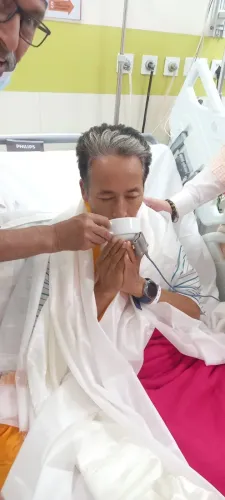
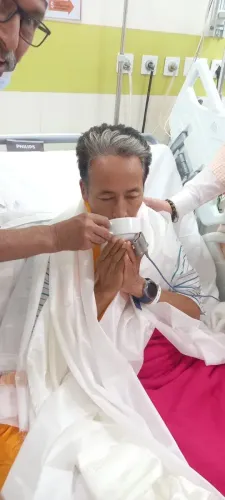
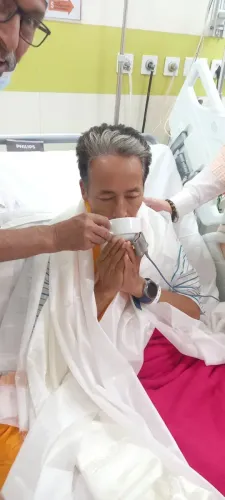
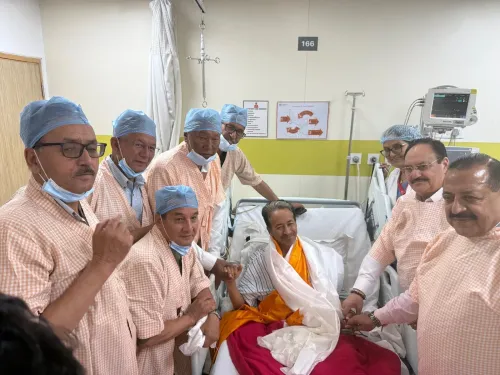
Jitendra Singh met Sonam Wangchuk at Medanta Hospital, Gurugram on 25 July 2026 .
Following the meeting, Wangchuk announced the end of his fast.
The government reaffirmed three commitments: strict action on paper leaks, exam system reforms, and a detailed parliamentary debate.
CM Rekha Gupta framed Wangchuk's decision as a sign of trust in the Modi government's intent to protect student interests.
PM Narendra Modi has consistently stated that India's youth power is the nation's greatest strength and wrongdoers will be punished.
The NTA , established in 2017 , and the fallout from 2024 exam paper-leak controversies form the policy backdrop to this development.
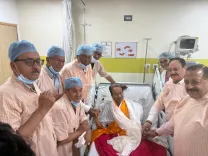
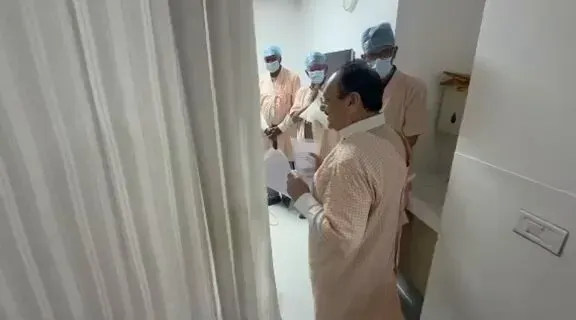
Delhi Chief Minister Rekha Gupta on Friday, 25 July 2026 welcomed the decision of Ladakhi activist Sonam Wangchuk to end his fast, stating that the move reflected his trust in the Modi government's commitment to protecting student interests. Her post came after Union Ministers J.P. Nadda and Dr. Jitendra Singh met Wangchuk at Medanta Hospital, Gurugram, where they conveyed the government's clear position and resolve on issues related to students.
Context
According to CM Gupta's post, the two senior ministers visited Wangchuk at Medanta Hospital in Gurugram and 'sarkaar ka spasht drishtikon aur samadhan ke prati apni pratibaddhataa vyakt ki' — expressed the government's clear perspective and its commitment to finding solutions on student-related issues. Following the meeting, Wangchuk announced the end of his fast. CM Gupta framed the decision as a reflection of Wangchuk's belief in the government's sincerity.
The post quoted Prime Minister Narendra Modi's oft-stated position that 'Bharat ki yuva shakti rashtra nirman ki sabse badi shakti hai' — India's youth power is the greatest force for nation-building — and that every person responsible for endangering the country's future would be punished.
Policy Backdrop
The government's outreach to Wangchuk comes against the backdrop of a prolonged crisis in India's centralised examination ecosystem. In 2024, large-scale allegations of paper leaks in the NEET-UG and UGC-NET examinations triggered nationwide protests by students and prompted the central government to constitute a high-level committee to recommend systemic reforms.
The National Testing Agency (NTA), set up in 2017 to standardise major entrance examinations and curb malpractice, came under intense scrutiny during that period. CM Gupta's post reaffirmed three specific government commitments: strict action against paper-leak incidents, reforms to make the examination system more transparent and credible, and a substantive parliamentary debate to arrive at meaningful solutions.
Stakeholders and Impact
The development directly concerns millions of competitive examination aspirants across India who have demanded accountability and structural reform in the testing system. Wangchuk, known for his educational and environmental campaigns in the Himalayan region, had positioned his fast as a moral intervention on behalf of students whose futures are at risk from examination fraud.
The government's decision to send two senior ministers — J.P. Nadda, the BJP national president and Union Minister, and Dr. Jitendra Singh, Minister of State for Personnel, Public Grievances and Pensions — signals the political weight it has assigned to resolving student grievances ahead of any parliamentary action.
What's Next
The government has specifically committed to a detailed parliamentary discussion on examination reforms, making the upcoming session a key watch-point for students, educators, and civil society. Regulatory or legislative changes to the NTA's functioning and examination protocols are expected to follow from those deliberations.
Whether the assurances conveyed at Medanta translate into concrete legislative or administrative steps will determine the durability of the trust that CM Gupta says Wangchuk's decision represents. Student groups and opposition parties are likely to hold the government to the three-point commitment now on public record.
Point of View
CM Gupta's post attempts to close the reputational damage opened by the 2024 exam-leak crisis. The three-point commitment — penal action, systemic reform, and parliamentary debate — is broadly worded enough to buy time, yet specific enough to be cited as a benchmark by student groups. The real test will come when Parliament convenes and the government must translate these assurances into legislative or regulatory text.
NationPress
24 Jul 2026
Frequently Asked Questions
Why did Sonam Wangchuk end his fast in July 2026?
According to Delhi CM Rekha Gupta's post, Wangchuk ended his fast after Union Ministers J.P. Nadda and Dr. Jitendra Singh visited him at Medanta Hospital, Gurugram, and conveyed the government's commitment to resolving student-related issues including examination reforms.
What did the Modi government promise regarding exam paper leaks?
The government reiterated three commitments: strict action against paper-leak incidents, reforms to make the examination system more transparent and credible, and a substantive parliamentary discussion to ensure meaningful solutions.
Who is Sonam Wangchuk and why was he on a fast?
Sonam Wangchuk is a Ladakhi engineer, innovator, and activist known for educational and environmental campaigns. He undertook a fast over issues related to student welfare and examination integrity.
What is the NTA and what controversies surround it?
The National Testing Agency (NTA) was established in 2017 to conduct major entrance examinations such as NEET-UG and UGC-NET. In 2024, widespread allegations of paper leaks in these exams triggered protests and prompted the government to form a high-level reform committee.
What is Rekha Gupta's role in this development?
Rekha Gupta is the Chief Minister of Delhi and a BJP leader. She posted on X to welcome Wangchuk's decision to end his fast, framing it as a reflection of trust in the Modi government's commitment to protecting students' futures.