Mahua Moitra Urges Wangchuk: Rest, Guard Agitation from Govt Co-option

Synopsis
TMC MP Mahua Moitra on 24 July 2026 publicly welcomed Ladakhi activist Sonam Wangchuk ending his fast, urging him to rest while cautioning that the government must not exploit the moment to weaken the ongoing agitation for Ladakh's constitutional protections under the Sixth Schedule.
Key Takeaways
Mahua Moitra , TMC Lok Sabha MP from Krishnanagar , posted a message to Sonam Wangchuk on 24 July 2026 welcoming the end of his fast.
She specifically warned Wangchuk to ensure the government does not 'use your voice as a tool to break the agitation.' Sonam Wangchuk is a Ladakhi engineer-activist and founder of the Himalayan Institute of Alternatives , a central figure in the Ladakh autonomy movement.
Ladakh was made a Union Territory without a legislature after the abrogation of Article 370 in 2019 , with demands for Sixth Schedule protections remaining unmet.
Central government responses to Ladakh agitations have historically involved dialogue committees rather than full legislative change.
The next round of talks between Ladakh representatives and the Ministry of Home Affairs is being closely watched.
TMC MP Mahua Moitra on Friday, 24 July 2026, publicly welcomed Ladakhi activist Sonam Wangchuk's decision to end his fast, while cautioning him to ensure the government does not exploit his gesture to weaken the ongoing agitation for Ladakh's constitutional protections.
Context
Writing directly to Wangchuk on X, Moitra said: 'Dear Wangchuk, very glad you have ended fast. Please rest and take care of your health. Also please ensure govt does not use your voice as a tool now to try and break agitation. Thank you.' The message signals solidarity from a prominent Opposition parliamentarian at a sensitive moment in the Ladakh movement.
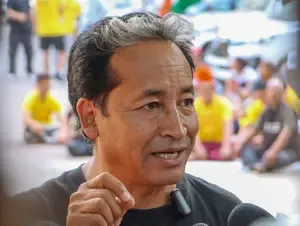
Sonam Wangchuk is a Ladakhi engineer, innovator and climate activist who founded the Himalayan Institute of Alternatives. He has been among the most visible faces of the campaign demanding statutory safeguards for Ladakh since its reorganisation as a Union Territory in 2019.
Policy Backdrop
Following the abrogation of Article 370 in 2019, Ladakh was carved out of Jammu and Kashmir and made a Union Territory without a legislature. At the time, assurances were given that the region's distinct cultural and environmental character would be protected through appropriate constitutional mechanisms, including possible inclusion under the Sixth Schedule.
Those assurances have remained unfulfilled in the years since, fuelling repeated cycles of hunger strikes and mass mobilisations. Activists and community leaders have demanded protection against unregulated land acquisition, demographic change, and the erosion of local governance rights. Central government responses have typically involved dialogue committees and selective concessions rather than full legislative action.
Stakeholders and Impact
Moitra's intervention reflects a broader Opposition interest in keeping pressure on the Centre over Ladakh's unresolved constitutional status. Her specific caution — that the government should not 'use your voice as a tool to break the agitation' — points to a recurring concern among protest movements that hunger-strike endings are sometimes framed by authorities as a resolution of underlying demands.
For Ladakhi communities, the stakes are high: without Sixth Schedule protections or equivalent legislative cover, tribal land rights, local employment reservations, and cultural autonomy remain vulnerable to administrative decisions made in New Delhi. Environmental groups have also flagged the Himalayan ecosystem's fragility in the context of rapid infrastructure development.
What's Next
Attention now shifts to the next scheduled round of talks between Ladakh representatives and the Ministry of Home Affairs on possible constitutional amendments or development packages. The movement's leadership faces the challenge of maintaining momentum while Wangchuk recovers his health.
Whether the Centre treats the end of the fast as an opportunity for substantive engagement or as a signal that pressure has eased will likely determine the agitation's next phase — and the degree to which Opposition voices like Moitra's remain central to the national conversation on Ladakh.
Point of View
While planting a public marker that any government claim of 'resolution' following Wangchuk's fast would be premature. The warning against co-option echoes a well-documented pattern in Indian protest politics, where authorities have historically used the end of a high-profile fast to signal that grievances have been addressed without conceding substantive demands. Moitra's intervention keeps the Ladakh question alive in the national political conversation at a moment when it could otherwise fade from headlines. It also signals that the Opposition intends to hold the Centre accountable on the unresolved constitutional status of Ladakh well into 2026.
NationPress
24 Jul 2026
Frequently Asked Questions
Why did Mahua Moitra message Sonam Wangchuk on 24 July 2026?
TMC MP Mahua Moitra posted on X to welcome Wangchuk ending his fast and to caution him that the government should not use his gesture to claim the Ladakh agitation has been resolved.
What is Sonam Wangchuk's fast about?
Sonam Wangchuk has been fasting to demand constitutional protections for Ladakh, particularly inclusion under the Sixth Schedule, which would safeguard tribal land rights and local governance after the region became a Union Territory in 2019.
What is the Sixth Schedule and why does Ladakh want it?
The Sixth Schedule of the Indian Constitution provides special protections for tribal areas, including autonomous district councils with legislative and judicial powers. Ladakhi activists want it to protect local land rights, cultural identity, and governance from centralised administrative decisions.
What happened to Ladakh after Article 370 was abrogated?
In 2019, Ladakh was separated from Jammu and Kashmir and made a Union Territory without a legislature, leaving it under direct central administration and without the statutory safeguards its communities had been promised.
What is Mahua Moitra's concern about the government's response to Wangchuk ending his fast?
Moitra warned that the government might try to present Wangchuk's decision to end his fast as evidence that the agitation is over or that demands have been met, without actually delivering legislative change for Ladakh.