CM Revanth Orders Unified Welfare Card for Telangana
Synopsis
Chief Minister Revanth Reddy has directed Telangana officials to build a 'Samagra Sankshema Card' — a single card consolidating every welfare scheme benefit for each citizen, powered by AI-based profiling and linked to the state's SEEPC survey data, under IT Department leadership.
Key Takeaways
CM Revanth Reddy has ordered development of a Unified Welfare Card ('Samagra Sankshema Card') for all Telangana citizens.
The card will consolidate benefits from all departments including Aarogyasri , fee reimbursement, CM Relief Fund, labour, education, and insurance schemes.
A special data-collection drive across all departments has been ordered to begin immediately.
AI-based profiling will be used to improve targeting, ensure eligible citizens receive benefits, and identify ineligible claimants.
Data from the recently conducted SEEPC survey will be linked to the card; a state-level unique identity number modelled on Aadhaar is under consideration.
The IT Department will lead implementation, using technology-savvy young officers; Kerala's Gulf-migrant worker model has been cited for study.
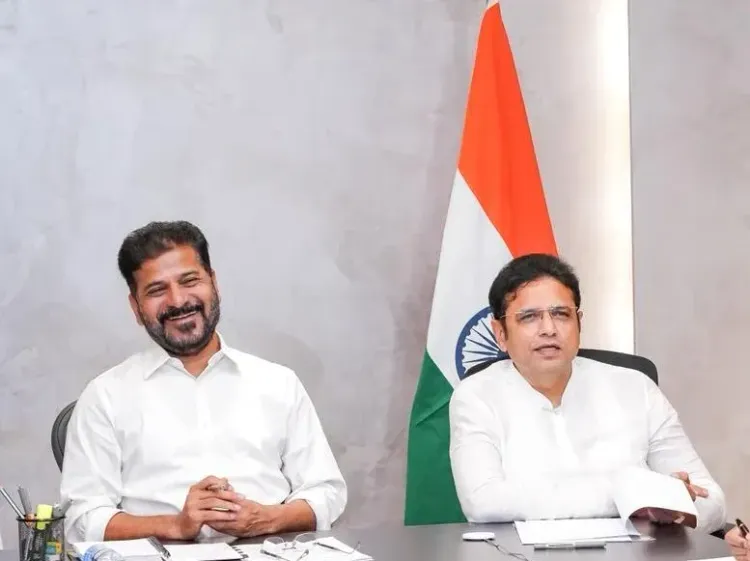
The Chief Minister's Office of Telangana announced on Thursday, 28 May 2026 that Chief Minister Revanth Reddy has directed officials to develop a 'Samagra Sankshema Card' (Unified Welfare Card) that consolidates every government welfare benefit a citizen receives into a single card, covering schemes across all state departments.
Context
The Chief Minister's directive was issued during a high-level review meeting attended by a cabinet minister, Telangana Chief Secretary K. Ramakrishna Rao, the CM's Special Secretary, the IT Department's Joint Secretary, and other senior officials. The post states that CM Revanth Reddy specifically discussed the initiative at that review, instructing that an immediate special drive be launched to collect beneficiary data from all departments.
The card is envisioned to clearly show 'which citizen receives which benefit, under which scheme, through which department, and to what extent' — a direct quote from the CMO's post. Schemes explicitly named for inclusion are Aarogyasri, the Chief Minister's Relief Fund, fee reimbursement, labour department schemes, education department schemes, and government insurance programmes.
Policy Backdrop
The proposal builds on India's decade-long push toward consolidated digital welfare delivery. The Centre's Direct Benefit Transfer (DBT) framework, launched in 2013, linked scheme disbursements with Aadhaar to reduce leakage and duplication. Telangana, formed in 2014, subsequently expanded sector-specific schemes across health, education, and agriculture, each managed by separate departments — the fragmentation the new card aims to resolve.
Several Indian states have pursued single-window welfare portals or cards since the mid-2010s, and the use of AI-driven profiling to detect ineligible claims mirrors national-level data analytics initiatives. CM Revanth Reddy's government has flagged digital governance as a priority since taking office in December 2023.
The CMO post also notes that the recently conducted Samagra Samajika, Arthika, Vidya, Udyoga, Rajakeeyam, Kula (#SEEPC) Survey data is to be linked to the card, creating a comprehensive socio-economic profile for each beneficiary household.
Stakeholders and Impact
The primary beneficiaries are Telangana's welfare recipients — low-income families currently navigating multiple cards and documents across departments. The CMO stated that the card will ensure welfare benefits 'reach genuinely eligible citizens more precisely' while making it easier to identify ineligible claimants through AI-based profiling.
The card is also designed to cover contract and outsourcing employees working across government departments, whose details the IT Department has been directed to compile. Additionally, the CMO post mentions studying Kerala's model for migrant workers travelling to the Gulf — centralising passport, visa, skill-development, and training information to reduce dependence on unauthorised agents. A state-level unique identity number, modelled on Aadhaar, is under consideration if needed.
The IT Department will lead the initiative, with a directive to deploy 'technology-savvy, proactive young officers' for implementation. Death certificate data is to be automatically linked to the Cheyutha pension database to trigger immediate action on beneficiary changes, and citizens' health profiles will be linked to the card.
What's Next
Officials have been asked to take immediate steps and launch a dedicated data-collection drive across all departments. The key milestones to watch are the integration of existing scheme databases — including the SEEPC survey — into a unified IT-department platform, and a decision on whether to introduce a state-level unique identity number. The CMO has framed the card as a tool not only for delivery but for impact evaluation: every scheme the government runs should be assessable for its real-world effect on the poor.
If implemented at scale, the Unified Welfare Card could become a template for other states seeking to rationalise fragmented welfare architecture through AI-assisted data consolidation.
Point of View
It strengthens the Congress government's welfare credentials ahead of future electoral cycles; if it triggers beneficiary exclusions, it could generate backlash. The proposal to study Kerala's Gulf-worker model also hints at an ambition to extend the card's scope beyond domestic welfare into labour migration, a constituency with significant political weight in Telangana. The state-level unique ID idea, if pursued, would put Telangana in direct conversation — and potential tension — with the national Aadhaar architecture.
NationPress
12 Oct 2026
Frequently Asked Questions
What is the Telangana Unified Welfare Card?
The Unified Welfare Card, called 'Samagra Sankshema Card,' is a proposed single card that will consolidate all government welfare scheme benefits a Telangana citizen receives — across departments such as health, education, labour, and insurance — into one place, directed by CM Revanth Reddy on 28 May 2026.
Which schemes will be included in the Telangana Unified Welfare Card?
The card is intended to include Aarogyasri, the Chief Minister's Relief Fund, fee reimbursement, labour department schemes, education department schemes, and government insurance programmes, along with data from the SEEPC survey.
How will AI be used in the Telangana welfare card system?
CM Revanth Reddy directed that beneficiary data collected from all departments be analysed using AI from multiple angles to increase transparency in scheme implementation, improve targeting of genuine beneficiaries, and identify ineligible claimants.
Will Telangana create its own unique ID like Aadhaar for the welfare card?
The Chief Minister has said the government should consider issuing a state-level unique identity number similar to Aadhaar if required to support the Unified Welfare Card system.
What is the SEEPC survey and how does it relate to the welfare card?
The SEEPC survey — Samagra Samajika, Arthika, Vidya, Udyoga, Rajakeeyam, Kula — is a comprehensive socio-economic, educational, employment, political, and caste survey recently conducted by the Telangana government; CM Revanth Reddy has directed that its data be linked to the Unified Welfare Card.