CM Rio Eyes France-Nagaland Ties After First Joint Project
Synopsis
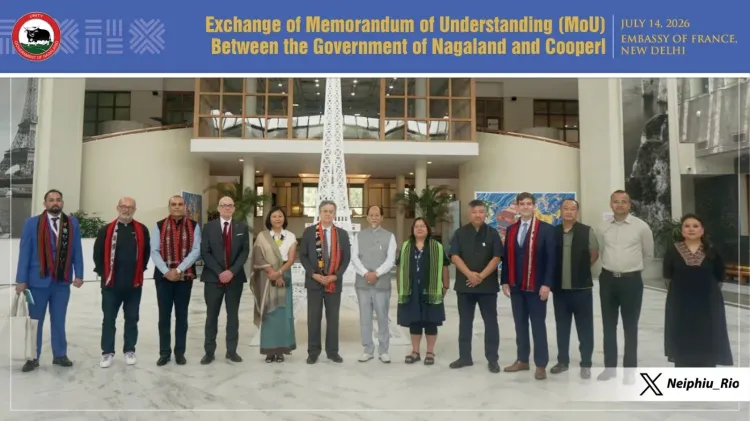
Nagaland Chief Minister Neiphiu Rio on 14 July 2026 publicly welcomed a completed France-Nagaland project and called for broader multi-sector collaboration, pledging his government's commitment to responsible investment and sustainable development partnerships.
Key Takeaways
CM Neiphiu Rio responded publicly on X on 14 July 2026 to a French interlocutor, welcoming the first France-Nagaland collaboration.
Rio stated the Nagaland government is committed to creating an enabling environment for responsible investment, innovation, and international partnerships.
The exchange signals sub-national diplomacy by a northeastern state, operating within India's broader federal framework.
India and France have maintained a strategic partnership since 1998 , providing a national foundation for such state-level engagements.
No specific project details have been officially disclosed; follow-up MoUs or agreements are the next milestone to watch.
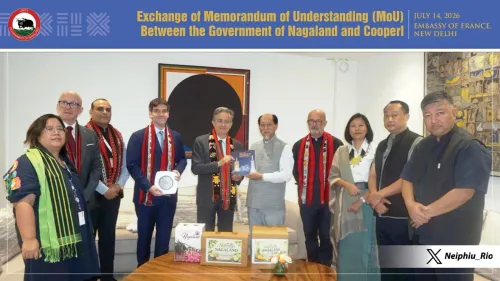
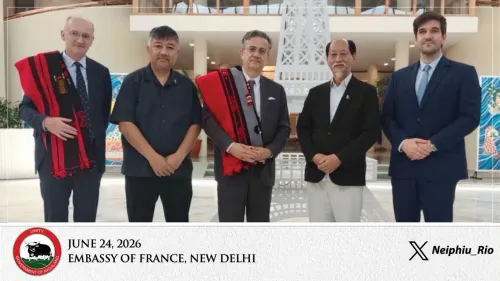
Nagaland Chief Minister Neiphiu Rio on Tuesday, 14 July 2026, signalled his government's openness to deeper engagement with France, describing a recently completed collaboration as the foundation for future partnerships spanning multiple sectors. Responding on X, Rio said the Nagaland government remains committed to building an environment conducive to responsible investment, innovation, and international cooperation for sustainable development.
Context
Rio's post was a reply on X, indicating an ongoing exchange with a French interlocutor or institution that had expressed hope for the bilateral project. In his response, the Chief Minister stated: 'We hope this project will be the first of many collaborations between France and Nagaland across diverse sectors.' The remark positions Nagaland as an active participant in sub-national diplomacy rather than a passive recipient of central government-led foreign engagement.
The specific project referenced has not been officially detailed in public disclosures available at the time of publication. However, the exchange signals that at least one concrete initiative between a French entity and the Nagaland government has reached a stage where both sides are publicly acknowledging it and looking ahead.
Policy Backdrop
India and France have maintained a strategic partnership since 1998, covering defence, space, and economic cooperation at the national level. In parallel, France has pursued targeted engagements with Indian states, particularly on sustainability, cultural exchange, and innovation — areas that align closely with the language used by CM Rio in his post.
Northeastern Indian states have historically faced challenges attracting foreign direct investment due to geographic remoteness, connectivity gaps, and security sensitivities. In recent years, state governments in the region have sought to leverage India's 'Act East' policy framework to position themselves as gateways to Southeast Asia and as destinations for niche sustainable-development investment.
Stakeholders and Impact
The Nagaland government stands as the primary institutional actor here, with CM Rio personally signalling political will for international partnerships. French investors, development agencies, or cultural institutions form the counterpart constituency. Nagaland's significant tribal communities and its biodiversity-rich landscape make it a candidate for sustainable forestry, eco-tourism, and cultural-heritage projects — sectors where French expertise and funding mechanisms are well established.
For local stakeholders — including tribal councils, entrepreneurs, and civil society — the prospect of structured international investment carries implications for employment, infrastructure, and the preservation of indigenous practices. Any formal agreements would also require alignment with India's federal framework governing state-level foreign engagements.
What's Next
Attention will now turn to whether the Nagaland government and its French counterparts formalise the next steps through memoranda of understanding or project-specific agreements. CM Rio's public statement raises expectations for an official announcement detailing the sectors and institutions involved. If the momentum holds, Nagaland could emerge as a model for how smaller northeastern states engage selectively with European partners on sustainability-driven investment — a template with implications for the broader 'Act East' agenda.
Point of View
Areas where Nagaland's biodiversity and tribal identity offer genuine differentiation. This move fits within the broader 'Act East' policy arc but pushes it a step further by cultivating European ties at the state level. Whether the partnership produces tangible MoUs will determine if this is a strategic pivot or a diplomatic courtesy exchange.
NationPress
14 Jul 2026
Frequently Asked Questions
What is the France-Nagaland project that CM Rio mentioned?
The specific project has not been officially detailed in public disclosures. CM Rio's post on 14 July 2026 described it as the 'first of many collaborations,' suggesting at least one initiative has been completed, but formal details are awaited.
Can Indian state governments sign international agreements with foreign countries?
Indian states can engage in sub-national diplomacy and attract foreign investment, but formal treaties and agreements with foreign governments require coordination with and approval from the central government under India's federal framework.
What is Nagaland's relationship with France?
There is no long-standing bilateral relationship at the state level, but India and France have maintained a strategic partnership since 1998. CM Rio's July 2026 post suggests Nagaland is now building a direct engagement track with French entities.
What sectors could France and Nagaland collaborate on?
CM Rio mentioned 'diverse sectors' without specifying them. Given Nagaland's biodiversity, tribal heritage, and sustainable development priorities, likely areas include eco-tourism, sustainable forestry, cultural exchange, and innovation-driven enterprises — all areas where French institutions are active.