CM Rio Greets Lotha Community on Tokhu Emong
Synopsis
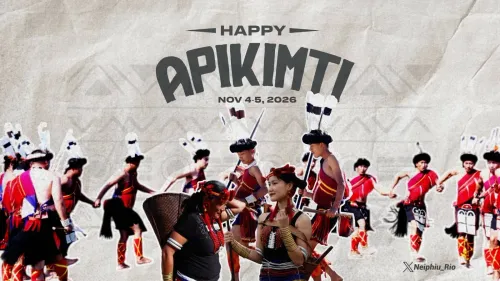
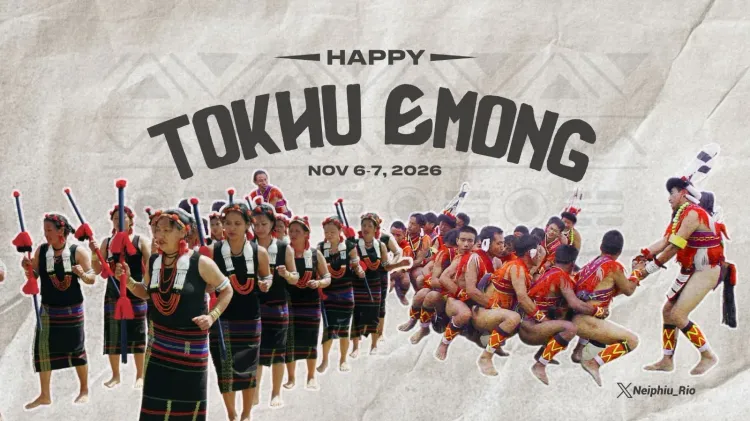
Nagaland Chief Minister Neiphiu Rio greeted the Lotha community on Tokhu Emong, an annual November harvest festival in Wokha district centred on thanksgiving, sharing, and reconciliation — one of Nagaland's most culturally significant tribal observances.
Key Takeaways
Nagaland CM Neiphiu Rio extended public greetings to the Lotha community on Tokhu Emong on 5 November 2026 .
Tokhu Emong is an annual harvest thanksgiving festival of the Lotha Naga tribe , held in early November each year.
The festival is centred on thanksgiving, community sharing, and reconciliation — themes that carry social weight in multi-tribal Nagaland .
The Lotha community is primarily based in Wokha district , Nagaland , and is one of the state's major recognised tribes.
CM Rio has led Nagaland since 2018 under the Nationalist Democratic Progressive Party (NDPP) and regularly acknowledges tribal festivals as part of state outreach.
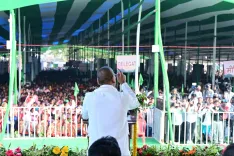
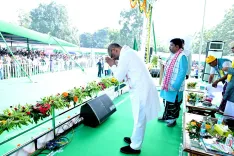
Every November, the hills of Wokha district in Nagaland come alive with song, feast, and the quiet work of mending — and this year, Nagaland Chief Minister Neiphiu Rio marked the occasion with a warm public greeting to the Lotha community on the occasion of Tokhu Emong, extending wishes for 'peace, harmony, and prosperity for all.'
What Tokhu Emong means to the Lotha people
Tokhu Emong is one of the most significant festivals of the Lotha Naga tribe, observed annually in early November. At its heart, it is a harvest thanksgiving — a moment to offer gratitude for the season's yield, share abundance with neighbours, and, crucially, resolve disputes and renew community bonds.
That emphasis on reconciliation gives the festival a weight beyond the ceremonial. In a state where Nagaland's 16-plus recognised tribes each carry distinct customs, languages, and sometimes competing histories, a festival anchored in shared gratitude and communal harmony carries real social meaning.
Rio's message and the broader tribal-outreach pattern
Chief Minister Rio, who leads the Nationalist Democratic Progressive Party (NDPP) and has held the top office in Nagaland since 2018, described the festival as 'a celebration of thanksgiving, sharing, and reconciliation.' The language is deliberate — Nagaland's political leadership has long used festival greetings as a soft but consistent instrument of inter-tribal solidarity.
Acknowledging each tribe's major festivals is a standard practice for the state government, but it also reflects the genuine complexity of governing a society shaped by multiple ethnic identities and decades of conflict legacy. A chief minister who is visibly present at every community's calendar signals continuity, inclusivity, and stability.
The Lotha community's place in Nagaland's cultural mosaic
The Lotha Nagas are primarily concentrated in Wokha district and are among the more prominent of Nagaland's tribes — known for a rich oral tradition, vibrant weaving craftsmanship, and a strong church culture. Tokhu Emong is their most publicly recognised celebration, and it draws participants from across the community's diaspora within the state.
Nagaland's annual Hornbill Festival, held each December, draws together all major tribes in a single showcase — but moments like Tokhu Emong remain distinctly community-owned, grounded in local ritual rather than state spectacle.
As Nagaland's tribes each guard their distinct identity while navigating shared governance, a festival rooted in reconciliation — and a chief minister who shows up for it every year — is a small but steady thread in a much larger weave.
Point of View
Visible acknowledgement of each tribe's identity. By framing the festival explicitly around reconciliation, Rio aligns state messaging with long-running peace-building efforts in a region still navigating the legacy of decades of ethnic and insurgent conflict. The consistency of such outreach across the state's 16-plus tribes is itself a governance strategy, reinforcing the idea that the chief minister's office belongs to no single community. How these symbolic gestures translate into substantive cultural preservation policy — funding, language protection, land rights — remains the more consequential question for Nagaland's tribal communities.
NationPress
5 Nov 2026
Frequently Asked Questions
What is Tokhu Emong festival?
Tokhu Emong is an annual harvest thanksgiving festival celebrated by the Lotha Naga tribe of Nagaland, observed in early November. It focuses on gratitude for the harvest, community sharing, and the reconciliation of disputes.
Which district is the Lotha community from in Nagaland?
The Lotha community is primarily based in Wokha district of Nagaland and is one of the state's major recognised Naga tribes.
Why does the Nagaland CM greet tribal festivals?
Nagaland has over 16 officially recognised tribes, each with distinct cultures and festivals. Chief ministers routinely extend greetings to each community's major celebrations as a practice of inter-tribal solidarity and inclusive governance.
When is Tokhu Emong celebrated?
Tokhu Emong is celebrated annually in early November by the Lotha Naga community of Wokha district, Nagaland.